Showing posts with label Jessica Bell. Show all posts

Tuesday, April 29

SUGAR
by Jessica Bell

You were Yiayia.
But I called you Zacharati.
That was your name.
It meant sugar.
Photo by Max Straeten, morguefile.com

Your parents must have known
that when you aged,
you’d litter your kitchen
bench with it,
when you’d make halva,
and wipe your hands
on your fraying apron
exactly seven times a day.

I’d count.
You’d giggle.
Papou would cross himself.

Every day I’d watch
you press baked almonds
into the squishy centers
of the diamond-shaped
brown sweets.

You were granting them hearts.

And that’s when you’d bring out the sugar.
And a sieve.

And sprinkle your name all over my world.

Source: Fabric. Edmonton, AB: Vine Leaves Press, 2012. p. 22.


Childhood memories are a powerful source for poetry ideas. Bell's piece is all the sweeter (pardon the pun) because she also weaves in a sense of place and culture, using Greek words and presenting her grandparents carrying on traditions.

Bell's collection Fabric is woven though with elements of Greek language and culture. It's a wonderful read. My review is posted here. For more on this and Bell's other poetry books, novels and writing resources, see her website.


What lines or images stand out to you? What childhood memories might you tap as inspiration for your writing?
Tuesday, April 29, 2014 Laurel Garver
SUGAR
by Jessica Bell

You were Yiayia.
But I called you Zacharati.
That was your name.
It meant sugar.
Photo by Max Straeten, morguefile.com

Your parents must have known
that when you aged,
you’d litter your kitchen
bench with it,
when you’d make halva,
and wipe your hands
on your fraying apron
exactly seven times a day.

I’d count.
You’d giggle.
Papou would cross himself.

Every day I’d watch
you press baked almonds
into the squishy centers
of the diamond-shaped
brown sweets.

You were granting them hearts.

And that’s when you’d bring out the sugar.
And a sieve.

And sprinkle your name all over my world.

Source: Fabric. Edmonton, AB: Vine Leaves Press, 2012. p. 22.


Childhood memories are a powerful source for poetry ideas. Bell's piece is all the sweeter (pardon the pun) because she also weaves in a sense of place and culture, using Greek words and presenting her grandparents carrying on traditions.

Bell's collection Fabric is woven though with elements of Greek language and culture. It's a wonderful read. My review is posted here. For more on this and Bell's other poetry books, novels and writing resources, see her website.


What lines or images stand out to you? What childhood memories might you tap as inspiration for your writing?

Monday, September 16

....it's a rare Monday post from me! But I will pop in on my "off days" for special occasions, including two I'll share below...

Photos

I had some new author photos shot recently by the talented Leah Kelly. Here are my four favorites--two indoor and two outdoor shots.

1. Thoughtful chick in specs


2. Jaunty angle


3. Philly girl
4. Garden variety author


I like each of the photos for different reasons. I'm curious to know what you think! Please visit my Facebook page to vote: http://www.facebook.com/AuthorLaurelGarver.

New release

I'm thrilled to be a contributor to the recently released Indiestructible: Inspiring Stories from the Publishing Jungle. If you're curious about Independent Publishing/Entrepreneurial Authorship, don't miss this wonderful new collection of essays from folks who have been there, done that.This is not a how-to guide. This is the best of the indie tradition of experienced authors paying forward what they’ve learned, giving you information to help you on your journey.

All this wonderful inspiration is available now for just 99c. And better yet, all proceeds will be donated to BUILDON.org, a movement which breaks the cycle of poverty, illiteracy, and low expectations through service and education.

A great bargain that does good in so many ways. What are you waiting for?

CLICK HERE TO PURCHASE INDIESTRUCTIBLE

eBook $0.99 USD
Publisher Vine Leaves Press
ISBN 10: 0987593102  ISBN 13: 9780987593108

Compiled and edited by Jessica Bell

Contributing authors:


What are you excited about this week?

Monday, September 16, 2013 Laurel Garver
....it's a rare Monday post from me! But I will pop in on my "off days" for special occasions, including two I'll share below...

Photos

I had some new author photos shot recently by the talented Leah Kelly. Here are my four favorites--two indoor and two outdoor shots.

1. Thoughtful chick in specs


2. Jaunty angle


3. Philly girl
4. Garden variety author


I like each of the photos for different reasons. I'm curious to know what you think! Please visit my Facebook page to vote: http://www.facebook.com/AuthorLaurelGarver.

New release

I'm thrilled to be a contributor to the recently released Indiestructible: Inspiring Stories from the Publishing Jungle. If you're curious about Independent Publishing/Entrepreneurial Authorship, don't miss this wonderful new collection of essays from folks who have been there, done that.This is not a how-to guide. This is the best of the indie tradition of experienced authors paying forward what they’ve learned, giving you information to help you on your journey.

All this wonderful inspiration is available now for just 99c. And better yet, all proceeds will be donated to BUILDON.org, a movement which breaks the cycle of poverty, illiteracy, and low expectations through service and education.

A great bargain that does good in so many ways. What are you waiting for?

CLICK HERE TO PURCHASE INDIESTRUCTIBLE

eBook $0.99 USD
Publisher Vine Leaves Press
ISBN 10: 0987593102  ISBN 13: 9780987593108

Compiled and edited by Jessica Bell

Contributing authors:


What are you excited about this week?

Thursday, June 27

Hi Friends! I am still in the UK, so I've asked the multi-talented Jessica Bell to swing by and talk about her latest writing resource book. I think it's so wonderfully helpful I wrote the endorsement for back cover! Onto our guest post...

by Jessica Bell

Writers constantly have rules thrown at them left, right, and center. Show, don’t tell! Stop using so many dialogue tags! More sensory detail! More tension! Speed up the pace! Yada yada yada ... it can become overwhelming, yes? I used to feel overwhelmed by it all too. In fact, I still do sometimes. It’s hard enough to get the words on the page, let alone consider how to put them there.

In Anne Lamott’s Bird by Bird, she says that in order not to be overwhelmed, a writer needs to focus on short assignments. She refers to the one-inch picture frame on her desk and how that little picture frame reminds her to focus on bite-sized pieces of the whole story. Basically, if you focus on one small thing at a time, the story will eventually come together to create a whole. I believe the same applies to learning the craft of writing. If writers focus on one aspect of the craft at a time, the process will seem less daunting and piece by piece it will come together.

My name’s Jessica Bell, and my own struggles with feeling overwhelmed inspired me to write the Writing in a Nutshell Series of pocket-sized writing guides. So you can learn to hone your craft in bite-sized, manageable pieces. In the first book of the series, I focused on demonstrating how to transition “telling” into “showing.” In Adverbs and Clichés in a Nutshell: Demonstrated Subversions of Adverbs and Clichés into Gourmet Imagery, I deal with another of the most common criticisms aspiring writers face: to absolutely avoid adverbs and clichés like the plague. But see, right now, I just used one of each. I also used a couple in the first two paragraphs of this post because they come naturally, and we utilize them frequently in everyday speech. But in fiction, too many adverbs and clichés weaken your prose. It’s considered “lazy writing,” because it means we don’t have to show what’s happening.

If your manuscript has too many adverbs and clichés, it most likely means that the emotion you felt while writing it is not going to translate to the reader in the same way. So how exactly can we approach the subversion of adverbs and clichés? For starters, play around with simile and metaphor when you’re trying to convey emotion, and for action, use strong verbs to show it happening in real time.

The key? Think smaller details rather than the bigger picture.

Need some help and inspiration?

In Adverbs and Clichés in a Nutshell: Demonstrated Subversions of Adverbs and Clichés into Gourmet Imagery, you will find thirty-four examples of prose which clearly demonstrate how to turn those pesky adverbs and clichés into vivid and unique imagery. Dispersed throughout are blank pages to craft your own unique examples. Extra writing prompts are also provided at the back of the book.

“Jessica Bell's latest pocket guide, Adverbs and Clichés in a Nutshell, will inspire you to leave bland behind and pursue your creative best. With force and clarity, she demonstrates how adverbs and clichés hobble vibrant writing. She then marks a course toward unique expression and provides workouts that will help writers at every level develop a distinctive voice.”  ~Laurel Garver, freelance editor, author of Never Gone and Muddy-Fingered Midnights

Purchase links:
Amazon US | Amazon UK | Amazon Ca | Kobo


Bio: The Australian-native contemporary fiction author and poet, Jessica Bell, also makes a living as an editor and writer for global ELT publishers (English Language Teaching), such as Pearson Education, HarperCollins, Macmillan Education, Education First and Cengage Learning.

She is the co-publishing editor of Vine Leaves Literary Journal, and the director of the Homeric Writers’ Retreat and Workshop on the Greek island of Ithaca.

For more information about Jessica please visit:
Website | Blog | Twitter | Facebook

Thursday, June 27, 2013 Laurel Garver
Hi Friends! I am still in the UK, so I've asked the multi-talented Jessica Bell to swing by and talk about her latest writing resource book. I think it's so wonderfully helpful I wrote the endorsement for back cover! Onto our guest post...

by Jessica Bell

Writers constantly have rules thrown at them left, right, and center. Show, don’t tell! Stop using so many dialogue tags! More sensory detail! More tension! Speed up the pace! Yada yada yada ... it can become overwhelming, yes? I used to feel overwhelmed by it all too. In fact, I still do sometimes. It’s hard enough to get the words on the page, let alone consider how to put them there.

In Anne Lamott’s Bird by Bird, she says that in order not to be overwhelmed, a writer needs to focus on short assignments. She refers to the one-inch picture frame on her desk and how that little picture frame reminds her to focus on bite-sized pieces of the whole story. Basically, if you focus on one small thing at a time, the story will eventually come together to create a whole. I believe the same applies to learning the craft of writing. If writers focus on one aspect of the craft at a time, the process will seem less daunting and piece by piece it will come together.

My name’s Jessica Bell, and my own struggles with feeling overwhelmed inspired me to write the Writing in a Nutshell Series of pocket-sized writing guides. So you can learn to hone your craft in bite-sized, manageable pieces. In the first book of the series, I focused on demonstrating how to transition “telling” into “showing.” In Adverbs and Clichés in a Nutshell: Demonstrated Subversions of Adverbs and Clichés into Gourmet Imagery, I deal with another of the most common criticisms aspiring writers face: to absolutely avoid adverbs and clichés like the plague. But see, right now, I just used one of each. I also used a couple in the first two paragraphs of this post because they come naturally, and we utilize them frequently in everyday speech. But in fiction, too many adverbs and clichés weaken your prose. It’s considered “lazy writing,” because it means we don’t have to show what’s happening.

If your manuscript has too many adverbs and clichés, it most likely means that the emotion you felt while writing it is not going to translate to the reader in the same way. So how exactly can we approach the subversion of adverbs and clichés? For starters, play around with simile and metaphor when you’re trying to convey emotion, and for action, use strong verbs to show it happening in real time.

The key? Think smaller details rather than the bigger picture.

Need some help and inspiration?

In Adverbs and Clichés in a Nutshell: Demonstrated Subversions of Adverbs and Clichés into Gourmet Imagery, you will find thirty-four examples of prose which clearly demonstrate how to turn those pesky adverbs and clichés into vivid and unique imagery. Dispersed throughout are blank pages to craft your own unique examples. Extra writing prompts are also provided at the back of the book.

“Jessica Bell's latest pocket guide, Adverbs and Clichés in a Nutshell, will inspire you to leave bland behind and pursue your creative best. With force and clarity, she demonstrates how adverbs and clichés hobble vibrant writing. She then marks a course toward unique expression and provides workouts that will help writers at every level develop a distinctive voice.”  ~Laurel Garver, freelance editor, author of Never Gone and Muddy-Fingered Midnights

Purchase links:
Amazon US | Amazon UK | Amazon Ca | Kobo


Bio: The Australian-native contemporary fiction author and poet, Jessica Bell, also makes a living as an editor and writer for global ELT publishers (English Language Teaching), such as Pearson Education, HarperCollins, Macmillan Education, Education First and Cengage Learning.

She is the co-publishing editor of Vine Leaves Literary Journal, and the director of the Homeric Writers’ Retreat and Workshop on the Greek island of Ithaca.

For more information about Jessica please visit:
Website | Blog | Twitter | Facebook

Tuesday, June 11

by Jessica Bell

The first word of advice I was given about writing stories in verse was that you can’t just break a short story into lines and call it “verse.”

This is true.

It’s also not.

Because ultimately, that’s what I did with Muted.

Muted was a normal short story to begin with. It was first published in an anthology called From Stage Door Shadows. But I wanted to publish it as a stand-alone piece, too. Mainly because I loved the story and thought it deserved a piece of the limelight.

I did want it to be a little more innovative though, as I’m the type of writer who likes to push boundaries and not conform. The story itself is quite unique, so I wanted to highlight this by making the format unique too. Also, the subject matter is horrific. And I didn’t want it to just be “a horrific story.” I wanted it to be beautiful, too. So turning it into verse created a great juxtaposition.

By writing Muted in verse, I was able to accent the emotion via clever line breaks, a bit of internal rhyme, alliteration, onomatopoeia and unusual formatting. Things that would normally bog a traditional short story down, if done in excess. But in verse? It works. And I believe gives the story an even stronger emotional pull.

But I didn’t just insert line breaks into the prose. After doing this, I had to reevaluate the story as a whole new piece of work. I tweaked a lot of lines to create double meanings in the line breaks, added new elements to the story, amped up the emotion with the poetic devices I mentioned above, and made sure the rhythm of each line flowed naturally, steadily, and rolled off the tongue.

Have you ever written a short story in verse? How did you go about it?

About Muted

What if it were illegal to wear clothes?

What if it were the law to wear a temperature-controlled body suit made of fetus membrane ... every day?

What if you were a singer, and it was illegal to sing?

What if you sang anyway, and got detained by a LEO, and punished by having your vocal chords violently slashed, and eardrums perforated?

What if multiple offenders were killed for their skin?

Would you commit suicide? Drown yourself in the river?

Concetta would.

But something stops her in her tracks ...

Purchase muted: a short story in verse
Amazon US | Amazon UK | Amazon Ca 


About Jessica

The Australian-native contemporary fiction author and poet, Jessica Bell, also makes a living as an editor and writer for global ELT publishers (English Language Teaching), such as Pearson Education, HarperCollins, Macmillan Education, Education First and Cengage Learning.

She is the co-publishing editor of Vine Leaves Literary Journal, and the director of the Homeric Writers’ Retreat & Workshop on the Greek island of Ithaca.

Connect with Jessica online:
website | retreat & workshop | blog | Vine Leaves Journal | Facebook | Twitter

CLICK HERE  to subscribe to Jessica’s newsletter. Every subscriber will receive The Hum of Sin Against Skin for free, and be the first to know about new releases and special subscriber giveaways.
Tuesday, June 11, 2013 Laurel Garver
by Jessica Bell

The first word of advice I was given about writing stories in verse was that you can’t just break a short story into lines and call it “verse.”

This is true.

It’s also not.

Because ultimately, that’s what I did with Muted.

Muted was a normal short story to begin with. It was first published in an anthology called From Stage Door Shadows. But I wanted to publish it as a stand-alone piece, too. Mainly because I loved the story and thought it deserved a piece of the limelight.

I did want it to be a little more innovative though, as I’m the type of writer who likes to push boundaries and not conform. The story itself is quite unique, so I wanted to highlight this by making the format unique too. Also, the subject matter is horrific. And I didn’t want it to just be “a horrific story.” I wanted it to be beautiful, too. So turning it into verse created a great juxtaposition.

By writing Muted in verse, I was able to accent the emotion via clever line breaks, a bit of internal rhyme, alliteration, onomatopoeia and unusual formatting. Things that would normally bog a traditional short story down, if done in excess. But in verse? It works. And I believe gives the story an even stronger emotional pull.

But I didn’t just insert line breaks into the prose. After doing this, I had to reevaluate the story as a whole new piece of work. I tweaked a lot of lines to create double meanings in the line breaks, added new elements to the story, amped up the emotion with the poetic devices I mentioned above, and made sure the rhythm of each line flowed naturally, steadily, and rolled off the tongue.

Have you ever written a short story in verse? How did you go about it?

About Muted

What if it were illegal to wear clothes?

What if it were the law to wear a temperature-controlled body suit made of fetus membrane ... every day?

What if you were a singer, and it was illegal to sing?

What if you sang anyway, and got detained by a LEO, and punished by having your vocal chords violently slashed, and eardrums perforated?

What if multiple offenders were killed for their skin?

Would you commit suicide? Drown yourself in the river?

Concetta would.

But something stops her in her tracks ...

Purchase muted: a short story in verse
Amazon US | Amazon UK | Amazon Ca 


About Jessica

The Australian-native contemporary fiction author and poet, Jessica Bell, also makes a living as an editor and writer for global ELT publishers (English Language Teaching), such as Pearson Education, HarperCollins, Macmillan Education, Education First and Cengage Learning.

She is the co-publishing editor of Vine Leaves Literary Journal, and the director of the Homeric Writers’ Retreat & Workshop on the Greek island of Ithaca.

Connect with Jessica online:
website | retreat & workshop | blog | Vine Leaves Journal | Facebook | Twitter

CLICK HERE  to subscribe to Jessica’s newsletter. Every subscriber will receive The Hum of Sin Against Skin for free, and be the first to know about new releases and special subscriber giveaways.

Tuesday, February 5

I'm delighted to have special guest Jessica Bell here to talk about how she develops and uses colors symbolically in her work. I love this of this sort of leitmotif in fiction, especially after doing a grad school paper on color motifs in Willa Cather's fiction.

USING COLOUR TO ACCENTUATE THEME
by Jessica Bell

I like to use the symbolism of colour to strengthen a common theme(s) I want to explore in my writing. I am fascinated by symbolic references in the books I read too (even if they do not have anything to do with colour), and believe they bring a richness and depth to what we read, even if it is not immediately evident to us. So let me tell you a little bit about how I utilize the combination of colour and theme in my work.

For THE BOOK it was GREEN.
Green symbolizes self-respect, well-being,  learning and harmony. It suggests safety and endurance, lack of experience, growth and hope. THE BOOK is about a little girl named Bonnie who is thought to have learning difficulties, but really is quite the genius. Her insights into the adult world are astounding, as she tries to "make logic" of the behaviour of her mother, father and step father regarding a journal ("the book") that is turning their family upside down. Her constant attraction to the colour green was a way for me to explore her subconscious need for security, stability and her desire to learn.

Some examples of the way it is used:
You saw Father Christmas at the mall and sat on his lap. He asked you what you wanted for Christmas and you said you wanted green lebküchen! (lebküchen are a German buscuit)

Dr Wright: Mummy tells me you that you miss Daddy. Do you want to talk about it?
Bonnie: [scribbles on paper with green crayon]
...
Dr Wright: How come you don’t like any of the other colours, Bonnie?
Bonnie: Daddy said green is a colour of being safe.

Dr Wright: Do you want to be a doctor when you grow up?
Bonnie: No, I want to give medicine from a shop with a green cross.

Bonnie: [shifts in seat, pushes hair from forehead] Well, my Ted isn’t very smart because I tolded him to fix it so all the greens could be on the same side and he sat with me on the flying carpet, and I made us go up in the air, so there could be magic around us, so he could fix it for all the greens to be on the same side.

And you are a gift no man could ever buy. Two beautiful ladies, and two shining souls, through one set of radiant green eyes.

“Now, if you have a little patience, my dear, I can show you how to make some green. Do you have a little patience?” I nod. But I can’t tell if this is a Daddy type question or a my Ted type question. But it doesn’t matter. If Mrs Haydon can make me some green, then I can paint some trees.

For STRING BRIDGE it was BLUE.
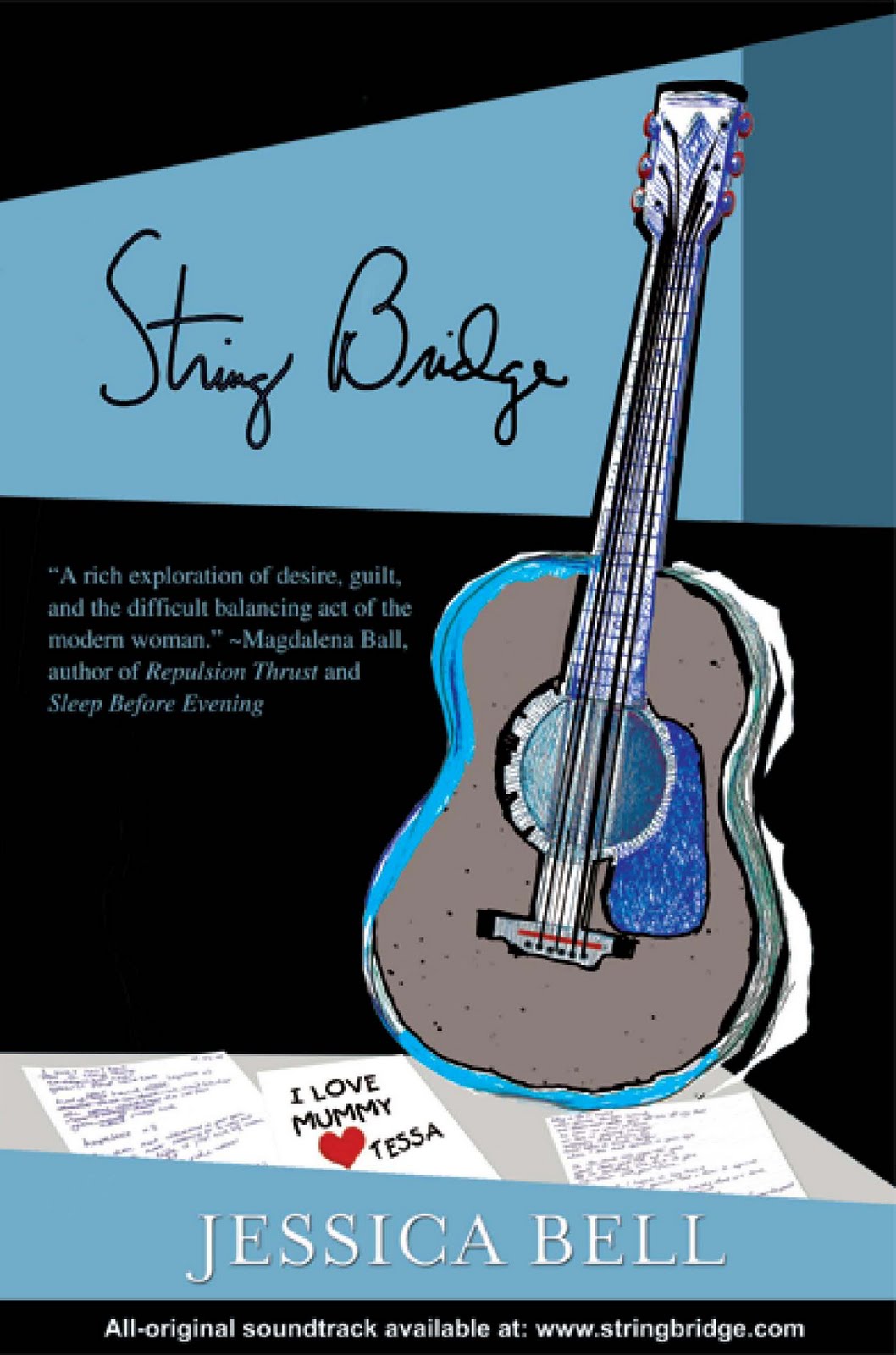
Blue is associated with freedom, strength and new beginnings, optimism and better opportunities,  loyalty and faith, power and protection. No colour is better fitting for this story about a woman named Melody who has let her passion for music die for the sake of her family, but tries to bring it back into her life without it affecting those she loves. In String Bridge, blue things are always deteriorating, symbolizing the fact that Melody feels helpless, and that it's going to be struggle to "start again".

Some examples of the way it was used:
I stare at my bag’s wrinkly, flaking, blue-vinyl exterior. It looks how I feel. Old. Poorly constructed. Depressed. Cheap.

“Oh, I don’t know,” I say, scrubbing the stain from the only decent dress I own. Blue dye comes off on the sponge.

Her fingers rose through her inward sigh, hovered above the keys, searched them for the correct notes like Braille. She began to play Joni Mitchell’s  “Blue.”

I steal one of Alex’s Camels and grab a box of matches. Sit on the floor in the living room, up against the wall. I strike a match, let it burn half way down, watching the blue base of the flame crawl along the stick as if lured by oil—kerosene candy.

I have another novel that is not yet published, called BITTER LIKE ORANGE PEEL, where I use the colour and flavour of orange to symbolize the bitterness, distrust and sexual desire my protagonists feel. Again, orange crops up in all sorts of shapes and forms such as rotting oranges falling from a tree, orange-flavoured lip gloss, an orange vinyl couch, an orange mohair sweater, photos tinged orange over time, and an orange scrub cap ...

And my lastest work-in-progress, WHITE LADY, (which stands for the drug speed) I have already shown signs of utilizing the colour white to represent tainted purity and cold, sterile environments.

As you can see, there is quite a lot you can play around with in the colour department. If you check out this link, perhaps the meanings of different colours might inspire you too.

Do you like to use symbolism in your writing? Give me an example. Do you notice symbolism used in the books you read?

Want to connect with Jessica Bell? Learn more at the following links:


Tuesday, February 05, 2013 Laurel Garver
I'm delighted to have special guest Jessica Bell here to talk about how she develops and uses colors symbolically in her work. I love this of this sort of leitmotif in fiction, especially after doing a grad school paper on color motifs in Willa Cather's fiction.

USING COLOUR TO ACCENTUATE THEME
by Jessica Bell

I like to use the symbolism of colour to strengthen a common theme(s) I want to explore in my writing. I am fascinated by symbolic references in the books I read too (even if they do not have anything to do with colour), and believe they bring a richness and depth to what we read, even if it is not immediately evident to us. So let me tell you a little bit about how I utilize the combination of colour and theme in my work.

For THE BOOK it was GREEN.
Green symbolizes self-respect, well-being,  learning and harmony. It suggests safety and endurance, lack of experience, growth and hope. THE BOOK is about a little girl named Bonnie who is thought to have learning difficulties, but really is quite the genius. Her insights into the adult world are astounding, as she tries to "make logic" of the behaviour of her mother, father and step father regarding a journal ("the book") that is turning their family upside down. Her constant attraction to the colour green was a way for me to explore her subconscious need for security, stability and her desire to learn.

Some examples of the way it is used:
You saw Father Christmas at the mall and sat on his lap. He asked you what you wanted for Christmas and you said you wanted green lebküchen! (lebküchen are a German buscuit)

Dr Wright: Mummy tells me you that you miss Daddy. Do you want to talk about it?
Bonnie: [scribbles on paper with green crayon]
...
Dr Wright: How come you don’t like any of the other colours, Bonnie?
Bonnie: Daddy said green is a colour of being safe.

Dr Wright: Do you want to be a doctor when you grow up?
Bonnie: No, I want to give medicine from a shop with a green cross.

Bonnie: [shifts in seat, pushes hair from forehead] Well, my Ted isn’t very smart because I tolded him to fix it so all the greens could be on the same side and he sat with me on the flying carpet, and I made us go up in the air, so there could be magic around us, so he could fix it for all the greens to be on the same side.

And you are a gift no man could ever buy. Two beautiful ladies, and two shining souls, through one set of radiant green eyes.

“Now, if you have a little patience, my dear, I can show you how to make some green. Do you have a little patience?” I nod. But I can’t tell if this is a Daddy type question or a my Ted type question. But it doesn’t matter. If Mrs Haydon can make me some green, then I can paint some trees.

For STRING BRIDGE it was BLUE.
Blue is associated with freedom, strength and new beginnings, optimism and better opportunities,  loyalty and faith, power and protection. No colour is better fitting for this story about a woman named Melody who has let her passion for music die for the sake of her family, but tries to bring it back into her life without it affecting those she loves. In String Bridge, blue things are always deteriorating, symbolizing the fact that Melody feels helpless, and that it's going to be struggle to "start again".

Some examples of the way it was used:
I stare at my bag’s wrinkly, flaking, blue-vinyl exterior. It looks how I feel. Old. Poorly constructed. Depressed. Cheap.

“Oh, I don’t know,” I say, scrubbing the stain from the only decent dress I own. Blue dye comes off on the sponge.

Her fingers rose through her inward sigh, hovered above the keys, searched them for the correct notes like Braille. She began to play Joni Mitchell’s  “Blue.”

I steal one of Alex’s Camels and grab a box of matches. Sit on the floor in the living room, up against the wall. I strike a match, let it burn half way down, watching the blue base of the flame crawl along the stick as if lured by oil—kerosene candy.

I have another novel that is not yet published, called BITTER LIKE ORANGE PEEL, where I use the colour and flavour of orange to symbolize the bitterness, distrust and sexual desire my protagonists feel. Again, orange crops up in all sorts of shapes and forms such as rotting oranges falling from a tree, orange-flavoured lip gloss, an orange vinyl couch, an orange mohair sweater, photos tinged orange over time, and an orange scrub cap ...

And my lastest work-in-progress, WHITE LADY, (which stands for the drug speed) I have already shown signs of utilizing the colour white to represent tainted purity and cold, sterile environments.

As you can see, there is quite a lot you can play around with in the colour department. If you check out this link, perhaps the meanings of different colours might inspire you too.

Do you like to use symbolism in your writing? Give me an example. Do you notice symbolism used in the books you read?

Want to connect with Jessica Bell? Learn more at the following links:


Tuesday, December 4

Click to add me to Goodreads!
Have you been told there's a little too much telling in your novel? Want to remedy it? Then this is the book for you!

In Show and Tell in a Nutshell: Demonstrated Transitions from Telling to Showing you will find sixteen real scenes depicting a variety of situations, emotions, and characteristics which clearly demonstrate how to turn telling into showing. Dispersed throughout, and at the back of the book, are blank pages to take notes as you read. A few short writing prompts are also provided.

Not only is this pocket guide an excellent learning tool for aspiring writers, but it is a light, convenient, and easy solution to honing your craft no matter how broad your writing experience. Keep it in the side pocket of your school bag, throw it in your purse, or even carry it around in the pocket of your jeans or jacket, to enhance your skills, keep notes, and jot down story ideas, anywhere, anytime.

If you purchase the e-book, you will be armed with the convenient hyper-linked Contents Page, where you can toggle backward and forward from different scenes with ease. Use your e-reader's highlighting and note-taking tools to keep notes instead.

The author, Jessica Bell, also welcomes questions via email, concerning the content of this book, or about showing vs. telling in general, at showandtellinanutshell@gmail.com

Reviews:
“Jessica Bell addresses one of the most common yet elusive pieces of writing advice—show, don't tell—in a uniquely user-friendly and effective way: by example. By studying the sixteen scenes she converts from “telling” into “showing,” not only will you clearly understand the difference; you will be inspired by her vivid imagery and dialogue to pour through your drafts and do the same.” ~Jenny Baranick, College English Teacher, Author of Missed Periods and Other Grammar Scares
“A practical, no-nonsense resource that will help new and experienced writers alike deal with that dreaded piece of advice: show, don’t tell. I wish Bell’s book had been around when I started writing!” ~Talli Roland, bestselling author

Purchase the paperback:
$4.40 on Amazon US
£3.99 on Amazon UK

Purchase the e-book:
$1.99 on Amazon US
£1.99 on Amazon UK
$1.99 on Kobo

About the Author:
The Australian-native contemporary fiction author and poet, Jessica Bell, also makes a living as an editor and writer for global ELT publishers (English Language Teaching), such as Pearson Education, HarperCollins, Macmillan Education, Education First and Cengage Learning.

She is the Co-Publishing Editor of Vine Leaves Literary Journal, and co-hosts the Homeric Writers’ Retreat & Workshop on the Greek Isle of Ithaca, with Chuck Sambuchino of Writer’s Digest.

For more information about Jessica Bell, please visit: 
Website
Blog
Twitter
Facebook
Tuesday, December 04, 2012 Laurel Garver
Click to add me to Goodreads!
Have you been told there's a little too much telling in your novel? Want to remedy it? Then this is the book for you!

In Show and Tell in a Nutshell: Demonstrated Transitions from Telling to Showing you will find sixteen real scenes depicting a variety of situations, emotions, and characteristics which clearly demonstrate how to turn telling into showing. Dispersed throughout, and at the back of the book, are blank pages to take notes as you read. A few short writing prompts are also provided.

Not only is this pocket guide an excellent learning tool for aspiring writers, but it is a light, convenient, and easy solution to honing your craft no matter how broad your writing experience. Keep it in the side pocket of your school bag, throw it in your purse, or even carry it around in the pocket of your jeans or jacket, to enhance your skills, keep notes, and jot down story ideas, anywhere, anytime.

If you purchase the e-book, you will be armed with the convenient hyper-linked Contents Page, where you can toggle backward and forward from different scenes with ease. Use your e-reader's highlighting and note-taking tools to keep notes instead.

The author, Jessica Bell, also welcomes questions via email, concerning the content of this book, or about showing vs. telling in general, at showandtellinanutshell@gmail.com

Reviews:
“Jessica Bell addresses one of the most common yet elusive pieces of writing advice—show, don't tell—in a uniquely user-friendly and effective way: by example. By studying the sixteen scenes she converts from “telling” into “showing,” not only will you clearly understand the difference; you will be inspired by her vivid imagery and dialogue to pour through your drafts and do the same.” ~Jenny Baranick, College English Teacher, Author of Missed Periods and Other Grammar Scares
“A practical, no-nonsense resource that will help new and experienced writers alike deal with that dreaded piece of advice: show, don’t tell. I wish Bell’s book had been around when I started writing!” ~Talli Roland, bestselling author

Purchase the paperback:
$4.40 on Amazon US
£3.99 on Amazon UK

Purchase the e-book:
$1.99 on Amazon US
£1.99 on Amazon UK
$1.99 on Kobo

About the Author:
The Australian-native contemporary fiction author and poet, Jessica Bell, also makes a living as an editor and writer for global ELT publishers (English Language Teaching), such as Pearson Education, HarperCollins, Macmillan Education, Education First and Cengage Learning.

She is the Co-Publishing Editor of Vine Leaves Literary Journal, and co-hosts the Homeric Writers’ Retreat & Workshop on the Greek Isle of Ithaca, with Chuck Sambuchino of Writer’s Digest.

For more information about Jessica Bell, please visit: 
Website
Blog
Twitter
Facebook

Wednesday, June 6

FabricI
Review of Fabric by Jessica Bell
When Jessica Bell asked if I'd like to review her latest poetry collection, Fabric, I jumped at the chance. She's not only a gifted writer, but also a great champion of the genre in an age when poetry has been largely shifted to margins--the lofty ivory tower of academia and the mean streets of urban poetry slams and hip-hop. If you can't make sense of John Ashbery or get nervous in the presence of bling and graffiti, you might encounter poetry only in its commercialized form, between the folds of a greeting card.

But if you think accessible poetry is a dead genre, Bell urges you to think again. In Fabric, she takes on personas and inhabits them like a well-trained actor. This aspect might be jarring at first to readers accustomed to greeting-card variety verse, which is focused on personal emotion. Instead, we get a novelist's sensibilites--an ear for conflict and pivotal change moments, an empathetic drive to experience as another might. The poems seem to me to fall in the larger category of confessional poetry, sharing affinities with the work of Anne Sexton, Sylvia Plath, W.D. Snodgrass, John Berryman and Sharon Olds.

 In many of the poems, Bell uses to great effect stunning epiphany end-lines that shed a new light on what came before, sending a reader spiraling back in delight to re-read and reinterpret. Like Sexton, she can be both tenacious and tender, often within the same stanza.

I finished Fabric with a renewed desire to live and write more fully engaged with my world. That, my friends, is something no greeting card verse will do.

Fabric is available in e-book for $1.99 and paperback for $5.50.
Links:

...

About Jessica Bell:

If Jessica Bell could choose only one creative mentor, she’d give the role to Euterpe, the Greek muse of music and lyrics. And not because she currently lives in Greece, either. The Australian-native author, poet and singer/songwriter/guitarist has her roots firmly planted in music, and admits inspiration often stems from lyrics she’s written.

She is the Co-Publishing Editor of Vine Leaves Literary Journal, and co-hosts the Homeric Writers' Retreat & Workshop on the Greek Isle of Ithaca, with Chuck Sambuchino of Writer’s Digest.


For more information about Jessica Bell, please visit:

Website

Don't forget to enter my giveaway for a chance to win the anthology Poetry Pact Volume 1, which features more poems by Jessica Bell, as well as me and a dozen other fabulous poets.

Wednesday, June 06, 2012 Laurel Garver
FabricI
Review of Fabric by Jessica Bell
When Jessica Bell asked if I'd like to review her latest poetry collection, Fabric, I jumped at the chance. She's not only a gifted writer, but also a great champion of the genre in an age when poetry has been largely shifted to margins--the lofty ivory tower of academia and the mean streets of urban poetry slams and hip-hop. If you can't make sense of John Ashbery or get nervous in the presence of bling and graffiti, you might encounter poetry only in its commercialized form, between the folds of a greeting card.

But if you think accessible poetry is a dead genre, Bell urges you to think again. In Fabric, she takes on personas and inhabits them like a well-trained actor. This aspect might be jarring at first to readers accustomed to greeting-card variety verse, which is focused on personal emotion. Instead, we get a novelist's sensibilites--an ear for conflict and pivotal change moments, an empathetic drive to experience as another might. The poems seem to me to fall in the larger category of confessional poetry, sharing affinities with the work of Anne Sexton, Sylvia Plath, W.D. Snodgrass, John Berryman and Sharon Olds.

 In many of the poems, Bell uses to great effect stunning epiphany end-lines that shed a new light on what came before, sending a reader spiraling back in delight to re-read and reinterpret. Like Sexton, she can be both tenacious and tender, often within the same stanza.

I finished Fabric with a renewed desire to live and write more fully engaged with my world. That, my friends, is something no greeting card verse will do.

Fabric is available in e-book for $1.99 and paperback for $5.50.
Links:

...

About Jessica Bell:

If Jessica Bell could choose only one creative mentor, she’d give the role to Euterpe, the Greek muse of music and lyrics. And not because she currently lives in Greece, either. The Australian-native author, poet and singer/songwriter/guitarist has her roots firmly planted in music, and admits inspiration often stems from lyrics she’s written.

She is the Co-Publishing Editor of Vine Leaves Literary Journal, and co-hosts the Homeric Writers' Retreat & Workshop on the Greek Isle of Ithaca, with Chuck Sambuchino of Writer’s Digest.


For more information about Jessica Bell, please visit:

Website

Don't forget to enter my giveaway for a chance to win the anthology Poetry Pact Volume 1, which features more poems by Jessica Bell, as well as me and a dozen other fabulous poets.

Thursday, December 1


Today is Vicki Rocho's "Well, I Never" blogfest. She invited us to share something we'd never done, never thought we'd do (but did) or something that simply puzzles us. Go swing by Rambles and Randomness to see the other participants. Rather than a list, I'll share one quick story...

I never went to the prom. It wasn't because I wasn't asked. No, it was largely because I didn't want to go with the guy who asked me. We had a history, one I didn't care to repeat.

I briefly considered asking a friend who went to another school, but as fun and cool as he was, the fact he was a freshman and I was a senior gave me pause. Too much potential to get really awkward. I was also kind-of-sort-of seeing someone at the time, a junior from my own school. Our daily walking-home-from-school flirtation would really go nowhere if I asked someone else to the prom--someone even younger than he. I had a real knack for relationship muddles like this at 17. Is it any wonder I write YA?

From what I could tell, the prom would be just like the school cafeteria but with formalwear--every clique keeping to themselves, everyone carefully guarding his or her established image. Honestly, why bother? So I decided to throw an anti-prom party instead. I had a fantastic night watching movies and hanging out with my favorite underclassman and a senior or two, who, like me, decided the prom was one of the "high school necessities" we could happily live without.

Funnily enough, my friends who did go to the prom ditched early and came to my house instead. Apparently, annoying classmates become even more so under the influence of cheap beer and Jack Daniels. More genuine fun was to be had with us sober, soda-sipping geeks.

====

In other news, there's a wonderful new e-zine now accepting submissions: Vine Leaves Literary Journal. This publication features vignette writing--short pieces that deeply explore character, setting or description rather than being a traditionally plotted story. You can read more about the editors' vision and submission guidelines HERE.

Vine Leaves Literary Journal is the brainchild of Jessica Bell (author of String Bridge) and her critique partner Dawn Ius, a Canadian writer and marketing/communications pro. They felt this subgenre of literary writing deserved a venue of its own.

I'm thrilled to have a piece accepted to the premiere issue (January 2012). I'll post a link when the issue goes live.


Did you go to the prom? Tell me your story!
Thursday, December 01, 2011 Laurel Garver

Today is Vicki Rocho's "Well, I Never" blogfest. She invited us to share something we'd never done, never thought we'd do (but did) or something that simply puzzles us. Go swing by Rambles and Randomness to see the other participants. Rather than a list, I'll share one quick story...

I never went to the prom. It wasn't because I wasn't asked. No, it was largely because I didn't want to go with the guy who asked me. We had a history, one I didn't care to repeat.

I briefly considered asking a friend who went to another school, but as fun and cool as he was, the fact he was a freshman and I was a senior gave me pause. Too much potential to get really awkward. I was also kind-of-sort-of seeing someone at the time, a junior from my own school. Our daily walking-home-from-school flirtation would really go nowhere if I asked someone else to the prom--someone even younger than he. I had a real knack for relationship muddles like this at 17. Is it any wonder I write YA?

From what I could tell, the prom would be just like the school cafeteria but with formalwear--every clique keeping to themselves, everyone carefully guarding his or her established image. Honestly, why bother? So I decided to throw an anti-prom party instead. I had a fantastic night watching movies and hanging out with my favorite underclassman and a senior or two, who, like me, decided the prom was one of the "high school necessities" we could happily live without.

Funnily enough, my friends who did go to the prom ditched early and came to my house instead. Apparently, annoying classmates become even more so under the influence of cheap beer and Jack Daniels. More genuine fun was to be had with us sober, soda-sipping geeks.

====

In other news, there's a wonderful new e-zine now accepting submissions: Vine Leaves Literary Journal. This publication features vignette writing--short pieces that deeply explore character, setting or description rather than being a traditionally plotted story. You can read more about the editors' vision and submission guidelines HERE.

Vine Leaves Literary Journal is the brainchild of Jessica Bell (author of String Bridge) and her critique partner Dawn Ius, a Canadian writer and marketing/communications pro. They felt this subgenre of literary writing deserved a venue of its own.

I'm thrilled to have a piece accepted to the premiere issue (January 2012). I'll post a link when the issue goes live.


Did you go to the prom? Tell me your story!

Friday, November 11


Today is THE day to help Jessica Bell's debut, STRING BRIDGE, hit the bestseller list on Amazon, and receive the all-original soundtrack, Melody Hill: On the Other Side, written and performed by the author herself, for free!

All you have to do is purchase the book today (paperback or eBook), November 11th, and then email the receipt to:
jessica.carmen.bell(at)gmail(dot)com

She will then email you a link to download the album at no extra cost!


You can purchase String Bridge here: Amazon.com, or here: Amazon UK

Get that? Buy a book and get a free soundtrack album. How cool is that?
Friday, November 11, 2011 Laurel Garver

Today is THE day to help Jessica Bell's debut, STRING BRIDGE, hit the bestseller list on Amazon, and receive the all-original soundtrack, Melody Hill: On the Other Side, written and performed by the author herself, for free!

All you have to do is purchase the book today (paperback or eBook), November 11th, and then email the receipt to:
jessica.carmen.bell(at)gmail(dot)com

She will then email you a link to download the album at no extra cost!


You can purchase String Bridge here: Amazon.com, or here: Amazon UK

Get that? Buy a book and get a free soundtrack album. How cool is that?

Thursday, October 27

Today my special guest is Jessica Bell, whose much anticipated fiction debut, String Bridge, releases officially on November 1. Jessica generously agreed to share a bit about her experiences preparing to launch her first novel.

About String Bridge
Greek cuisine, smog and domestic drudgery was not the life Australian musician, Melody, was expecting when she married a Greek music promoter and settled in Athens, Greece. Keen to play in her new shoes, though, Melody trades her guitar for a “proper” career and her music for motherhood. That is, until she can bear it no longer and plots a return to the stage—and the person she used to be. However, the obstacles she faces along the way are nothing compared to the tragedy that awaits, and she realizes she’s been seeking fulfillment in the wrong place.

E-book available at Amazon.com, Amazon UK
Paperback available at Amazon.com, Barnes & Noble
Soundtrack "Melody Hill: On the Other Side" available at iTunes, Amazon.com, Amazon UK

The Interview

What marketing activities did you decide to pursue to launch String Bridge?
I think nowadays the best thing to focus on is web presence. Not only is it cost-effective, but it’s fast. So, of course, I’ve organized a blog tour and Amazon Chart Rush. I’ve also released an all-original soundtrack to accompany the book, which can also be purchased as a separate item from over 150 different digital outlets. I’m hoping this album with create a little more interest in the book, than the book itself is capable of, as I can actually market the music to an audience that probably wouldn’t look twice at the book without the album existing.

How did you prioritize them?
I actually didn’t. Each thing seemed as important as the other. It was just a matter of reaching deadlines.

What did your schedule look like?
Hectic. I made sure I did everything I needed to as it came in. I never put anything to the side that could be accomplished within a 24-hour period. Not sure that was such a good idea as it tampered with my sanity. I had to fit these things in around my day job, but thankfully I work from home so I suppose creating my own schedule wasn’t so hard now that I look back. But I think I was too "fly-by-the-seat-of-my-pants." I got stressed. Really stressed. I think my jaw was perpetually clenched. Even now I have to remind myself to loosen it up.

Which activities have taken more time or been trickier than you anticipated?
The hardest thing was organizing the blog tour. Over 90 blogs have signed up to participate, some posting reviews and some interviews, or both, and some signed up to plug the Amazon Chart Rush only. Keeping track of everyone’s preferences and emails and blog addresses, and post dates has been a challenge. I have Excel to thank for that! But nothing has really been "tricky," only time-consuming. I’ve enjoyed every minute of it though. I guess that’s the key to getting through so many tasks without having a nervous breakdown! Implementing the final edits to the novel and writing the album took a lot of time. But that was a creative part. And time shouldn’t even exist then, right?

What are some lessons learned from this launch? Things that worked well? Things you’d like to do differently with the next book?
One: Never underestimate the importance of making friends online! Their help and support has been invaluable to this exciting and important time in my career. I can’t thank them enough!
Two: Don’t burn yourself out. Find time to spend AWAY from your desk to maintain sanity.

There were a few weeks there where I thought I was literally going to fry my brain. I took a couple of days off after weeks of constant rigorous juggling of tasks, but it was too late. I spent the whole time staring at the wall just trying to find some inner-quiet. I could hardly lift a finger. Seriously. Pace yourself. The slower you move, the faster you’ll get things done. Trust me.

About Jessica

Jessica Bell is a literary women’s fiction author, poet and singer/songwriter who grew up in Melbourne, Australia, to two gothic rock musicians who had successful independent careers during the '80s and early '90s.

She spent much of her childhood travelling to and from Australia to Europe, experiencing two entirely different worlds, yet feeling equally at home in both environments. She currently lives in Athens, Greece and works as a freelance writer/editor for English Language Teaching publishers worldwide, such as HarperCollins, Pearson Education and Macmillan Education.

In addition to String Bridge, Jessica has published a book of poetry called Twisted Velvet Chains. A full list of poems and short stories published in various anthologies and literary magazines can be found under Published Works & Awards, on her website.

Help spread the word about the String Bridge Amazon Chart Rush, November 11th!
Help Jessica Bell's debut novel STRING BRIDGE hit the bestseller list on Amazon and receive the all-original soundtrack, written and performed by the author herself, for free! All you have to do is purchase the ebook or paperback on November 11th, and then email the receipt to jessica(dot)carmen(dot)bell(at)gmail(dot)com. She will then email you a link to download the album entitled, "Melody Hill: On the Other Side," at no extra cost! Visit www.jessicacbell.com to hear samples from the album.

What take-home tips did you pick up from Jessica?
Thursday, October 27, 2011 Laurel Garver
Today my special guest is Jessica Bell, whose much anticipated fiction debut, String Bridge, releases officially on November 1. Jessica generously agreed to share a bit about her experiences preparing to launch her first novel.

About String Bridge
Greek cuisine, smog and domestic drudgery was not the life Australian musician, Melody, was expecting when she married a Greek music promoter and settled in Athens, Greece. Keen to play in her new shoes, though, Melody trades her guitar for a “proper” career and her music for motherhood. That is, until she can bear it no longer and plots a return to the stage—and the person she used to be. However, the obstacles she faces along the way are nothing compared to the tragedy that awaits, and she realizes she’s been seeking fulfillment in the wrong place.

E-book available at Amazon.com, Amazon UK
Paperback available at Amazon.com, Barnes & Noble
Soundtrack "Melody Hill: On the Other Side" available at iTunes, Amazon.com, Amazon UK

The Interview

What marketing activities did you decide to pursue to launch String Bridge?
I think nowadays the best thing to focus on is web presence. Not only is it cost-effective, but it’s fast. So, of course, I’ve organized a blog tour and Amazon Chart Rush. I’ve also released an all-original soundtrack to accompany the book, which can also be purchased as a separate item from over 150 different digital outlets. I’m hoping this album with create a little more interest in the book, than the book itself is capable of, as I can actually market the music to an audience that probably wouldn’t look twice at the book without the album existing.

How did you prioritize them?
I actually didn’t. Each thing seemed as important as the other. It was just a matter of reaching deadlines.

What did your schedule look like?
Hectic. I made sure I did everything I needed to as it came in. I never put anything to the side that could be accomplished within a 24-hour period. Not sure that was such a good idea as it tampered with my sanity. I had to fit these things in around my day job, but thankfully I work from home so I suppose creating my own schedule wasn’t so hard now that I look back. But I think I was too "fly-by-the-seat-of-my-pants." I got stressed. Really stressed. I think my jaw was perpetually clenched. Even now I have to remind myself to loosen it up.

Which activities have taken more time or been trickier than you anticipated?
The hardest thing was organizing the blog tour. Over 90 blogs have signed up to participate, some posting reviews and some interviews, or both, and some signed up to plug the Amazon Chart Rush only. Keeping track of everyone’s preferences and emails and blog addresses, and post dates has been a challenge. I have Excel to thank for that! But nothing has really been "tricky," only time-consuming. I’ve enjoyed every minute of it though. I guess that’s the key to getting through so many tasks without having a nervous breakdown! Implementing the final edits to the novel and writing the album took a lot of time. But that was a creative part. And time shouldn’t even exist then, right?

What are some lessons learned from this launch? Things that worked well? Things you’d like to do differently with the next book?
One: Never underestimate the importance of making friends online! Their help and support has been invaluable to this exciting and important time in my career. I can’t thank them enough!
Two: Don’t burn yourself out. Find time to spend AWAY from your desk to maintain sanity.

There were a few weeks there where I thought I was literally going to fry my brain. I took a couple of days off after weeks of constant rigorous juggling of tasks, but it was too late. I spent the whole time staring at the wall just trying to find some inner-quiet. I could hardly lift a finger. Seriously. Pace yourself. The slower you move, the faster you’ll get things done. Trust me.

About Jessica

Jessica Bell is a literary women’s fiction author, poet and singer/songwriter who grew up in Melbourne, Australia, to two gothic rock musicians who had successful independent careers during the '80s and early '90s.

She spent much of her childhood travelling to and from Australia to Europe, experiencing two entirely different worlds, yet feeling equally at home in both environments. She currently lives in Athens, Greece and works as a freelance writer/editor for English Language Teaching publishers worldwide, such as HarperCollins, Pearson Education and Macmillan Education.

In addition to String Bridge, Jessica has published a book of poetry called Twisted Velvet Chains. A full list of poems and short stories published in various anthologies and literary magazines can be found under Published Works & Awards, on her website.

Help spread the word about the String Bridge Amazon Chart Rush, November 11th!
Help Jessica Bell's debut novel STRING BRIDGE hit the bestseller list on Amazon and receive the all-original soundtrack, written and performed by the author herself, for free! All you have to do is purchase the ebook or paperback on November 11th, and then email the receipt to jessica(dot)carmen(dot)bell(at)gmail(dot)com. She will then email you a link to download the album entitled, "Melody Hill: On the Other Side," at no extra cost! Visit www.jessicacbell.com to hear samples from the album.

What take-home tips did you pick up from Jessica?

Tuesday, April 5

Today I welcome author Jessica Bell, whose debut novel String Bridge will be released in November, to share her story about creating her book trailer.

In case you haven't yet seen this amazing multimedia presentation, here it is for your viewing pleasure:

Now, onto our Q&A!

Q: How was your publisher, Lucky Press, involved in the creation and release of your book trailer? Was there a permissions and vetting process? What was that like?

JB: Well, originally Lucky Press told me to purchase photos from iStock send them with a text and that they would put it together for me. But when I voiced my vision for the trailer and said that I would do it myself, they said, "go for it," but to send a rough in for approval first. So I sent in my mother's original song (didn't need anything other other than my mother's "yes, use it" for permission), and the changes to the lyrics I was going to make, plus an accumilation of photos I wanted in it (some are from iStock and some are mine from past live performances of mine). The photos from iStock are purchased, so I didn't need any special permissions for those either, as permission comes with the purchase. All good so far.

Then I put together my first draft. I originally had VERY minimal text, and my publisher was concerned that it looked too much like a music video, so I added in more text at the beginning as per their suggestions. I hadn't intended to include moving images until I'd done a few drafts and realized it was missing something. The moving images really brought the trailer to life for me. I cut and pasted sections of my mother's music clip into it (full body shot of woman against white wall, and distorted piano keys), and some sped up shots of people walking in Athens streets. The other videos where purchased at iStock. Again no permission difficulties there.

Q: Your trailer focuses on the atmosphere and emotions of String Bridge, rather than the plot. What was your decision-making process in how you approached choosing the style and content of your trailer?

JB: Well, my book really is ABOUT emotion, so it just felt natural to try and make a trailer like that. I want my book to make readers "feel," so naturally I wanted my trailer to give readers a taste of what they might feel when reading the book. Being a musician, and knowing how much music can invoke emotional responses, I figured, "Hey, let's let the music do the talking." The lyrics of the song pretty much summarize the struggles and questions my protagonist faces throughout the story, too. So again, I didn't want to draw attention away from the vocals. The lyrics needed to be heard.

Q: What technology tools did you use to create the trailer?

JB: The videos I used were already made, so I just used Windows Movie Maker to cut and paste it all together. It was quite easy. Regarding the song, well, that was what was the most work. Hours in the recording studio, singing and then letting the music engineer do his magic! The instuments were recorded with a program called Cubase, in my mother's home studio first. The guitar, bass and piano were recorded manually, and drums and strings electronically. I grabbed the data files, put them on a disc, all raw and dry with no dynamics, gave them to the engineer here in Athens, sung to the guitar track, and then let him produce it until it shined.

Q: What unexpected hitches did you face in creating the trailer? How did you overcome them?

JB: Actually, it all ran really smoothly!

Q: Are there any special considerations other authors should think about before composing and performing their own music? For example, should original soundtracks like yours be copyrighted? How can they achieve the best sound quality on a limited budget?

JB: Well, the song hasn't been copyrighted legally. Yet. But it will be. But I can't reallly talk about that right now. I have a bit of a surprise when the book is released. Let's just say it includes a lot more than one song! ;o) I don't think copyright would really be an issue. Once something is out there, with a date on it, you have a legal right to it no matter what.

Regarding sound quality, if you want to produce a song with the least amount of fuss, time and money, do it at home on your computer with Cubase or some equivalent music program. But if you're doing it at home, you need to realize that you won't have sound-proofed walls like proper studios do, so it would be best to use digital instruments to avoid all sorts of static, pops and background noises creeping into your recording. It's a lot more complicated than just "recording it at home"--you have to learn how to use the program and purchase other equipment, etc., but if you already know what you're doing, go for it!

Thanks so much, Jessia, for sharing your experiences with us!

Jessica Bell is a native of Australia who now lives in Athens, Greece. She writes women's literary fiction and poetry. She makes a living as a freelance fiction editor and a writer/editor of global English language teaching materials. She blogs at The Alliterative Allomorph.

What do you admire about Jessica's trailer? What helpful tips did you learn?
Tuesday, April 05, 2011 Laurel Garver
Today I welcome author Jessica Bell, whose debut novel String Bridge will be released in November, to share her story about creating her book trailer.

In case you haven't yet seen this amazing multimedia presentation, here it is for your viewing pleasure:

Now, onto our Q&A!

Q: How was your publisher, Lucky Press, involved in the creation and release of your book trailer? Was there a permissions and vetting process? What was that like?

JB: Well, originally Lucky Press told me to purchase photos from iStock send them with a text and that they would put it together for me. But when I voiced my vision for the trailer and said that I would do it myself, they said, "go for it," but to send a rough in for approval first. So I sent in my mother's original song (didn't need anything other other than my mother's "yes, use it" for permission), and the changes to the lyrics I was going to make, plus an accumilation of photos I wanted in it (some are from iStock and some are mine from past live performances of mine). The photos from iStock are purchased, so I didn't need any special permissions for those either, as permission comes with the purchase. All good so far.

Then I put together my first draft. I originally had VERY minimal text, and my publisher was concerned that it looked too much like a music video, so I added in more text at the beginning as per their suggestions. I hadn't intended to include moving images until I'd done a few drafts and realized it was missing something. The moving images really brought the trailer to life for me. I cut and pasted sections of my mother's music clip into it (full body shot of woman against white wall, and distorted piano keys), and some sped up shots of people walking in Athens streets. The other videos where purchased at iStock. Again no permission difficulties there.

Q: Your trailer focuses on the atmosphere and emotions of String Bridge, rather than the plot. What was your decision-making process in how you approached choosing the style and content of your trailer?

JB: Well, my book really is ABOUT emotion, so it just felt natural to try and make a trailer like that. I want my book to make readers "feel," so naturally I wanted my trailer to give readers a taste of what they might feel when reading the book. Being a musician, and knowing how much music can invoke emotional responses, I figured, "Hey, let's let the music do the talking." The lyrics of the song pretty much summarize the struggles and questions my protagonist faces throughout the story, too. So again, I didn't want to draw attention away from the vocals. The lyrics needed to be heard.

Q: What technology tools did you use to create the trailer?

JB: The videos I used were already made, so I just used Windows Movie Maker to cut and paste it all together. It was quite easy. Regarding the song, well, that was what was the most work. Hours in the recording studio, singing and then letting the music engineer do his magic! The instuments were recorded with a program called Cubase, in my mother's home studio first. The guitar, bass and piano were recorded manually, and drums and strings electronically. I grabbed the data files, put them on a disc, all raw and dry with no dynamics, gave them to the engineer here in Athens, sung to the guitar track, and then let him produce it until it shined.

Q: What unexpected hitches did you face in creating the trailer? How did you overcome them?

JB: Actually, it all ran really smoothly!

Q: Are there any special considerations other authors should think about before composing and performing their own music? For example, should original soundtracks like yours be copyrighted? How can they achieve the best sound quality on a limited budget?

JB: Well, the song hasn't been copyrighted legally. Yet. But it will be. But I can't reallly talk about that right now. I have a bit of a surprise when the book is released. Let's just say it includes a lot more than one song! ;o) I don't think copyright would really be an issue. Once something is out there, with a date on it, you have a legal right to it no matter what.

Regarding sound quality, if you want to produce a song with the least amount of fuss, time and money, do it at home on your computer with Cubase or some equivalent music program. But if you're doing it at home, you need to realize that you won't have sound-proofed walls like proper studios do, so it would be best to use digital instruments to avoid all sorts of static, pops and background noises creeping into your recording. It's a lot more complicated than just "recording it at home"--you have to learn how to use the program and purchase other equipment, etc., but if you already know what you're doing, go for it!

Thanks so much, Jessia, for sharing your experiences with us!

Jessica Bell is a native of Australia who now lives in Athens, Greece. She writes women's literary fiction and poetry. She makes a living as a freelance fiction editor and a writer/editor of global English language teaching materials. She blogs at The Alliterative Allomorph.

What do you admire about Jessica's trailer? What helpful tips did you learn?