
For your listening pleasure, I share the music from Ever Near's Lessons and Carols service described in the book.
What are some of your favorite songs for Advent and Christmas?


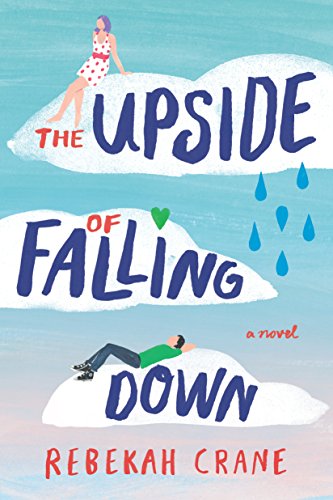 If your past were erased, who would you become? What choices would you make?
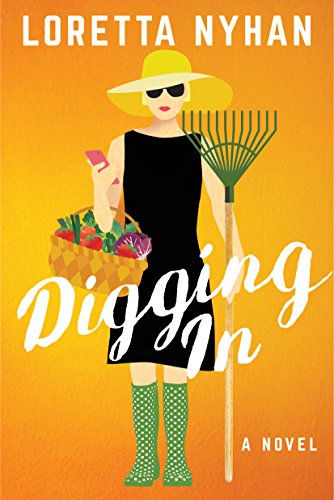 I inhaled this book in two days, it is just that much of a great read, managing to be heartfelt and funny while dealing with some pretty tough issues, like death of a spouse and ageism in the workplace.
 So many retellings (I'm thinking especially of Austen knock offs) try to slavishly recreate the plot of the original without really modernizing it, so they kind of fall flat. I love that Tyler doesn't fall into this trap. She takes elements of Shakespeare's The Taming of the Shrew, and reworks them in a contemporary idiom so that the result is a delightful read, quite funny, and a lot less sexist than the original.If your past were erased, who would you become? What choices would you make?I inhaled this book in two days, it is just that much of a great read, managing to be heartfelt and funny while dealing with some pretty tough issues, like death of a spouse and ageism in the workplace.So many retellings (I'm thinking especially of Austen knock offs) try to slavishly recreate the plot of the original without really modernizing it, so they kind of fall flat. I love that Tyler doesn't fall into this trap. She takes elements of Shakespeare's The Taming of the Shrew, and reworks them in a contemporary idiom so that the result is a delightful read, quite funny, and a lot less sexist than the original.
 I confess I wasn't much of a reader in my childhood. From age 4 to almost 9, I lived on a 100-acre farm (most of it forested), where I spent many happy afternoons imagining adventures with a host of imaginary friends, a few barn cats at my heels. Being cooped up inside looking at paper was the stuff of school, the stuff of have-to, must, and you'd better.... Out among the trees was the stuff of color, texture, and life of all kinds. The worlds my imagination built were more real to me than Dick and Jane, cursive, and George Washington.I confess I wasn't much of a reader in my childhood. From age 4 to almost 9, I lived on a 100-acre farm (most of it forested), where I spent many happy afternoons imagining adventures with a host of imaginary friends, a few barn cats at my heels. Being cooped up inside looking at paper was the stuff of school, the stuff of have-to, must, and you'd better.... Out among the trees was the stuff of color, texture, and life of all kinds. The worlds my imagination built were more real to me than Dick and Jane, cursive, and George Washington.
 One surprisingly helpful class from my undergrad days was a theatre course I took called "Basic Movement." In it, we learned some of the tools of the trade of acting--stances, carriage, gestures, playing to the audience, and of course, choreographed violence.
 One surprisingly helpful class from my undergrad days was a theatre course I took called "Basic Movement." In it, we learned some of the tools of the trade of acting--stances, carriage, gestures, playing to the audience, and of course, choreographed violence.


