Showing posts with label film reviews. Show all posts

Friday, February 8

If you haven't seen the BBC miniseries Wives and Daughters, based on the unfinished novel by Elizabeth Gaskell, I heartily recommend it. I found the story more accessible than Austen's works, perhaps because the social faux pas are more evident to a modern reader. I often feel I'm missing something when I read Austen--the manners so central to the comedy are a bit too removed from our own day.

The acting is really first rate. All the characters come across as full-orbed. The heroine, Molly, is virtuous but outspoken, trustworthy to a fault and perhaps a bit too attached to her father. The stepmother who enters the story is an interesting riff on the stereotype: she's a bit self-absorbed and small-minded, but she's more weak than anything else and never cruel. She fumbles at asserting her role as mistress of the house, coming across as a pitiable character. Along with the stepmother comes a daughter, Cynthia, who is also quite a mixed bag. She's beautiful, charming, free spirited and careless. Though she and Molly become fast friends, her charm and carelessness get her into sticky situations from which Molly loyally tries to rescue her. The hardest part of the story is when Molly crucifies her desires, standing back as the man she loves falls for Cynthia, who neither cherishes nor deserves his love.

The hero and main love interest, Roger, is also pretty unusual. Instead of a rakish, dashing fellow, or a romantic artist or poet, he's a naturalist. He spends his hours outdoors collecting insects and pond scum, then brings his finds inside to draw or examine under a microscope. He seems a far more iteresting hero than most men you'll find in women's literature. He's the guy Gilbert Blythe (Anne of Green Gables series) could be if L.M. Montgomery were better at writing men.

There's a strong undercurrent involving class issues. Most of the romances take place across class boundaries. Those who oppose the matches are often humbled later for their opinion. At one point, Molly repirmands the daughter of the most fabulously wealthy family in town, Lady Harriet, a young woman about 5-7 years her senior. Lady Harriet had confided that she's been invited the home of two middle class spinster sisters who she considers "quite ridiculous," and Molly chides her to not go if you're only going to gawk and laugh, adding that she dislikes hearing her class spoken of that way. Lady Harriet takes the rebuke in stride and her admiration for Molly grows to the point that she takes great pains to help her "protege" ever after. Lady Harriet's brother likewise admires Roger's first-class brain and becomes his benefactor. It was refreshing to see noblesse oblige working properly.

Most of all, I think Wives and Daughters is a fascinating character study in the effects of different parenting. Molly loses her mother at a young age, yet matures into a loyal, soft-hearted girl. Her foil and stepsister, Cynthia, loses her father at a young age. Yet Cynthia matures into a woman who is unable to feel deeply or make meaningful connections with people.

One would expect the motherless girl to fare worse, but Molly is more fully human. Gaskell’s point is that a child needs loving care, regardless of the sex of the parent who gives it.

Cynthia’s living mother treats her as a burden from the beginning of widowhood, sending Cynthia off to boarding school at age 4. Every school vacation, Cynthia is left in the care of strangers while her mother travels with the great families that employ her as governess.

The net effect of this continued neglect is a vanity and manipulativeness, someone who cannot ever turn off the charm for fear of rejection. Yet Cynthia is apt to reject others, three suitors in all in the course of the novel. She admits that she’s not really capable of love or deep feeling for others. Today I think Cynthia would be said to suffer from an attachment disorder.

Molly, on the other hand, is blessed to be educated at home by a loving governess. She lives in a community where the women watch out for her, take an interest in her growth, strive to keep up a relationship with her. Though her father is a busy country doctor in the age of nothing but house calls, he works to be as available as he can. Theirs is a relationship of nurture and friendship. Gaskell paints their intimacy by showing father and daughter kneeling at the fireside, making toasted cheese sandwiches and amiably talking about the day’s events.

When Molly’s father marries Cynthia’s mother, thinking it will help is “poor motherless girl,” Gaskell makes it clear that it’s far too late for Molly to be helped by a stepmother. Her good character is well formed by age 17, as is Cynthia’s weak character. A great tension of the story is whether either girl will be swayed by the new family circumstances so late in “childhood.”

What literary classics have you most enjoyed? What have you learned from them?
Friday, February 08, 2019 Laurel Garver
If you haven't seen the BBC miniseries Wives and Daughters, based on the unfinished novel by Elizabeth Gaskell, I heartily recommend it. I found the story more accessible than Austen's works, perhaps because the social faux pas are more evident to a modern reader. I often feel I'm missing something when I read Austen--the manners so central to the comedy are a bit too removed from our own day.

The acting is really first rate. All the characters come across as full-orbed. The heroine, Molly, is virtuous but outspoken, trustworthy to a fault and perhaps a bit too attached to her father. The stepmother who enters the story is an interesting riff on the stereotype: she's a bit self-absorbed and small-minded, but she's more weak than anything else and never cruel. She fumbles at asserting her role as mistress of the house, coming across as a pitiable character. Along with the stepmother comes a daughter, Cynthia, who is also quite a mixed bag. She's beautiful, charming, free spirited and careless. Though she and Molly become fast friends, her charm and carelessness get her into sticky situations from which Molly loyally tries to rescue her. The hardest part of the story is when Molly crucifies her desires, standing back as the man she loves falls for Cynthia, who neither cherishes nor deserves his love.

The hero and main love interest, Roger, is also pretty unusual. Instead of a rakish, dashing fellow, or a romantic artist or poet, he's a naturalist. He spends his hours outdoors collecting insects and pond scum, then brings his finds inside to draw or examine under a microscope. He seems a far more iteresting hero than most men you'll find in women's literature. He's the guy Gilbert Blythe (Anne of Green Gables series) could be if L.M. Montgomery were better at writing men.

There's a strong undercurrent involving class issues. Most of the romances take place across class boundaries. Those who oppose the matches are often humbled later for their opinion. At one point, Molly repirmands the daughter of the most fabulously wealthy family in town, Lady Harriet, a young woman about 5-7 years her senior. Lady Harriet had confided that she's been invited the home of two middle class spinster sisters who she considers "quite ridiculous," and Molly chides her to not go if you're only going to gawk and laugh, adding that she dislikes hearing her class spoken of that way. Lady Harriet takes the rebuke in stride and her admiration for Molly grows to the point that she takes great pains to help her "protege" ever after. Lady Harriet's brother likewise admires Roger's first-class brain and becomes his benefactor. It was refreshing to see noblesse oblige working properly.

Most of all, I think Wives and Daughters is a fascinating character study in the effects of different parenting. Molly loses her mother at a young age, yet matures into a loyal, soft-hearted girl. Her foil and stepsister, Cynthia, loses her father at a young age. Yet Cynthia matures into a woman who is unable to feel deeply or make meaningful connections with people.

One would expect the motherless girl to fare worse, but Molly is more fully human. Gaskell’s point is that a child needs loving care, regardless of the sex of the parent who gives it.

Cynthia’s living mother treats her as a burden from the beginning of widowhood, sending Cynthia off to boarding school at age 4. Every school vacation, Cynthia is left in the care of strangers while her mother travels with the great families that employ her as governess.

The net effect of this continued neglect is a vanity and manipulativeness, someone who cannot ever turn off the charm for fear of rejection. Yet Cynthia is apt to reject others, three suitors in all in the course of the novel. She admits that she’s not really capable of love or deep feeling for others. Today I think Cynthia would be said to suffer from an attachment disorder.

Molly, on the other hand, is blessed to be educated at home by a loving governess. She lives in a community where the women watch out for her, take an interest in her growth, strive to keep up a relationship with her. Though her father is a busy country doctor in the age of nothing but house calls, he works to be as available as he can. Theirs is a relationship of nurture and friendship. Gaskell paints their intimacy by showing father and daughter kneeling at the fireside, making toasted cheese sandwiches and amiably talking about the day’s events.

When Molly’s father marries Cynthia’s mother, thinking it will help is “poor motherless girl,” Gaskell makes it clear that it’s far too late for Molly to be helped by a stepmother. Her good character is well formed by age 17, as is Cynthia’s weak character. A great tension of the story is whether either girl will be swayed by the new family circumstances so late in “childhood.”

What literary classics have you most enjoyed? What have you learned from them?

Monday, September 22

Thanks to our host Alex Cavanaugh for coming up with this fun fest theme, "Underrated Treasure," in which we share a favorite movie, band/artist, TV show, or book (any or all categories). As my bio blurb over to the right says, I'm an indie film enthusiast, so I thought I'd talk about my very favorite indie film that I suspect many of you haven't heard of.

Film - Lars and the Real Girl (2007)

Available for streaming or on DVD

A young man purchases a life-sized, anatomically-correct doll off the Internet and is convinced she is real.

Sounds like a set up for a hilarious romp involving sexual deviancy, right? Prepare to be surprised, because from this bizarre premise comes one of the most touching, insightful, profound films about love and community I've ever seen. More accurately, I'd blurb it as "A small-town community rallies to help a man suffering from a delusion." But I guess that's not as sexy.

What I love most about this film is the psychological puzzle at its core. WHY does Lars suddenly develop a delusion? How have his past and present circumstances conspired to make him need this kind of extreme coping mechanism? Little by little we're given clues, beginning from the very first scene when Lars's pregnant sister-in-law invites him to breakfast, and he answers the door wearing a baby blanket like a scarf. The visual motif of the color pink is tied to the psychological puzzle. In true indie film fashion, we get all the information we need, bit by bit, until the cause of Lars's psychological issues becomes abundantly clear without the screenwriter ever resorting to a Hollywood-style bash-you-over-the-head pronouncement.

I also love what this film teaches about how communities could (and should) act when someone is hurting--by taking the humble path of getting down into the ditch with that hurting person. The local Lutheran church, full of very ordinary, no-frills Midwestern folk are at the center, asking, "how can we help?" and, with absolutely no irony, "what would Jesus do?"

Here's the trailer:


Have you seen this underrated treasure? Have I convinced you to give it a try?
Monday, September 22, 2014 Laurel Garver
Thanks to our host Alex Cavanaugh for coming up with this fun fest theme, "Underrated Treasure," in which we share a favorite movie, band/artist, TV show, or book (any or all categories). As my bio blurb over to the right says, I'm an indie film enthusiast, so I thought I'd talk about my very favorite indie film that I suspect many of you haven't heard of.

Film - Lars and the Real Girl (2007)

Available for streaming or on DVD

A young man purchases a life-sized, anatomically-correct doll off the Internet and is convinced she is real.

Sounds like a set up for a hilarious romp involving sexual deviancy, right? Prepare to be surprised, because from this bizarre premise comes one of the most touching, insightful, profound films about love and community I've ever seen. More accurately, I'd blurb it as "A small-town community rallies to help a man suffering from a delusion." But I guess that's not as sexy.

What I love most about this film is the psychological puzzle at its core. WHY does Lars suddenly develop a delusion? How have his past and present circumstances conspired to make him need this kind of extreme coping mechanism? Little by little we're given clues, beginning from the very first scene when Lars's pregnant sister-in-law invites him to breakfast, and he answers the door wearing a baby blanket like a scarf. The visual motif of the color pink is tied to the psychological puzzle. In true indie film fashion, we get all the information we need, bit by bit, until the cause of Lars's psychological issues becomes abundantly clear without the screenwriter ever resorting to a Hollywood-style bash-you-over-the-head pronouncement.

I also love what this film teaches about how communities could (and should) act when someone is hurting--by taking the humble path of getting down into the ditch with that hurting person. The local Lutheran church, full of very ordinary, no-frills Midwestern folk are at the center, asking, "how can we help?" and, with absolutely no irony, "what would Jesus do?"

Here's the trailer:


Have you seen this underrated treasure? Have I convinced you to give it a try?

Tuesday, May 13

The Hobbit: Desolation of Smaug has such a mockable title, it's not much of a surprise Tolkien fans and film critics largely panned it. I'd honestly had no intention of seeing it, but when there was a free screening on the campus where my hubby teaches, curiosity got the better of me. Sure, this was the most non-canonical Tolkien film in Jackson's oeuvre so far, but did that aspect lead to the negative reviews?

Actually, no. I'd argue that poor storytelling is what killed the film--at least for me and many critics. (There's no accounting for the ticket-buying public, which seems to love nonsensical, overwrought action flicks--witness the box office power of the Transformers films.)

The beauty of being a writer is that scriptwriting failures are educational gold. Below are a few storytelling lessons I gleaned from DoS. (Sorry to resort to a goofy abbreviation, but it's taking all my self control to not make three dozen bad puns on the terrible title).

1. Whose story is it anyway?


I honestly could never quite sort out who the film's protagonist is supposed to be.

It might be Thorin Oakenshield, whose backstory opens the film. He's kingly, tormented, and kind of hot in a hipster-meets-80s-hair-band way. We learn in this backstory that Thorin has not only a quest--to regain the lost assets of his kingdom--but a new enemy, the Necromancer, who's keen to stop him, though we have no clue why. With both a quest and an enemy, Thorin seems like he ought to be the story's hero. However, the climax of the film focuses on Bilbo Baggins, who goes into the dragon's lair to face this fierce enemy, while Thorin and his entourage hang back in safety.

Yet if Bilbo is the hero, what exactly is his quest? What does he set out to achieve? We're never given much information about what motivates him, other than that Gandalf told him to go along with this weird assortment of dwarves. He might be hungry to prove himself valiant, or greedy for gain, or simply sick to death of his boring life in Hobbiton and itching for thrills. We just don't know, because we rarely get very close to him, just like we don't get close to Thorin.

Takeaway: Have a clear protagonist with a goal and motivations to meet that goal, both surface drives and deeper inner drives. Take the time to show why the protagonist is motivated. Make sure the protagonist is intimately involved in the climax moment.

2. Why are you chasing me?


Apparently the scriptwriters thought it wasn't going to be an exciting enough quest for a party of thirteen somewhat silly and unskilled little dudes to make it through the treacherous depths of Mirkwood, past Shelob's redneck cousins, in order to face a fire-breathing enemy that wiped out an entire city single-handed. No, they clearly needed to be chased the entire time by bloodthirsty, gholish orcs who are pursuing for no obvious reason.

The orc chase not only adds nothing, it actually takes away from the story because it feels to darned random. There's no solid reason that the Necromancer opposes Thorin. He supposedly doesn't want the dwarves to become strong again, but WHY? Does he want to get to the gold first so that he can be rich beyond dreams and powerful beyond dreams? The film would make a heck of a lot more sense if he did. But we're never given that much information about the Necromancer's nefarious plot. As the film drags on, it seems he doesn't really have one. And nothing is more of a waste of time than an enemy with no real goals.

Takeaway: Adding random enemies subtracts from the story's core tension, so don't dilute your main plotline with characters who have too little reason to be there. Invest in showing your hero/es unequal to the task being attempted (injuries or hardships work nicely here) or raise the stakes of what they'll lose if they fail.

Antagonists must have a goal. Vague malevolence is about as scary as flatulence--it stinks at first, but dissipates quickly with no lasting effects. 

What are your thoughts about creating a clear protagonist and a goal-driven antagonist? Can you think of other examples of films that fail to create solid characters for these two key roles?
Tuesday, May 13, 2014 Laurel Garver
The Hobbit: Desolation of Smaug has such a mockable title, it's not much of a surprise Tolkien fans and film critics largely panned it. I'd honestly had no intention of seeing it, but when there was a free screening on the campus where my hubby teaches, curiosity got the better of me. Sure, this was the most non-canonical Tolkien film in Jackson's oeuvre so far, but did that aspect lead to the negative reviews?

Actually, no. I'd argue that poor storytelling is what killed the film--at least for me and many critics. (There's no accounting for the ticket-buying public, which seems to love nonsensical, overwrought action flicks--witness the box office power of the Transformers films.)

The beauty of being a writer is that scriptwriting failures are educational gold. Below are a few storytelling lessons I gleaned from DoS. (Sorry to resort to a goofy abbreviation, but it's taking all my self control to not make three dozen bad puns on the terrible title).

1. Whose story is it anyway?


I honestly could never quite sort out who the film's protagonist is supposed to be.

It might be Thorin Oakenshield, whose backstory opens the film. He's kingly, tormented, and kind of hot in a hipster-meets-80s-hair-band way. We learn in this backstory that Thorin has not only a quest--to regain the lost assets of his kingdom--but a new enemy, the Necromancer, who's keen to stop him, though we have no clue why. With both a quest and an enemy, Thorin seems like he ought to be the story's hero. However, the climax of the film focuses on Bilbo Baggins, who goes into the dragon's lair to face this fierce enemy, while Thorin and his entourage hang back in safety.

Yet if Bilbo is the hero, what exactly is his quest? What does he set out to achieve? We're never given much information about what motivates him, other than that Gandalf told him to go along with this weird assortment of dwarves. He might be hungry to prove himself valiant, or greedy for gain, or simply sick to death of his boring life in Hobbiton and itching for thrills. We just don't know, because we rarely get very close to him, just like we don't get close to Thorin.

Takeaway: Have a clear protagonist with a goal and motivations to meet that goal, both surface drives and deeper inner drives. Take the time to show why the protagonist is motivated. Make sure the protagonist is intimately involved in the climax moment.

2. Why are you chasing me?


Apparently the scriptwriters thought it wasn't going to be an exciting enough quest for a party of thirteen somewhat silly and unskilled little dudes to make it through the treacherous depths of Mirkwood, past Shelob's redneck cousins, in order to face a fire-breathing enemy that wiped out an entire city single-handed. No, they clearly needed to be chased the entire time by bloodthirsty, gholish orcs who are pursuing for no obvious reason.

The orc chase not only adds nothing, it actually takes away from the story because it feels to darned random. There's no solid reason that the Necromancer opposes Thorin. He supposedly doesn't want the dwarves to become strong again, but WHY? Does he want to get to the gold first so that he can be rich beyond dreams and powerful beyond dreams? The film would make a heck of a lot more sense if he did. But we're never given that much information about the Necromancer's nefarious plot. As the film drags on, it seems he doesn't really have one. And nothing is more of a waste of time than an enemy with no real goals.

Takeaway: Adding random enemies subtracts from the story's core tension, so don't dilute your main plotline with characters who have too little reason to be there. Invest in showing your hero/es unequal to the task being attempted (injuries or hardships work nicely here) or raise the stakes of what they'll lose if they fail.

Antagonists must have a goal. Vague malevolence is about as scary as flatulence--it stinks at first, but dissipates quickly with no lasting effects. 

What are your thoughts about creating a clear protagonist and a goal-driven antagonist? Can you think of other examples of films that fail to create solid characters for these two key roles?

Wednesday, October 10

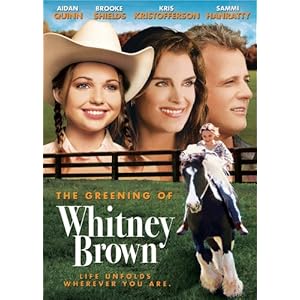
Yesterday afternoon my daughter and I watched what I believed would be a cute tween film, The Greening of Whitney Brown. About ten minutes in, I felt bad for Brooke Shields and Aidan Quinn for having their names attached to this clunker full of goofy, poorly motivated plot turns and thin characterization.

The biggest problem, according to my daughter, is that the story is "just like Cars." What does she mean? The story features a protagonist who is by all accounts a winner--competent, worshiped, healthy, wealthy. But he/she is simultaneously arrogant, impatient, unkind, boastful, rude. All the things that St. Paul in I Corinthians 13 says that love is NOT.

Both of these stories are based on the Greek tragedy plot, in which a hero full of hubris (false pride) suffers for it and is humbled, which leads to deep personal change, or to death if he refuses to change.

The tricky thing is, a certain segment of the audience will not connect with a Greek tragic hero. Their sense of a good story is shaped by the Judeo-Christian plot of the Messianic hero, figured in Moses and David, Jesus and Peter. These guys come from humble beginnings, get kicked around a lot, sacrifice for others and in the end are exalted.

Interestingly, both plot types assume that proud=bad and humble=good. But the Greek tragic hero method approaches the "lesson" from a punitive stance (punishing the wrong), while the Messianic hero method does so from a reward stance (honoring the right).

What does this mean for your writing? Be aware that getting your audience to connect with a hero who's arrogant and must get his comeuppance is extremely hard to pull off in certain genres. The only YA I've read that does this really well is Before I Fall by Lauren Oliver. You'd do well to study how she achieves an unlikable queen bee's metamorphosis into a humble and heroic figure.

I think the key to Oliver's success is that she sows seeds of hope for change into the characterization from the beginning. Neither Lightning McQueen nor Whitney Brown show any signs of having an identity apart from arrogantly putting others down. You want them to fail, and it's hard to hang onto audience when they wish nothing but bad for your protagonist.

Ramble news
Today, I'm over at Play off the Page, where Mary Aalgaard interviewed me about inspirations for Never Gone and why I mixed ghosts and God in the story.

Do you prefer to read about Greek tragic heroes or Messianic heroes? Can you think of other Greek tragic hero plots that worked well?
Wednesday, October 10, 2012 Laurel Garver
Yesterday afternoon my daughter and I watched what I believed would be a cute tween film, The Greening of Whitney Brown. About ten minutes in, I felt bad for Brooke Shields and Aidan Quinn for having their names attached to this clunker full of goofy, poorly motivated plot turns and thin characterization.

The biggest problem, according to my daughter, is that the story is "just like Cars." What does she mean? The story features a protagonist who is by all accounts a winner--competent, worshiped, healthy, wealthy. But he/she is simultaneously arrogant, impatient, unkind, boastful, rude. All the things that St. Paul in I Corinthians 13 says that love is NOT.

Both of these stories are based on the Greek tragedy plot, in which a hero full of hubris (false pride) suffers for it and is humbled, which leads to deep personal change, or to death if he refuses to change.

The tricky thing is, a certain segment of the audience will not connect with a Greek tragic hero. Their sense of a good story is shaped by the Judeo-Christian plot of the Messianic hero, figured in Moses and David, Jesus and Peter. These guys come from humble beginnings, get kicked around a lot, sacrifice for others and in the end are exalted.

Interestingly, both plot types assume that proud=bad and humble=good. But the Greek tragic hero method approaches the "lesson" from a punitive stance (punishing the wrong), while the Messianic hero method does so from a reward stance (honoring the right).

What does this mean for your writing? Be aware that getting your audience to connect with a hero who's arrogant and must get his comeuppance is extremely hard to pull off in certain genres. The only YA I've read that does this really well is Before I Fall by Lauren Oliver. You'd do well to study how she achieves an unlikable queen bee's metamorphosis into a humble and heroic figure.

I think the key to Oliver's success is that she sows seeds of hope for change into the characterization from the beginning. Neither Lightning McQueen nor Whitney Brown show any signs of having an identity apart from arrogantly putting others down. You want them to fail, and it's hard to hang onto audience when they wish nothing but bad for your protagonist.

Ramble news
Today, I'm over at Play off the Page, where Mary Aalgaard interviewed me about inspirations for Never Gone and why I mixed ghosts and God in the story.

Do you prefer to read about Greek tragic heroes or Messianic heroes? Can you think of other Greek tragic hero plots that worked well?

Monday, July 11

Today I have a guest post from my husband Joel, an assistant professor of philosophy at La Salle University who teaches a course, Harry Potter and Philosophy. He also contributed a chapter to a collection of "philosophy for beginners" essays that engage Rowling's world--The Ultimate Harry Potter and Philosophy: Hogwarts for Muggles.

Because of this, his university PR department often send reporters his way that are covering Harry Potter topics. Joel kindly let me post his response to a reporter at the Hartford Courant (not sure when/if his comments will appear in the planned article).

She had asked,
"How does the experience of readers today differ from the generation of readers who were growing up as the books first came out?"

Joel replied:

I've taught Harry Potter to college students who grew up with them and I have an elementary school-age daughter who is now reading through the books, so I've seen both generations of readers and movie-watchers.

It seems to me that Rowling always intended the books to be taken slowly, over an extended time -- and that is how we are guiding our daughter in her reading. The books are intended to grow up with the children who read them, as they in fact did by necessity with the first generation of readers.

After all, with each successive book the volumes get longer, the plots become increasingly more complex, the main characters grow up, the wizarding world becomes darker and scarier, the stakes become higher, and the themes of the books -- love, death, relationships, sacrifice -- become more mature. There are matters to be puzzled out, problems to be pondered, and realizations to be fought for.

So, these are not books meant to be read by a precocious youngster all in a single summer. Rather, the volumes reward delayed gratification and re-reading. A rapid read will miss too much and fail to absorb all that is going on.

This seems to me part of the genius of Rowling's work -- taking young readers, carrying them along through the character's experiences, and growing them up and helping them mature right along with Harry, Ron, and Hermione. The magic of that sort of literary and personal transformation requires time and patient reading.

Another difference today is that many readers of the books will have begun with the films rather than the books. For those of us who read the books first and then viewed the films afterwards, there was always a certain disappointment with the films. Given the limits and strictures of film-making, they could not help but fall short of the rich tapestry of Rowling's world, the depth of her characterizations, and the complexity of her plots.

The relationship between the films and the books is now reversed for many children (and adults!). There's nothing wrong with that in principle and I'm sure new readers who have seen the films will be impressed by how much of the books is left off the screen.

But what will be lost in reading the books after the films is the sense of discovery the first readers enjoyed -- getting to know these characters and imagining Rowling's world. For many new readers, Hogwarts will always be the place director Chris Columbus imagined and Harry will always be Daniel Radcliffe. Furthermore, these new readers will also lose the experience of being surprised again and again by plot twists, mistaken identities, and startling revelations. And that's a sad loss, I think.

What was your experience with reading the books and watching the films? What are your thoughts on taking the series slowly, books first?
Monday, July 11, 2011 Laurel Garver
Today I have a guest post from my husband Joel, an assistant professor of philosophy at La Salle University who teaches a course, Harry Potter and Philosophy. He also contributed a chapter to a collection of "philosophy for beginners" essays that engage Rowling's world--The Ultimate Harry Potter and Philosophy: Hogwarts for Muggles.

Because of this, his university PR department often send reporters his way that are covering Harry Potter topics. Joel kindly let me post his response to a reporter at the Hartford Courant (not sure when/if his comments will appear in the planned article).

She had asked,
"How does the experience of readers today differ from the generation of readers who were growing up as the books first came out?"

Joel replied:

I've taught Harry Potter to college students who grew up with them and I have an elementary school-age daughter who is now reading through the books, so I've seen both generations of readers and movie-watchers.

It seems to me that Rowling always intended the books to be taken slowly, over an extended time -- and that is how we are guiding our daughter in her reading. The books are intended to grow up with the children who read them, as they in fact did by necessity with the first generation of readers.

After all, with each successive book the volumes get longer, the plots become increasingly more complex, the main characters grow up, the wizarding world becomes darker and scarier, the stakes become higher, and the themes of the books -- love, death, relationships, sacrifice -- become more mature. There are matters to be puzzled out, problems to be pondered, and realizations to be fought for.

So, these are not books meant to be read by a precocious youngster all in a single summer. Rather, the volumes reward delayed gratification and re-reading. A rapid read will miss too much and fail to absorb all that is going on.

This seems to me part of the genius of Rowling's work -- taking young readers, carrying them along through the character's experiences, and growing them up and helping them mature right along with Harry, Ron, and Hermione. The magic of that sort of literary and personal transformation requires time and patient reading.

Another difference today is that many readers of the books will have begun with the films rather than the books. For those of us who read the books first and then viewed the films afterwards, there was always a certain disappointment with the films. Given the limits and strictures of film-making, they could not help but fall short of the rich tapestry of Rowling's world, the depth of her characterizations, and the complexity of her plots.

The relationship between the films and the books is now reversed for many children (and adults!). There's nothing wrong with that in principle and I'm sure new readers who have seen the films will be impressed by how much of the books is left off the screen.

But what will be lost in reading the books after the films is the sense of discovery the first readers enjoyed -- getting to know these characters and imagining Rowling's world. For many new readers, Hogwarts will always be the place director Chris Columbus imagined and Harry will always be Daniel Radcliffe. Furthermore, these new readers will also lose the experience of being surprised again and again by plot twists, mistaken identities, and startling revelations. And that's a sad loss, I think.

What was your experience with reading the books and watching the films? What are your thoughts on taking the series slowly, books first?

Friday, January 7

If, like me, you prefer to curl up on the couch rather than trek through the snow on a winter weekend, chances are some movie recommendations might be welcome. This week, my theme is SciFi suspense films that examine the ethical use of technology (no goofy aliens in these, I promise).

Moon (2009)
Description from IMDB: "Sam Bell has a three year contract to work for Lunar Industries. For the contract's entire duration, he is the sole employee based at their lunar station. His primary job responsibility is to harvest and periodically rocket back to Earth supplies of helium-3, the current clean and abundant fuel used on Earth. There is no direct communication link available between the lunar station and Earth, so his only direct real-time interaction is with GERTY, the intelligent computer whose function is to attend to his day to day needs. With such little human contact and all of it indirect, he feels that three years is far too long to be so isolated; he knows he is beginning to hallucinate as the end of his three years approaches. All he wants is to return to Earth to be with his wife Tess and their infant daughter Eve, who was born just prior to his leaving for this job. With two weeks to go, he gets into an accident at one of the mechanical harvesters and is rendered unconscious..."

The synopsis trails off there to protect folks from spoilers. All I can tell you is that after the accident, things get weird and Sam begins to question what's really going on at this station and why. If you've seen the space classics 2001 and Solaris (either the original Russian or the American remake with George Clooney), you'll definitely feel resonances.


Gattaca (1997)
Description from IMDB: "In the not-too-distant future, a less-than-perfect man wants to travel to the stars. Society has categorized Vincent Freeman as less than suitable given his genetic make-up and he has become one of the underclass of humans that are only useful for menial jobs. To move ahead, he assumes the identity of Jerome Morrow, a perfect genetic specimen who is a paraplegic as a result of a car accident. With professional advice, Vincent learns to deceive DNA and urine sample testing. Just when he is finally scheduled for a space mission, his program director is killed and the police begin an investigation, jeopardizing his secret. "

This film features A-list stars including Jude Law, Ethan Hawke and Uma Thurman, but I know few people who've seen it. It's visually stunning and tightly plotted, with amazing visual motifs running through, such as a spiral staircase gesturing toward the DNA that determines fates in this world. My husband wrote a wonderful article examining themes and motifs in the film. You can read it HERE.


Cordwainer Smith stories
If you're in more of a reading mood, I recommend The Rediscovery of Man: Complete Short Science Fiction of Cordwainer Smith. Smith was a pioneer in writing SciFi about bioethics, especially how cyber enhancements and assisted evolution of animals might effect a society.

Here's what Amazon says:
"These are futuristic tales told as myth, as legend, as a history of a distant and decayed past. Written in an unadorned voice reminiscent of James Tiptree Jr., Smith's visions are dark and pessimistic, clearly a contrast from the mood of SF in his time; in the 1940s, '50s, and '60s it was still thought that science would cure the ills of humanity. In Smith's tales, space travel takes a horrendous toll on those who pilot the ships through the void. After reaching perfection, the lack of strife stifles humanity to a point of decay and stagnation; the Instrumentality of Mankind arises in order to stir things up. Many stories describe moral dilemmas involving the humanity of the Underpeople, beings evolved from animals into humanlike forms."

Have a great weekend!

Any other SciFi films on this theme you can recommend? Seen any good films that made you think?
Friday, January 07, 2011 Laurel Garver
If, like me, you prefer to curl up on the couch rather than trek through the snow on a winter weekend, chances are some movie recommendations might be welcome. This week, my theme is SciFi suspense films that examine the ethical use of technology (no goofy aliens in these, I promise).

Moon (2009)
Description from IMDB: "Sam Bell has a three year contract to work for Lunar Industries. For the contract's entire duration, he is the sole employee based at their lunar station. His primary job responsibility is to harvest and periodically rocket back to Earth supplies of helium-3, the current clean and abundant fuel used on Earth. There is no direct communication link available between the lunar station and Earth, so his only direct real-time interaction is with GERTY, the intelligent computer whose function is to attend to his day to day needs. With such little human contact and all of it indirect, he feels that three years is far too long to be so isolated; he knows he is beginning to hallucinate as the end of his three years approaches. All he wants is to return to Earth to be with his wife Tess and their infant daughter Eve, who was born just prior to his leaving for this job. With two weeks to go, he gets into an accident at one of the mechanical harvesters and is rendered unconscious..."

The synopsis trails off there to protect folks from spoilers. All I can tell you is that after the accident, things get weird and Sam begins to question what's really going on at this station and why. If you've seen the space classics 2001 and Solaris (either the original Russian or the American remake with George Clooney), you'll definitely feel resonances.


Gattaca (1997)
Description from IMDB: "In the not-too-distant future, a less-than-perfect man wants to travel to the stars. Society has categorized Vincent Freeman as less than suitable given his genetic make-up and he has become one of the underclass of humans that are only useful for menial jobs. To move ahead, he assumes the identity of Jerome Morrow, a perfect genetic specimen who is a paraplegic as a result of a car accident. With professional advice, Vincent learns to deceive DNA and urine sample testing. Just when he is finally scheduled for a space mission, his program director is killed and the police begin an investigation, jeopardizing his secret. "

This film features A-list stars including Jude Law, Ethan Hawke and Uma Thurman, but I know few people who've seen it. It's visually stunning and tightly plotted, with amazing visual motifs running through, such as a spiral staircase gesturing toward the DNA that determines fates in this world. My husband wrote a wonderful article examining themes and motifs in the film. You can read it HERE.


Cordwainer Smith stories
If you're in more of a reading mood, I recommend The Rediscovery of Man: Complete Short Science Fiction of Cordwainer Smith. Smith was a pioneer in writing SciFi about bioethics, especially how cyber enhancements and assisted evolution of animals might effect a society.

Here's what Amazon says:
"These are futuristic tales told as myth, as legend, as a history of a distant and decayed past. Written in an unadorned voice reminiscent of James Tiptree Jr., Smith's visions are dark and pessimistic, clearly a contrast from the mood of SF in his time; in the 1940s, '50s, and '60s it was still thought that science would cure the ills of humanity. In Smith's tales, space travel takes a horrendous toll on those who pilot the ships through the void. After reaching perfection, the lack of strife stifles humanity to a point of decay and stagnation; the Instrumentality of Mankind arises in order to stir things up. Many stories describe moral dilemmas involving the humanity of the Underpeople, beings evolved from animals into humanlike forms."

Have a great weekend!

Any other SciFi films on this theme you can recommend? Seen any good films that made you think?

Wednesday, November 3

Getting out from under a work deadline has been incredibly freeing. And so has committing myself to NaBalWriMo, my experiment in "filling up" in a period of burnout.

I got in a bike ride with hobbit girl yesterday and she was quite impressed, since I haven't ridden in over a decade. That old adage about never forgetting how to ride is totally true. My muscles were remembering all my best bike memories. The summer between eighth and ninth grade, for example, I biked 10 miles nearly every day going to visit my BF Becky and her new horse, Chess. I liked to imagine my silver 10-speed was a dapple grey gelding named Strider. Unlike Chess, he never tried to throw me. Chess was green-broke, and I don't know what Becky's parents were thinking buying such an animal for a 14-y0.

But I digress. And I have to say it's an exceptionally good sign I'm able to do so. A week ago I was so fried, I could not have called up a memory from that era.

I did some quality writing yesterday on a scene I've been stuck on for ages. As Anne Lamott said, sometimes you just have to try things. Four hundred words later, I feel like energy is coming back in this project I'd begun to despair about.

Film time with hubby was the most surprising part of the day. We'd had this Argentinian Netflix pick "The Secret in Their Eyes" sitting around for two weeks unwatched. The fact it was about a writer researching and writing a novel appealed to me. The description on the sleeve was rather offputting, though:

"A startling discovery comes to light for retired Argentine criminal investigator Benjamín Espósito (Ricardo Darín) as he pens a biographical novel about the unsolved case of a young newlywed's brutal r*pe and murder years ago. Past and present intertwine for Espósito and colleague Irene Menéndez Hastings (Soledad Villamil) in director Juan José Campanella's Oscar-winning character study in which justice, pain and love collide."

I generally avoid movies with the word "brutal" anywhere in the description. I have to say, however, that this film approached a heinous crime with such sensitivity and emotional beauty. What matters is how deeply concerned the protagonist is with seeing justice served for the victim and the husband she left behind.

As a writer, I was especially interested in the protagonist's grappling with the aesthetic and ethical implications of fictionally "doing justice" to this case that has haunted and shaped his life.

The cinematography draws you in right away. Arty scenes suddenly cut to Benjamín crossing out lines and crumpling pages. He tries opening after opening--something I could totally relate to, even if my genre isn't crime fiction.

The film switches back and forth in time. In the present, a retired Benjamín writes and researches his novel and tries to make sense of his past. In flashbacks, younger Benjamín the legal counselor gets drawn into a case that is bungled by his superiors. He and a colleague (to whom he's obviously attracted) work to solve the crime and bring the killer to justice.

Justice, and how it is intertwined with love and fear (and love with fear) becomes the thematic thread linking the case, Benjamín's novel and Benjamín's search for meaning as he enters old age. Several very clever literary leitmotifs echo among the story lines. In the end, Benjamín must learn to reinterpret and re-narrate his own life. It's a powerful picture of how writing shapes the writer.
Have you tried something new lately? What pleasant surprises have resulted?
Wednesday, November 03, 2010 Laurel Garver
Getting out from under a work deadline has been incredibly freeing. And so has committing myself to NaBalWriMo, my experiment in "filling up" in a period of burnout.

I got in a bike ride with hobbit girl yesterday and she was quite impressed, since I haven't ridden in over a decade. That old adage about never forgetting how to ride is totally true. My muscles were remembering all my best bike memories. The summer between eighth and ninth grade, for example, I biked 10 miles nearly every day going to visit my BF Becky and her new horse, Chess. I liked to imagine my silver 10-speed was a dapple grey gelding named Strider. Unlike Chess, he never tried to throw me. Chess was green-broke, and I don't know what Becky's parents were thinking buying such an animal for a 14-y0.

But I digress. And I have to say it's an exceptionally good sign I'm able to do so. A week ago I was so fried, I could not have called up a memory from that era.

I did some quality writing yesterday on a scene I've been stuck on for ages. As Anne Lamott said, sometimes you just have to try things. Four hundred words later, I feel like energy is coming back in this project I'd begun to despair about.

Film time with hubby was the most surprising part of the day. We'd had this Argentinian Netflix pick "The Secret in Their Eyes" sitting around for two weeks unwatched. The fact it was about a writer researching and writing a novel appealed to me. The description on the sleeve was rather offputting, though:

"A startling discovery comes to light for retired Argentine criminal investigator Benjamín Espósito (Ricardo Darín) as he pens a biographical novel about the unsolved case of a young newlywed's brutal r*pe and murder years ago. Past and present intertwine for Espósito and colleague Irene Menéndez Hastings (Soledad Villamil) in director Juan José Campanella's Oscar-winning character study in which justice, pain and love collide."

I generally avoid movies with the word "brutal" anywhere in the description. I have to say, however, that this film approached a heinous crime with such sensitivity and emotional beauty. What matters is how deeply concerned the protagonist is with seeing justice served for the victim and the husband she left behind.

As a writer, I was especially interested in the protagonist's grappling with the aesthetic and ethical implications of fictionally "doing justice" to this case that has haunted and shaped his life.

The cinematography draws you in right away. Arty scenes suddenly cut to Benjamín crossing out lines and crumpling pages. He tries opening after opening--something I could totally relate to, even if my genre isn't crime fiction.

The film switches back and forth in time. In the present, a retired Benjamín writes and researches his novel and tries to make sense of his past. In flashbacks, younger Benjamín the legal counselor gets drawn into a case that is bungled by his superiors. He and a colleague (to whom he's obviously attracted) work to solve the crime and bring the killer to justice.

Justice, and how it is intertwined with love and fear (and love with fear) becomes the thematic thread linking the case, Benjamín's novel and Benjamín's search for meaning as he enters old age. Several very clever literary leitmotifs echo among the story lines. In the end, Benjamín must learn to reinterpret and re-narrate his own life. It's a powerful picture of how writing shapes the writer.
Have you tried something new lately? What pleasant surprises have resulted?

Friday, May 28

Since it's a holiday weekend (for us Yanks at least), I thought I'd wait to pick up the overwriting series next week.

There's nothing like a long weekend to lounge about watching movies (between the picnics and family gatherings). If you're looking for recommendations, here are a few quick picks for your weekend entertainment, all from about three years ago and available on DVD.

The Prestige
Synopsis (from IMDB): A mysterious story of two magicians whose intense rivalry leads them on a life-long battle for supremacy -- full of obsession, deceit and jealousy with dangerous and deadly consequences. From the time that they first met as young magicians on the rise, Robert Angier and Alfred Borden were competitors. However, their friendly competition evolves into a bitter rivalry making them fierce enemies-for-life and consequently jeopardizing the lives of everyone around them. Set against the backdrop of turn-of-the-century London.

My take: Absolutely brilliant film about rivalry and deception among illusionists. The flow of the plot isn't strictly linear, so it requires some effort to follow on the first viewing. I found that the film got better and better with repeated viewings; each time I picked up new clues I'd missed before.

Unlike "The Illusionist," which was released around the same time, this one doesn't insult your intelligence by revealing the entire trick of the plot. That's what's so beautiful--I woke up in the middle of the night realizing the deepest rivalry isn't the one given all the attention. Talk about misdirection! That tie of form to content blew me away.

Once
Synopsis (from IMDB): An (unnamed) Guy is a Dublin guitarist/singer-songwriter who makes a living by fixing vacuum cleaners in his Dad's Hoover repair shop by day, and singing and playing for money on the Dublin streets by night. An (unnamed) Girl is a Czech who plays piano when she gets a chance, and does odd jobs by day and takes care of her mom and her daughter by night. Guy meets Girl, and they get to know each other as the Girl helps the Guy to put together a demo disc that he can take to London in hope of landing a music contract. During the same several day period, the Guy and the Girl work through their past loves, and reveal their budding love for one another, through their songs.

My take: This film starts so quietly and sucks you in entirely. I don't think I've ever been so emotionally undone by a film. Beautiful and powerful in its slow, subtle storyline and haunting music. It's filmed like the Danish Dogme films "Italian for Beginners" and others--hand-held cameras, ambient sounds and performances for the "soundtrack." It just made the emotional impact of the story all the stronger because it's so NOT Hollywood and felt all the more real and poignant.

In the Land of Women
Synopsis (from IMDB): His world in complete disorder after his break-up with a famous actress, Carter, a young script writer, goes to suburban Detroit to care for his sickly Grandmother and heal his broken heart. Along the way he forms a special bond with the family that lives across from his Grandma, and changes the life of each woman. They, in turn, help him find his way.

My take: I really liked Carter's character arc in this. He starts out pie-eyed about women, tending to project his fantasies on them (his job keeps him stuck in this mode). He gradually begins to know himself and females better after a break up, and spending time with three generations of females--his grandmother, his 40-something neighbor and her teen daughter. There's some great dialogue as he spends time with these women and they open up parts of him that need to be nourished and matured. That he tries to get romantic with age-inappropriate partners fits his fatal flaw and finally compels needed change.

Do any of these appeal to you? Why or why not?
Any special plans this weekend? Will you try to write or take a vacation?
Friday, May 28, 2010 Laurel Garver
Since it's a holiday weekend (for us Yanks at least), I thought I'd wait to pick up the overwriting series next week.

There's nothing like a long weekend to lounge about watching movies (between the picnics and family gatherings). If you're looking for recommendations, here are a few quick picks for your weekend entertainment, all from about three years ago and available on DVD.

The Prestige
Synopsis (from IMDB): A mysterious story of two magicians whose intense rivalry leads them on a life-long battle for supremacy -- full of obsession, deceit and jealousy with dangerous and deadly consequences. From the time that they first met as young magicians on the rise, Robert Angier and Alfred Borden were competitors. However, their friendly competition evolves into a bitter rivalry making them fierce enemies-for-life and consequently jeopardizing the lives of everyone around them. Set against the backdrop of turn-of-the-century London.

My take: Absolutely brilliant film about rivalry and deception among illusionists. The flow of the plot isn't strictly linear, so it requires some effort to follow on the first viewing. I found that the film got better and better with repeated viewings; each time I picked up new clues I'd missed before.

Unlike "The Illusionist," which was released around the same time, this one doesn't insult your intelligence by revealing the entire trick of the plot. That's what's so beautiful--I woke up in the middle of the night realizing the deepest rivalry isn't the one given all the attention. Talk about misdirection! That tie of form to content blew me away.

Once
Synopsis (from IMDB): An (unnamed) Guy is a Dublin guitarist/singer-songwriter who makes a living by fixing vacuum cleaners in his Dad's Hoover repair shop by day, and singing and playing for money on the Dublin streets by night. An (unnamed) Girl is a Czech who plays piano when she gets a chance, and does odd jobs by day and takes care of her mom and her daughter by night. Guy meets Girl, and they get to know each other as the Girl helps the Guy to put together a demo disc that he can take to London in hope of landing a music contract. During the same several day period, the Guy and the Girl work through their past loves, and reveal their budding love for one another, through their songs.

My take: This film starts so quietly and sucks you in entirely. I don't think I've ever been so emotionally undone by a film. Beautiful and powerful in its slow, subtle storyline and haunting music. It's filmed like the Danish Dogme films "Italian for Beginners" and others--hand-held cameras, ambient sounds and performances for the "soundtrack." It just made the emotional impact of the story all the stronger because it's so NOT Hollywood and felt all the more real and poignant.

In the Land of Women
Synopsis (from IMDB): His world in complete disorder after his break-up with a famous actress, Carter, a young script writer, goes to suburban Detroit to care for his sickly Grandmother and heal his broken heart. Along the way he forms a special bond with the family that lives across from his Grandma, and changes the life of each woman. They, in turn, help him find his way.

My take: I really liked Carter's character arc in this. He starts out pie-eyed about women, tending to project his fantasies on them (his job keeps him stuck in this mode). He gradually begins to know himself and females better after a break up, and spending time with three generations of females--his grandmother, his 40-something neighbor and her teen daughter. There's some great dialogue as he spends time with these women and they open up parts of him that need to be nourished and matured. That he tries to get romantic with age-inappropriate partners fits his fatal flaw and finally compels needed change.

Do any of these appeal to you? Why or why not?
Any special plans this weekend? Will you try to write or take a vacation?

Thursday, May 6

Looking for a few good rentals for the upcoming weekend? (Is it bad that I'm thinking weekend already?) Something to stimulate your writerly brain a bit, instead of the usual car chases and pedestrian romances?

Come to the land of indie film! This week I'm highlighting a few recent faves that feature teen boy protagonists and offer three very different takes on male adolescence.

Charlie Bartlett
Flixter description:
A wealthy teen goes to a new public high school and ingratiates himself into its social fabric by using his charm to become the school's resident "psychiatrist."

My take: Fun and charming film about a nice kid who's had entirely too little parenting. Charlie's misguided attempts to become popular perpetually run afoul of adult rules, but his underlying vulnerability and caring attitude keep you rooting for him. I especially like the way the romantic relationship develops, founded first on a supportive friendship. It's rare to see that in teen films. The parent-child relationships are also done well, and not the usual cliches. I've heard others compare this film to Ferris Beuller's Day Off--I think CB is deeper and more concerned with teens having healthy connections with the adult world rather than simply kids gone wild, thumbing their noses at authority.

Pope Dreams
Description from the film site: Pope Dreams is about a directionless, 19-year old boy, Andy Venable, who works for his hard-case dad in a warehouse during the day and plays drums in a loud heavy-metal band at night. His only clear goal at the moment is to get his sick mother, a devout Catholic, to meet the Pope before she dies. While he's busy with that, he falls for a girl who's totally out of his league and gets discovered by two Broadway producers for a musical talent that just might be his true calling. Andy's a dreamer. But dreaming is easy. It's reality that's hard.

My take: I love independent film for bringing sweet stories like this one to the screen. Despite the rather silly title, this redemptive story of a teen boy totally adrift as his mother is dying of cancer hits many of the right notes and mostly avoids being maudlin. The romantic subplot will make your heart ache at times, but it serves thematic purpose. Andy learns, like the biblical Joseph whose brothers sold him into slavery, "you intended it for harm, but God intended it for good."

Brick Flixter description: "Brick," while taking its cues and its verbal style from the novels of Dashiell Hammett, also honors the rich cinematic tradition of the hard-boiled noir mystery, here wittily and bracingly immersed in fresh territory -- a modern-day Southern California neighborhood and high school. There, student Brendan Frye's piercing intelligence spares no one. Brendan is not afraid to back up his words with actions, and knows all the angles; yet he prefers to stay an outsider, and does -- until the day that his ex-girlfriend, Emily reaches out to him unexpectedly and then vanishes. Brendan's feelings for her still run deep; so much so, that he becomes consumed with finding his troubled inamorata. To find her, Brendan enlists the aid of his only true peer, The Brain, while keeping the assistant vice principal only occasionally informed of what quickly becomes a dangerous investigation.

My take: A stylish adaptation of the film noir detective genre, set among affluent, suburban teens embroiled in drug culture who speak in incomprehensible slang. Joseph Gordon-Levitt has grown up nicely since his Third Rock days and plays the smart, tough-yet-vulnerable leading man with aplomb. The Tiger Beat crowd won't see his appeal, but the smart, arty girls will.

As with most SciFi, you're thrown into a new world and must put the pieces together. The story's pace and tension keep you intrigued, even when the characters don't quite seem to be speaking English.

Do any of these sound appealing? Why or why not? What films do you recommend that feature teen guys?
Thursday, May 06, 2010 Laurel Garver
Looking for a few good rentals for the upcoming weekend? (Is it bad that I'm thinking weekend already?) Something to stimulate your writerly brain a bit, instead of the usual car chases and pedestrian romances?

Come to the land of indie film! This week I'm highlighting a few recent faves that feature teen boy protagonists and offer three very different takes on male adolescence.

Charlie Bartlett
Flixter description:
A wealthy teen goes to a new public high school and ingratiates himself into its social fabric by using his charm to become the school's resident "psychiatrist."

My take: Fun and charming film about a nice kid who's had entirely too little parenting. Charlie's misguided attempts to become popular perpetually run afoul of adult rules, but his underlying vulnerability and caring attitude keep you rooting for him. I especially like the way the romantic relationship develops, founded first on a supportive friendship. It's rare to see that in teen films. The parent-child relationships are also done well, and not the usual cliches. I've heard others compare this film to Ferris Beuller's Day Off--I think CB is deeper and more concerned with teens having healthy connections with the adult world rather than simply kids gone wild, thumbing their noses at authority.

Pope Dreams
Description from the film site: Pope Dreams is about a directionless, 19-year old boy, Andy Venable, who works for his hard-case dad in a warehouse during the day and plays drums in a loud heavy-metal band at night. His only clear goal at the moment is to get his sick mother, a devout Catholic, to meet the Pope before she dies. While he's busy with that, he falls for a girl who's totally out of his league and gets discovered by two Broadway producers for a musical talent that just might be his true calling. Andy's a dreamer. But dreaming is easy. It's reality that's hard.

My take: I love independent film for bringing sweet stories like this one to the screen. Despite the rather silly title, this redemptive story of a teen boy totally adrift as his mother is dying of cancer hits many of the right notes and mostly avoids being maudlin. The romantic subplot will make your heart ache at times, but it serves thematic purpose. Andy learns, like the biblical Joseph whose brothers sold him into slavery, "you intended it for harm, but God intended it for good."

Brick Flixter description: "Brick," while taking its cues and its verbal style from the novels of Dashiell Hammett, also honors the rich cinematic tradition of the hard-boiled noir mystery, here wittily and bracingly immersed in fresh territory -- a modern-day Southern California neighborhood and high school. There, student Brendan Frye's piercing intelligence spares no one. Brendan is not afraid to back up his words with actions, and knows all the angles; yet he prefers to stay an outsider, and does -- until the day that his ex-girlfriend, Emily reaches out to him unexpectedly and then vanishes. Brendan's feelings for her still run deep; so much so, that he becomes consumed with finding his troubled inamorata. To find her, Brendan enlists the aid of his only true peer, The Brain, while keeping the assistant vice principal only occasionally informed of what quickly becomes a dangerous investigation.

My take: A stylish adaptation of the film noir detective genre, set among affluent, suburban teens embroiled in drug culture who speak in incomprehensible slang. Joseph Gordon-Levitt has grown up nicely since his Third Rock days and plays the smart, tough-yet-vulnerable leading man with aplomb. The Tiger Beat crowd won't see his appeal, but the smart, arty girls will.

As with most SciFi, you're thrown into a new world and must put the pieces together. The story's pace and tension keep you intrigued, even when the characters don't quite seem to be speaking English.

Do any of these sound appealing? Why or why not? What films do you recommend that feature teen guys?