Showing posts with label decision making. Show all posts

Thursday, January 25

By guest Shannon L. Mokry

So you want to write a children’s book, but you don’t know where to begin? First get those ideas on paper, just the basic outline or concept to start with. Then, before you go any further, decide what age group you’re writing for. Next, consider what subgenre you are wanting it to be. If you have already finished your piece and are only now looking at defining it, all is not lost. Most manuscripts need several revisions before they are ready to publish.

So why is it so important to define now? What is a genre anyway? Both of these things are important because they tell you how long your piece needs to be, and what expectations your readers will have . If you want your book to be read, then it is important to understand your audience.

When I decided I wanted to write for children there were several questions I needed to ask myself. Will I be writing fiction or nonfiction? What age am I writing for? Children’s books fall into several age brackets. Hilari Bell does an amazing job listing them all in detail here.

For our purposes, the bare facts look like this:

  • 8-12 Middle Grade (MG) 40,000-55,000 words, MC(Main Character) is usually 10-12. It’s important to keep the story age appropriate. You really start to see subgenres at this point; is it a mystery, a fantasy, sci-fi? No specific page count. Still mostly sold in paperback.
  • 10-13 Early Young Adult (EYA) 50,000 words, MC 13-14. This category is a gray area. While it had some popularity a few years ago, it is important to note that libraries and bookstores don’t recognize this category. If you find yourself here, pick MG or YA and make the adjustments needed. This article goes into more detail on why EYA is not a real category. 
  • 12-18 Young Adult (YA) 55,000-70,000 or longer. These are full on novels with a MC usually 15-17 yrs old. No language concerns, no specific page count. You start to see an real uptick in ebook sales.

Now let's look a little closer at the differences between MG books and YA books. The vast majority of MG books are written in third person, while the majority of YA books are first person. That doesn’t and shouldn’t restrict you, but it is important to be aware of. Another factor is where the average MC age comes from. Kids want to read about kids their age or older. They do not want to read about younger kids. For example, a 16 year old doesn’t want to read about a 12 year old, they just don’t relate. For a similar reason, an 8 year old can read about 10-12 year olds just fine, but doesn’t relate at all to a 14 or 15 year old. That really makes sense because a 8-10 year olds are still in elementary school and while they may be looking forward to middle school, high school is too far into the future.

You may notice a that MG book doesn’t deal with edgy topics. There shouldn’t be any bad language or intimacy, drug use or explicit violence. Some of these things may be hinted at but not gone into detail and not be things your MC is experiencing. With YA all those rules go out the window. YA readers want to read about edgy subjects. They are exposed to and experimenting with the darker things in life. You can still write clean and sweet, but ignoring the roller coaster of emotions that a teen goes through will just make your book unrelatable.

About the Author


Shannon L. Mokry lives in Texas where she homeschools her three daughters. The Bubbles stories were inspired by stories she would tell her youngest daughter Charlotte. She recently published a MG novel.

Website / Twitter / Facebook

About the Book


Escaping Gardenia
MG fantasy

Friendships are forged in the most unlikely of places.

From a kingdom at war with dragons, Ivy is sent to scout out a path to safety. Along the way she learns about magic and accidentally hatches a baby dragon.

Safety is the next kingdom over. Vlad, a gamekeepers apprentice, joins in the effort to help the refugees. His only intent is to help as many people find safety as he can.

Making new friends was the last thing either of them expected. Can they get Ivy's village to safety and learn to trust each other? Or will they learn to late that even well meaning secret can have big consequences?

Available from Amazon

Q4U: What are some of your favorite books written for these age groups?
Thursday, January 25, 2018 Laurel Garver
By guest Shannon L. Mokry

So you want to write a children’s book, but you don’t know where to begin? First get those ideas on paper, just the basic outline or concept to start with. Then, before you go any further, decide what age group you’re writing for. Next, consider what subgenre you are wanting it to be. If you have already finished your piece and are only now looking at defining it, all is not lost. Most manuscripts need several revisions before they are ready to publish.

So why is it so important to define now? What is a genre anyway? Both of these things are important because they tell you how long your piece needs to be, and what expectations your readers will have . If you want your book to be read, then it is important to understand your audience.

When I decided I wanted to write for children there were several questions I needed to ask myself. Will I be writing fiction or nonfiction? What age am I writing for? Children’s books fall into several age brackets. Hilari Bell does an amazing job listing them all in detail here.

For our purposes, the bare facts look like this:

  • 8-12 Middle Grade (MG) 40,000-55,000 words, MC(Main Character) is usually 10-12. It’s important to keep the story age appropriate. You really start to see subgenres at this point; is it a mystery, a fantasy, sci-fi? No specific page count. Still mostly sold in paperback.
  • 10-13 Early Young Adult (EYA) 50,000 words, MC 13-14. This category is a gray area. While it had some popularity a few years ago, it is important to note that libraries and bookstores don’t recognize this category. If you find yourself here, pick MG or YA and make the adjustments needed. This article goes into more detail on why EYA is not a real category. 
  • 12-18 Young Adult (YA) 55,000-70,000 or longer. These are full on novels with a MC usually 15-17 yrs old. No language concerns, no specific page count. You start to see an real uptick in ebook sales.

Now let's look a little closer at the differences between MG books and YA books. The vast majority of MG books are written in third person, while the majority of YA books are first person. That doesn’t and shouldn’t restrict you, but it is important to be aware of. Another factor is where the average MC age comes from. Kids want to read about kids their age or older. They do not want to read about younger kids. For example, a 16 year old doesn’t want to read about a 12 year old, they just don’t relate. For a similar reason, an 8 year old can read about 10-12 year olds just fine, but doesn’t relate at all to a 14 or 15 year old. That really makes sense because a 8-10 year olds are still in elementary school and while they may be looking forward to middle school, high school is too far into the future.

You may notice a that MG book doesn’t deal with edgy topics. There shouldn’t be any bad language or intimacy, drug use or explicit violence. Some of these things may be hinted at but not gone into detail and not be things your MC is experiencing. With YA all those rules go out the window. YA readers want to read about edgy subjects. They are exposed to and experimenting with the darker things in life. You can still write clean and sweet, but ignoring the roller coaster of emotions that a teen goes through will just make your book unrelatable.

About the Author


Shannon L. Mokry lives in Texas where she homeschools her three daughters. The Bubbles stories were inspired by stories she would tell her youngest daughter Charlotte. She recently published a MG novel.

Website / Twitter / Facebook

About the Book


Escaping Gardenia
MG fantasy

Friendships are forged in the most unlikely of places.

From a kingdom at war with dragons, Ivy is sent to scout out a path to safety. Along the way she learns about magic and accidentally hatches a baby dragon.

Safety is the next kingdom over. Vlad, a gamekeepers apprentice, joins in the effort to help the refugees. His only intent is to help as many people find safety as he can.

Making new friends was the last thing either of them expected. Can they get Ivy's village to safety and learn to trust each other? Or will they learn to late that even well meaning secret can have big consequences?

Available from Amazon

Q4U: What are some of your favorite books written for these age groups?

Thursday, June 22

I write stories about teens facing real-world problems in a today-ish setting. I say today-ish, because the biggest dilemma of writing a contemporary story is this:

The world doesn't stand still while you write. Major changes happen every day, to cultures, to landmarks, to technology.

Those unanticipated changes can make your story absolutely laughable.

I'll give an example from one of my books. I started writing it after a trip to the UK in 2006, and had spent the weeks doing heavy on-the-ground research. But for various reasons I won't go into here, I didn't finally publish that book until 2012.

Guess what happened in the UK in 2012? The London Summer Olympics.

One of my scenes that takes place in a London train station, which I'd blocked out step by step in 2006, couldn't have happened the year I published. Big modifications were made to all rail stations in anticipation of the Olympics that upped the level of security. Yet I knew readers would expect my "contemporary" story published in 2012 to be set in 2012.

So what's a writer to do?

Backdate your story. It's that simple.

I now call my stories "near historical" because they are set in the late-2000s (Never Gone, 2007-08; Almost There, 2009). This enables me to "lock down" particular landmarks, technologies, and character interaction with world history (for example, my protagonist would be old enough to actually remember 9/11). It helped me make decisions about what tech would be available and most likely used, considering my characters' socio-economic backgrounds. The rapid change of tech and trends among teens alone makes "near historical" a good option for YA contemporary authors.

How you add in time markers depends on your story. Here are some ideas:

Dated chapter titles
Dated correspondence (snail mail, e-mail) within the story
News headlines or broadcasts (quoted or paraphrased)
Mentions of historic events
Mentions of time spans
Mentions of birth or death dates
Character participation (direct or indirect) in historic events

What do you think of the "contemporary fiction dilemma"? What other solutions besides writing "near historical" have you seen used effectively?


Thursday, June 22, 2017 Laurel Garver
I write stories about teens facing real-world problems in a today-ish setting. I say today-ish, because the biggest dilemma of writing a contemporary story is this:

The world doesn't stand still while you write. Major changes happen every day, to cultures, to landmarks, to technology.

Those unanticipated changes can make your story absolutely laughable.

I'll give an example from one of my books. I started writing it after a trip to the UK in 2006, and had spent the weeks doing heavy on-the-ground research. But for various reasons I won't go into here, I didn't finally publish that book until 2012.

Guess what happened in the UK in 2012? The London Summer Olympics.

One of my scenes that takes place in a London train station, which I'd blocked out step by step in 2006, couldn't have happened the year I published. Big modifications were made to all rail stations in anticipation of the Olympics that upped the level of security. Yet I knew readers would expect my "contemporary" story published in 2012 to be set in 2012.

So what's a writer to do?

Backdate your story. It's that simple.

I now call my stories "near historical" because they are set in the late-2000s (Never Gone, 2007-08; Almost There, 2009). This enables me to "lock down" particular landmarks, technologies, and character interaction with world history (for example, my protagonist would be old enough to actually remember 9/11). It helped me make decisions about what tech would be available and most likely used, considering my characters' socio-economic backgrounds. The rapid change of tech and trends among teens alone makes "near historical" a good option for YA contemporary authors.

How you add in time markers depends on your story. Here are some ideas:

Dated chapter titles
Dated correspondence (snail mail, e-mail) within the story
News headlines or broadcasts (quoted or paraphrased)
Mentions of historic events
Mentions of time spans
Mentions of birth or death dates
Character participation (direct or indirect) in historic events

What do you think of the "contemporary fiction dilemma"? What other solutions besides writing "near historical" have you seen used effectively?


Wednesday, September 30

The other day, a well-meaning writer on Twitter tweeted, "I've found that if the story isn't easy to write, it's because you're telling the wrong one."

Once in a while, that might be true--some stories do practically write themselves in a blaze of white-hot inspiration. But most writers I know don't have that experience every time, only once a career, or sadly, on and off as they get in the grips of a bipolar mania.

Image source: www.metrolic.com
I think the myth that easy = right is a creatively crippling one that will lead you to make bad decisions about what stories to write.

When I was younger and as naive as they come, writing came very easily. And those easy-to-write stories were pretty terrible, cliche filled, amateurish homages to other books and films. More than anything, my easy stories didn't require me to stretch or grow. I wrote what I knew, and at 12 and 13, I didn't know much.

Having the expectations that the only good ideas are the easy ideas goes against everything we know about creativity and invention. The good ideas are ones like the light bulb, that went through over a hundred prototypes until Edison got one that actually worked well. If every inventor who ever hit a hitch immediately dropped the idea because hard = wrong, we wouldn't have cars or computers or yes, even light bulbs.

There are a number of reasons a story might not be easy to tell that don't make it "the wrong one." The best ideas take more than a momentary zap of inspiration. They take time and energy, prototypes that fail, revision, more prototypes, outside input, encouragement, yet more prototypes, testing, more revision, until the brilliant final product emerges.

Expecting ease means bypassing craft, because craft always involves a learning curve. Learning curves are not easy. They kind of suck. They make you feel like everything you do is wrong, until one day you're over the curve. And then you realize that the hardness and the suckiness were just what you needed. The slog made you stronger and wiser. Your ideas got better because you didn't settle for easy.

Here are some signs you might indeed be telling the wrong story:
~You heard this genre was hot, even though you never read it.
~You're following the usual tropes of a genre for lack of better ideas.
~You're trying to write a genre because you think it will make you look smart, cool, or sexy.
~You love reading a sci fi/fantasy/historical but don't enjoy world building.
~Your characters seem to rebel against every plot decision.
~You've had absolutely no moments of fun and enthusiasm while writing.


Here are some reasons that the right story might be hard to write
~You have to dig deep emotionally, and it's scary.
~You'll have to take a side on a divisive issue, and fear you'll offend people or lose friends.
~You fear being judged for your genre choice.
~This story is unlike anything you've ever written and you fear you'll lose fans.
~The amount of research needed will take years or involve expensive.
~You'll need to talk to experts to get accurate information, and you're super shy.
~Your research will require talking to victims and you worry about the emotional toll on them and on you.
~Writing multiple points of view is something you've never done before.
~You're scared people will think this story is too weird.
~You worry that your take on a hot-button issue will thrust you into the limelight, and that kind of attention is way too scary.

And finally, here are some signs that your "wrong" story is salvageable, and possible remedies

I was having fun for a while, but can't seem to fix plot holes
~Set aside the manuscript for a few weeks or months
~Get beta readers to help you
~Research more aspects of the plot or setting to get better ideas

A secondary character keeps stealing the spotlight
~Reassign the role of protagonist
~Shift the narration style ala The Great Gatsby, so your former protagonist is a narrator
~Write in alternating points of view so both character 1 and 2 can speak

My story feels too much like an homage to my favorite author
~Try a change of milieu, setting it in a radically different time or place. (For more, see THIS post).
~Try reassigning roles in your cast, so the kinds of people who are your mentor author's villains are your heroes.
~Experiment with point of view. If your mentor author writes first person for example, try third
~Experiment with timeline narration. If your mentor author writes linear stories, try multiple time streams, unfolding the story from the past to the future and from the future to the past, meeting at a crisis moment.
~Mix elements of other genres into your story, such as literary, mystery, romance, or comedy

I'm bored with this story
~Research aspects of plot or setting to get more exciting ideas
~Assess who in the cast is dragging down the story's movement and give them a makeover, or the boot
~Ask beta readers to pinpoint where in the story their interest lags, and cut or revamp those scenes
~Revise for pacing, removing as much stage business as possible and tightening up the dialogue. (See Janice Hardy's pacing posts for more ideas)
~Look for opportunities to raise the stakes or add complications

What do you think friends? Do you believe the mythos of easy = right, hard = wrong? Why or why not?
Wednesday, September 30, 2015 Laurel Garver
The other day, a well-meaning writer on Twitter tweeted, "I've found that if the story isn't easy to write, it's because you're telling the wrong one."

Once in a while, that might be true--some stories do practically write themselves in a blaze of white-hot inspiration. But most writers I know don't have that experience every time, only once a career, or sadly, on and off as they get in the grips of a bipolar mania.

Image source: www.metrolic.com
I think the myth that easy = right is a creatively crippling one that will lead you to make bad decisions about what stories to write.

When I was younger and as naive as they come, writing came very easily. And those easy-to-write stories were pretty terrible, cliche filled, amateurish homages to other books and films. More than anything, my easy stories didn't require me to stretch or grow. I wrote what I knew, and at 12 and 13, I didn't know much.

Having the expectations that the only good ideas are the easy ideas goes against everything we know about creativity and invention. The good ideas are ones like the light bulb, that went through over a hundred prototypes until Edison got one that actually worked well. If every inventor who ever hit a hitch immediately dropped the idea because hard = wrong, we wouldn't have cars or computers or yes, even light bulbs.

There are a number of reasons a story might not be easy to tell that don't make it "the wrong one." The best ideas take more than a momentary zap of inspiration. They take time and energy, prototypes that fail, revision, more prototypes, outside input, encouragement, yet more prototypes, testing, more revision, until the brilliant final product emerges.

Expecting ease means bypassing craft, because craft always involves a learning curve. Learning curves are not easy. They kind of suck. They make you feel like everything you do is wrong, until one day you're over the curve. And then you realize that the hardness and the suckiness were just what you needed. The slog made you stronger and wiser. Your ideas got better because you didn't settle for easy.

Here are some signs you might indeed be telling the wrong story:
~You heard this genre was hot, even though you never read it.
~You're following the usual tropes of a genre for lack of better ideas.
~You're trying to write a genre because you think it will make you look smart, cool, or sexy.
~You love reading a sci fi/fantasy/historical but don't enjoy world building.
~Your characters seem to rebel against every plot decision.
~You've had absolutely no moments of fun and enthusiasm while writing.


Here are some reasons that the right story might be hard to write
~You have to dig deep emotionally, and it's scary.
~You'll have to take a side on a divisive issue, and fear you'll offend people or lose friends.
~You fear being judged for your genre choice.
~This story is unlike anything you've ever written and you fear you'll lose fans.
~The amount of research needed will take years or involve expensive.
~You'll need to talk to experts to get accurate information, and you're super shy.
~Your research will require talking to victims and you worry about the emotional toll on them and on you.
~Writing multiple points of view is something you've never done before.
~You're scared people will think this story is too weird.
~You worry that your take on a hot-button issue will thrust you into the limelight, and that kind of attention is way too scary.

And finally, here are some signs that your "wrong" story is salvageable, and possible remedies

I was having fun for a while, but can't seem to fix plot holes
~Set aside the manuscript for a few weeks or months
~Get beta readers to help you
~Research more aspects of the plot or setting to get better ideas

A secondary character keeps stealing the spotlight
~Reassign the role of protagonist
~Shift the narration style ala The Great Gatsby, so your former protagonist is a narrator
~Write in alternating points of view so both character 1 and 2 can speak

My story feels too much like an homage to my favorite author
~Try a change of milieu, setting it in a radically different time or place. (For more, see THIS post).
~Try reassigning roles in your cast, so the kinds of people who are your mentor author's villains are your heroes.
~Experiment with point of view. If your mentor author writes first person for example, try third
~Experiment with timeline narration. If your mentor author writes linear stories, try multiple time streams, unfolding the story from the past to the future and from the future to the past, meeting at a crisis moment.
~Mix elements of other genres into your story, such as literary, mystery, romance, or comedy

I'm bored with this story
~Research aspects of plot or setting to get more exciting ideas
~Assess who in the cast is dragging down the story's movement and give them a makeover, or the boot
~Ask beta readers to pinpoint where in the story their interest lags, and cut or revamp those scenes
~Revise for pacing, removing as much stage business as possible and tightening up the dialogue. (See Janice Hardy's pacing posts for more ideas)
~Look for opportunities to raise the stakes or add complications

What do you think friends? Do you believe the mythos of easy = right, hard = wrong? Why or why not?

Wednesday, June 10

While your real-life name is something you inherit and have to live into, up to, or out of, a fictional character's name is a tool for its creator to communicate something about the person. Juliet's contention that "a rose by any other name would smell as sweet" has not been borne out by the research. Names shape our perception. They form mental pictures for readers.

Naming characters is one of my great joys as a writer. Finding the right name can happen almost instinctively, though I enjoy deliberating about it as part of the character development process.
I write realistic fiction, so the issues I consider below will be most applicable for stories set in contemporary or historic real-life settings. Still, SciFi and fantasy writers might want to consider at least some of the issues I ponder when deciding upon a character's name.

Generational fit

How old is the character? Does his name fit in as contemporary within his peer group or stand out as either old-timey or fashion-forward?

Reader perception is influenced by their own experiences, so they will naturally imagine your character's age based on generational fit. Name three female characters Jeanie, Susan, and Hannah, readers won't picture three teens, they'll picture three generations: a grandmother, mother, and teen.

One of the first steps I take when picking character names is determining their ages and birth years. There's a bit of number crunching involved. Using the protagonist as my reference point, I also calculate the ages of parents, siblings, and other extended family who will appear in the story.

Next, I hit my go-to resource for name trends: the Social Security Administration's name database. They track each year's 1,000 most popular names, and their data goes back all the way back to 1880. This provides me with a pretty good starter list. Any name I choose off the top of the list will communicate trendiness or "typical specimen of this generation." Names in the 75th to 150th position both fit in and stand out. They seem like individuals, but not of the extreme oddball variety. Names down in the 600s or 700s will seem like weirdos, oddballs, or even outcasts.

Sometimes you want a name to stand out for thematic reasons. I named my protagonist's Gen-X mother Grace, which would be perceived as a "grandma" sort of name in her generation. It sticks out more than if I'd named her, say, Deborah, popular for her generation and a better pairing with sibling David (alliterative and also Hebrew in origin). The oddness is a clue to readers that there's a story behind the name, especially when Grace repeatedly behaves ungraciously.

Ethnicity

Another consideration is the characters' ethnicity and their relationship to it. There's no such thing as a nonethnic name, unless you call your characters X or H or V like values in an algebraic formula. Every human has some kind of ethnic background, even John and Jane Doe, who certainly couldn't just melt into the background were they walking the streets of Tashkent or Yaoundé.

In American contexts, the names of your characters can communicate a sense of place as much as describing a setting in detail. A mill town peopled with characters named Tony diFrancesco and Lucia Vincenzo will be a palpably different place than one with characters named Gordon MacElroy and Bonnie Fergus. Urban settings reflect their diversity most convincingly when peopled with folks from a variety of backgrounds. Of course, your urban character may very well live in an ethnically insular "ghetto." The character names should reflect that reality. Likewise, you say a lot about a character when his closest allies have names reflecting an ethnic diversity that isn't the norm for his community.

In contexts where a character goes to a different environment, names of the people she meets there will help ground the setting. Much of my novel Never Gone occurs in England, so it was important that the British characters be distinguishable from the Americans. I chose names more fashionable across the pond, including Graham, Oliver, Reggie, Gemma, Elliott, Hugh, Cecily, Eliza, and Jane. Online regional magazines and phone directories can be helpful for finding appropriate surnames for an area.

Characters that attempt to suppress their ethnicity communicate an ambivalent relationship with their heritage, or even an outright rejection of it. Consider how the title character in The Great Gatsby hides his Jewish heritage by changing his name from James Gatz to Jay Gatsby.

Associations

To whom or to what is this character linked? Who is he most like (or unlike) in my fictional universe? What myths, stories, literature resonate with her story arc?

Creating a legacy name that is shared by a long line of characters, for instance George Sr., George Jr. George III, will link the men for good or ill. So will the Jewish practice of using the same initial letter to honor a dead relative: Chelsea to honor grandpa Chaim, for example. Namesakes always have a bit of unspoken expectation laid on them--to follow an example or redeem a tragedy.

Names can also be allusive, bringing outside stories to bear on your work, resonating within it. Name a girl Pandora, and readers will expect her to set some terrible chain of events into motion, like the woman in Greek mythology. For this reason, it pays to read up on literary uses of a name before you settle on it.

Family dynamics

What do I want to communicate about the name-giver (parent, family of origin)?

My husband attended grad school with a classmate named Lovechild. You can picture the parents from that one fact, can't you? Hippies in fringe and beads and daisy-chain crowns who are all about peace, love and power to the people. And how about the guy who named his daughters Portia, Marina, and Cordelia? Probably a Shakespeare aficionado.

My protagonist in Never Gone, Danielle Renee, has a name that reflects French ancestry on her mother's side of the family. Here, the ethnic name speaks of Dani's mother desire to connect with her French relatives.

Families that give all the children alliterative names value cohesion. Trend-followers worry most about fitting in with their community. Those who choose classic names value tradition. Lovers of offbeat names value individual expression. Odd spellings can signal parents who are subliterate.

Likability

Psychology researchers have found that people tend to perceive people as more trustworthy who have an easily pronounceable name.

Other research has found that the texture of a name, especially the number of syllables, leads to certain impressions. The more syllables in a female name, the more she will be perceived as ultra-feminine, sensitive, delicate. The name book Beyond Jennifer and Jason categorizes names along a spectrum: no-frills, feminine, feminissa for girls, with the names Alexa, Alexis, Alexandra  and Alice, Alicia, Alyssa given as examples.

For guys, short names connote strength but also a lack of ethics; longer names are less fun but more successful. Brock is more likely to lead a hostile takeover, while Sebastian might build a new venture from the ground up. Nicknames say fun-loving, but not necessarily a rock on whom you can depend in a crisis.

Do enjoy naming characters or find it difficult? Why?
Wednesday, June 10, 2015 Laurel Garver
While your real-life name is something you inherit and have to live into, up to, or out of, a fictional character's name is a tool for its creator to communicate something about the person. Juliet's contention that "a rose by any other name would smell as sweet" has not been borne out by the research. Names shape our perception. They form mental pictures for readers.

Naming characters is one of my great joys as a writer. Finding the right name can happen almost instinctively, though I enjoy deliberating about it as part of the character development process.
I write realistic fiction, so the issues I consider below will be most applicable for stories set in contemporary or historic real-life settings. Still, SciFi and fantasy writers might want to consider at least some of the issues I ponder when deciding upon a character's name.

Generational fit

How old is the character? Does his name fit in as contemporary within his peer group or stand out as either old-timey or fashion-forward?

Reader perception is influenced by their own experiences, so they will naturally imagine your character's age based on generational fit. Name three female characters Jeanie, Susan, and Hannah, readers won't picture three teens, they'll picture three generations: a grandmother, mother, and teen.

One of the first steps I take when picking character names is determining their ages and birth years. There's a bit of number crunching involved. Using the protagonist as my reference point, I also calculate the ages of parents, siblings, and other extended family who will appear in the story.

Next, I hit my go-to resource for name trends: the Social Security Administration's name database. They track each year's 1,000 most popular names, and their data goes back all the way back to 1880. This provides me with a pretty good starter list. Any name I choose off the top of the list will communicate trendiness or "typical specimen of this generation." Names in the 75th to 150th position both fit in and stand out. They seem like individuals, but not of the extreme oddball variety. Names down in the 600s or 700s will seem like weirdos, oddballs, or even outcasts.

Sometimes you want a name to stand out for thematic reasons. I named my protagonist's Gen-X mother Grace, which would be perceived as a "grandma" sort of name in her generation. It sticks out more than if I'd named her, say, Deborah, popular for her generation and a better pairing with sibling David (alliterative and also Hebrew in origin). The oddness is a clue to readers that there's a story behind the name, especially when Grace repeatedly behaves ungraciously.

Ethnicity

Another consideration is the characters' ethnicity and their relationship to it. There's no such thing as a nonethnic name, unless you call your characters X or H or V like values in an algebraic formula. Every human has some kind of ethnic background, even John and Jane Doe, who certainly couldn't just melt into the background were they walking the streets of Tashkent or Yaoundé.

In American contexts, the names of your characters can communicate a sense of place as much as describing a setting in detail. A mill town peopled with characters named Tony diFrancesco and Lucia Vincenzo will be a palpably different place than one with characters named Gordon MacElroy and Bonnie Fergus. Urban settings reflect their diversity most convincingly when peopled with folks from a variety of backgrounds. Of course, your urban character may very well live in an ethnically insular "ghetto." The character names should reflect that reality. Likewise, you say a lot about a character when his closest allies have names reflecting an ethnic diversity that isn't the norm for his community.

In contexts where a character goes to a different environment, names of the people she meets there will help ground the setting. Much of my novel Never Gone occurs in England, so it was important that the British characters be distinguishable from the Americans. I chose names more fashionable across the pond, including Graham, Oliver, Reggie, Gemma, Elliott, Hugh, Cecily, Eliza, and Jane. Online regional magazines and phone directories can be helpful for finding appropriate surnames for an area.

Characters that attempt to suppress their ethnicity communicate an ambivalent relationship with their heritage, or even an outright rejection of it. Consider how the title character in The Great Gatsby hides his Jewish heritage by changing his name from James Gatz to Jay Gatsby.

Associations

To whom or to what is this character linked? Who is he most like (or unlike) in my fictional universe? What myths, stories, literature resonate with her story arc?

Creating a legacy name that is shared by a long line of characters, for instance George Sr., George Jr. George III, will link the men for good or ill. So will the Jewish practice of using the same initial letter to honor a dead relative: Chelsea to honor grandpa Chaim, for example. Namesakes always have a bit of unspoken expectation laid on them--to follow an example or redeem a tragedy.

Names can also be allusive, bringing outside stories to bear on your work, resonating within it. Name a girl Pandora, and readers will expect her to set some terrible chain of events into motion, like the woman in Greek mythology. For this reason, it pays to read up on literary uses of a name before you settle on it.

Family dynamics

What do I want to communicate about the name-giver (parent, family of origin)?

My husband attended grad school with a classmate named Lovechild. You can picture the parents from that one fact, can't you? Hippies in fringe and beads and daisy-chain crowns who are all about peace, love and power to the people. And how about the guy who named his daughters Portia, Marina, and Cordelia? Probably a Shakespeare aficionado.

My protagonist in Never Gone, Danielle Renee, has a name that reflects French ancestry on her mother's side of the family. Here, the ethnic name speaks of Dani's mother desire to connect with her French relatives.

Families that give all the children alliterative names value cohesion. Trend-followers worry most about fitting in with their community. Those who choose classic names value tradition. Lovers of offbeat names value individual expression. Odd spellings can signal parents who are subliterate.

Likability

Psychology researchers have found that people tend to perceive people as more trustworthy who have an easily pronounceable name.

Other research has found that the texture of a name, especially the number of syllables, leads to certain impressions. The more syllables in a female name, the more she will be perceived as ultra-feminine, sensitive, delicate. The name book Beyond Jennifer and Jason categorizes names along a spectrum: no-frills, feminine, feminissa for girls, with the names Alexa, Alexis, Alexandra  and Alice, Alicia, Alyssa given as examples.

For guys, short names connote strength but also a lack of ethics; longer names are less fun but more successful. Brock is more likely to lead a hostile takeover, while Sebastian might build a new venture from the ground up. Nicknames say fun-loving, but not necessarily a rock on whom you can depend in a crisis.

Do enjoy naming characters or find it difficult? Why?

Thursday, April 4

Photo by palomino, morguefile.com 
Independent publishing has truly revolutionized how books get into the hands of readers. Authors themselves can get books to market themselves quickly and cheaply. The prevailing thoughts about it tend to fall into these two camps:

This is great news: authors are earning more sooner, unheard voices are emerging, genre-benders are seeing the light of day.

This is terrible news: quality is a thing of the past, we’re drowning in a deluge of bestseller knockoffs, it’s impossible for non-genre authors to get any traction.

In my experience, the Indie Revolution is neither all roses nor all doom. When you want to bring something completely different to readers, it can be the best option, because legacy publishers tend to be risk averse, and new approaches are by nature risky. But book marketing is tricky no matter how you publish, and when you’re going it alone, something of a daunting task. Building an audience takes time, but the independent author has the advantage of “the long tail”--your work is available as long as you like, rather than having to earn out in a matter of months or face a premature death.

A number of factors led me onto the Indie path.

First is my broad experience in publishing. Over the past 21 years, I’ve done copywriting, editing, graphic design, print production, project management, scheduling, and copyrights and permissions. It felt like a natural extension of my existing skill sets to produce polished, professional books after years of producing magazines and newsletters.

Second is the nature of my fiction and poetry, which takes faith seriously but doesn't sanitize real life problems. I soon discovered that what I think of as the sweet spot (the dramatic place where life and beliefs collide) falls into a publishing no-man’s-land, too faith-saturated for the secular market, but too edgy for the Christian market. You’d be surprised by how little it takes to be “edgy” in the Christian market, where even “gosh” might be considered profanity. I explain more in an interview I did with Author Karen Akins (http://novelsduringnaptime.blogspot.com/2012/10/edgy-clean-writing-across-genre-divides.html).   Rather than choose a side, I opted to forge a new path.

Finally, I considered the following three questions:

1. What does success look like TO ME?

Quitting the day job to write full time might be your goal. Or having a loyal following of readers who appreciate your work. It might mean having a certain level of control. Producing work that you feel proud of. Reaching a particular target audience with something helpful and life-giving. Having creative freedom to write in several different genres or across categories.

2. What are my no-go areas?

What sacrifices am I not willing to make in my career? This might involve decisions about genres and approaches, financial risk, public exposure, associations. Where are you unwilling to compromise?

3. What kind of writing lifestyle can I maintain?

This question is perhaps the toughest to answer. It has to do with your stamina, your level of self-motivation, your ability to deal with outside pressure and to some degree the strength of your ego.


After much research and soul-searching, I concluded that publishing independently fit best with my work and my goals. It enables me to tell the kinds of stories I feel called to share without downplaying either the grit or the spiritual aspects. I can produce at my own pace, market at my own pace, and work in multiple genres.

(This had originally been a guest post I'd written for Michelle Davidson Argyle/The Innocent Flower.)

Have you wrestled with publishing path decision-making? What questions or concerns do/did you have?
Thursday, April 04, 2013 Laurel Garver
Photo by palomino, morguefile.com 
Independent publishing has truly revolutionized how books get into the hands of readers. Authors themselves can get books to market themselves quickly and cheaply. The prevailing thoughts about it tend to fall into these two camps:

This is great news: authors are earning more sooner, unheard voices are emerging, genre-benders are seeing the light of day.

This is terrible news: quality is a thing of the past, we’re drowning in a deluge of bestseller knockoffs, it’s impossible for non-genre authors to get any traction.

In my experience, the Indie Revolution is neither all roses nor all doom. When you want to bring something completely different to readers, it can be the best option, because legacy publishers tend to be risk averse, and new approaches are by nature risky. But book marketing is tricky no matter how you publish, and when you’re going it alone, something of a daunting task. Building an audience takes time, but the independent author has the advantage of “the long tail”--your work is available as long as you like, rather than having to earn out in a matter of months or face a premature death.

A number of factors led me onto the Indie path.

First is my broad experience in publishing. Over the past 21 years, I’ve done copywriting, editing, graphic design, print production, project management, scheduling, and copyrights and permissions. It felt like a natural extension of my existing skill sets to produce polished, professional books after years of producing magazines and newsletters.

Second is the nature of my fiction and poetry, which takes faith seriously but doesn't sanitize real life problems. I soon discovered that what I think of as the sweet spot (the dramatic place where life and beliefs collide) falls into a publishing no-man’s-land, too faith-saturated for the secular market, but too edgy for the Christian market. You’d be surprised by how little it takes to be “edgy” in the Christian market, where even “gosh” might be considered profanity. I explain more in an interview I did with Author Karen Akins (http://novelsduringnaptime.blogspot.com/2012/10/edgy-clean-writing-across-genre-divides.html).   Rather than choose a side, I opted to forge a new path.

Finally, I considered the following three questions:

1. What does success look like TO ME?

Quitting the day job to write full time might be your goal. Or having a loyal following of readers who appreciate your work. It might mean having a certain level of control. Producing work that you feel proud of. Reaching a particular target audience with something helpful and life-giving. Having creative freedom to write in several different genres or across categories.

2. What are my no-go areas?

What sacrifices am I not willing to make in my career? This might involve decisions about genres and approaches, financial risk, public exposure, associations. Where are you unwilling to compromise?

3. What kind of writing lifestyle can I maintain?

This question is perhaps the toughest to answer. It has to do with your stamina, your level of self-motivation, your ability to deal with outside pressure and to some degree the strength of your ego.


After much research and soul-searching, I concluded that publishing independently fit best with my work and my goals. It enables me to tell the kinds of stories I feel called to share without downplaying either the grit or the spiritual aspects. I can produce at my own pace, market at my own pace, and work in multiple genres.

(This had originally been a guest post I'd written for Michelle Davidson Argyle/The Innocent Flower.)

Have you wrestled with publishing path decision-making? What questions or concerns do/did you have?

Monday, March 4

Once you take the Indie plunge, you might be tempted to be very hands-off with the vendors to whom you outsource tasks. Especially your cover designer. Writing is verbal, design is visual. Unless you've had the good fortune to have studied communications or journalism, where you're trained in both sets of skills, you likely will take anything your designer says as gospel.

But here's the rub. Some designers know digital deeply and intimately, but have very little knowledge of the ins and outs of print production. And print is a very different animal. What you see on screen is not necessarily what you get in final output when a press (even a digital press) is generating the product.

The one thing you must know and discuss with a designer is this: digital colors and print colors are created completely differently, so how do I get a consistently good product for both e-books and paperbacks?

Digital colors are built from lights in red, green and blue (designers call it RGB). The maximum amount of all three combined creates...WHITE! Weird, right? This is how computers create color. If you only do e-books, you're golden. What you see on screen is an excellent representation of the final product.

RGB or digital color. Image source: wikipedia

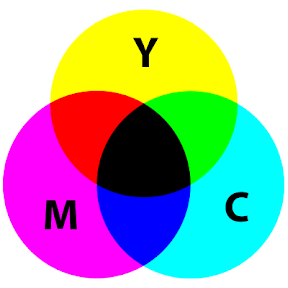
Print colors, on the other hand, are build from inks in cyan (a medium turquoise), magenta, yellow and black (designers call it CMYK). The maximum amount of all four combined colors is...BLACK, like the bottom of the Mariana trench in density of darkness. Because the RGB system of a computer monitor makes color differently than a printing device, what you see on screen is not exactly what you get when output onto paper. There's translation involved. And if you want your paperback cover to look as attractive as you e-book, you need to be careful about color choice.

CMYK or "process" color used in printing


Is you mind blown?

Can you see why you might want to discuss color with your designer? Or, if you're a do-it-yourself-er, why you need to educate yourself a bit?

When choosing solid colors for a design, you need to see swatches from a "process color" swatch book to really know what your output will look like. A nice onscreen color might become a muddy or hazy color when translated to CMYK. This is especially true for darker shades of blue from royal to navy.

Another tip--especially for colored text--you want those colors to be composed of the fewest number of inks. Remember that the print process involves laying down tiny dots of ink next to each other. Newer digital presses are pretty good at staying aligned, but there's always a chance that off-register problems can arise. Here's an illustration that shows the ugly result of misalignment in registration.

cyan and magenta are misaligned; image from Wikipedia
The fewer inks you use, the less likely you'll have to worry about misalignment. So when looking through that process swatch book, think about what color will output best that can be made most simply.

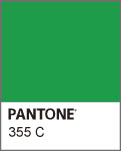
For example, when selecting between two emerald greens, such as these two:
PMS 348: C=97, Y=95, M=17

PMS 355: C=93, Y=96

I know I'll get better results with the two-ink shade than the three-ink shade.

If you're planning to only create e-books, someone with expertise in Web design might be perfectly capable of creating a great cover design. If you plan to do both e-book and a paperback, however, it's a good idea to work with a designer with some print experience. And the more you know, the better you'll be able to communicate and make wise decisions.

And do-it-yourself-ers, take the time to learn about the print process. A few resources I recommend are:

Printing and Prepress Basics
Claudia McCue's book Real World Print Production with Adobe Creative Suite Applications
From Design Into Print: Preparing Graphics and Text for Professional Printing by Sandee Cohen
The Non-Designers Design Book by Robin Williams

Do you feel more empowered as a consumer of design services? What other questions or concerns do you have about producing print books?
Monday, March 04, 2013 Laurel Garver
Once you take the Indie plunge, you might be tempted to be very hands-off with the vendors to whom you outsource tasks. Especially your cover designer. Writing is verbal, design is visual. Unless you've had the good fortune to have studied communications or journalism, where you're trained in both sets of skills, you likely will take anything your designer says as gospel.

But here's the rub. Some designers know digital deeply and intimately, but have very little knowledge of the ins and outs of print production. And print is a very different animal. What you see on screen is not necessarily what you get in final output when a press (even a digital press) is generating the product.

The one thing you must know and discuss with a designer is this: digital colors and print colors are created completely differently, so how do I get a consistently good product for both e-books and paperbacks?

Digital colors are built from lights in red, green and blue (designers call it RGB). The maximum amount of all three combined creates...WHITE! Weird, right? This is how computers create color. If you only do e-books, you're golden. What you see on screen is an excellent representation of the final product.

RGB or digital color. Image source: wikipedia

Print colors, on the other hand, are build from inks in cyan (a medium turquoise), magenta, yellow and black (designers call it CMYK). The maximum amount of all four combined colors is...BLACK, like the bottom of the Mariana trench in density of darkness. Because the RGB system of a computer monitor makes color differently than a printing device, what you see on screen is not exactly what you get when output onto paper. There's translation involved. And if you want your paperback cover to look as attractive as you e-book, you need to be careful about color choice.

CMYK or "process" color used in printing


Is you mind blown?

Can you see why you might want to discuss color with your designer? Or, if you're a do-it-yourself-er, why you need to educate yourself a bit?

When choosing solid colors for a design, you need to see swatches from a "process color" swatch book to really know what your output will look like. A nice onscreen color might become a muddy or hazy color when translated to CMYK. This is especially true for darker shades of blue from royal to navy.

Another tip--especially for colored text--you want those colors to be composed of the fewest number of inks. Remember that the print process involves laying down tiny dots of ink next to each other. Newer digital presses are pretty good at staying aligned, but there's always a chance that off-register problems can arise. Here's an illustration that shows the ugly result of misalignment in registration.

cyan and magenta are misaligned; image from Wikipedia
The fewer inks you use, the less likely you'll have to worry about misalignment. So when looking through that process swatch book, think about what color will output best that can be made most simply.

For example, when selecting between two emerald greens, such as these two:
PMS 348: C=97, Y=95, M=17

PMS 355: C=93, Y=96

I know I'll get better results with the two-ink shade than the three-ink shade.

If you're planning to only create e-books, someone with expertise in Web design might be perfectly capable of creating a great cover design. If you plan to do both e-book and a paperback, however, it's a good idea to work with a designer with some print experience. And the more you know, the better you'll be able to communicate and make wise decisions.

And do-it-yourself-ers, take the time to learn about the print process. A few resources I recommend are:

Printing and Prepress Basics
Claudia McCue's book Real World Print Production with Adobe Creative Suite Applications
From Design Into Print: Preparing Graphics and Text for Professional Printing by Sandee Cohen
The Non-Designers Design Book by Robin Williams

Do you feel more empowered as a consumer of design services? What other questions or concerns do you have about producing print books?

Wednesday, February 20

More or less faith on the page?

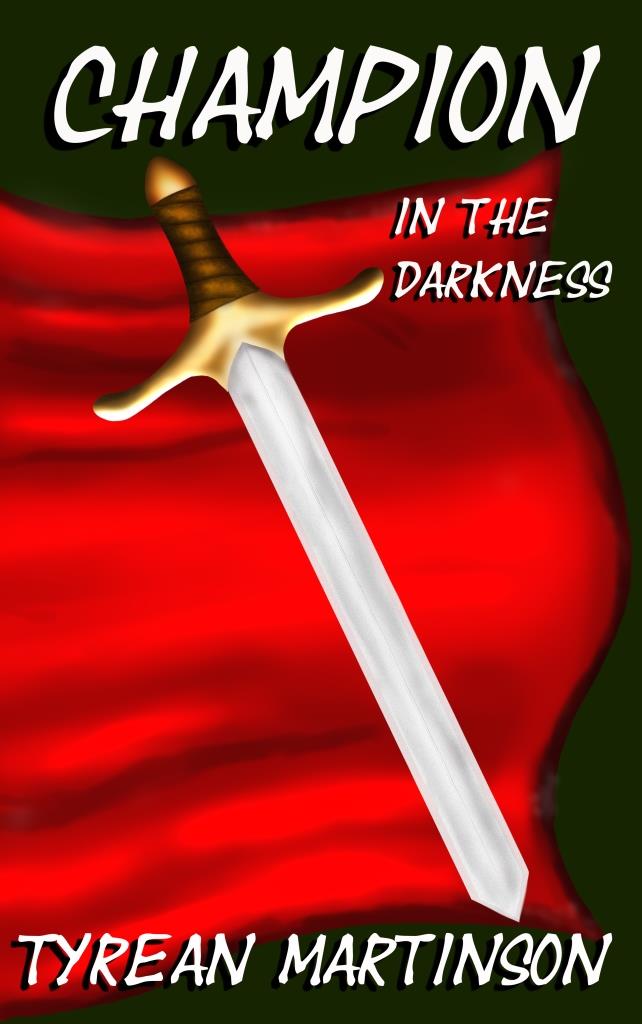
by Tyrean Martinson, author of Champion in the Darkness

As writers, our beliefs are an integral part of what we write. We can’t really help it, even when we try to downplay it. We’ve all seen that when we read books, right? A writer creates a world of imagination and their values and worldview shines through all of it. (To read more about my thoughts on Faith in Fiction: The Integral Part, visit my post at Ian’s Realm.)

A famous example of a worldview shining through a fiction world is The Lord of the Rings by Tolkien. Tolkien wanted to be a “sub-creator” with his writing, with his faith under the surface of the story. It is true that many Tolkien fans claim that his writing isn’t about Christian faith at all, but I see it there under the surface of the story because the sacrificial love of the main character, Frodo, is the key to saving Middle Earth. When I read Lord of the Rings, I feel as if the whole story is an embodiment of John 15:13, “Greater love has no one than this: to lay down one’s life for one’s friends.”

So, the decision we have to make is this: do we write like Tolkien as sub-creators of our stories, with our faith under the surface of events and characters’ decisions, or do we write with our faith out loud in the minds and words of our characters on the page?

There is a small middle ground, like in the Narnia series by C.S. Lewis, in which Aslan represents Jesus, but is never specifically called Jesus anywhere in the series. The Christian symbolism throughout the series is hard to miss, with the creation story in The Magician’s Nephew, the sacrifice of Aslan in The Lion, the Witch, and the Wardrobe, and the baptismal cleansing of Eustace in The Voyage of the Dawn Treader, as well as many other instance of Christian symbolism. Despite all that, secular readers enjoy the Narnia series without necessarily ever finding out what Aslan’s “other” name is in the Pevensies’ world.

The last option, which I think is the hardest one to write, is to choose an all-out, open faith-based approach to writing fiction.

After years of writing fiction and poetry that never proclaimed my faith, I decided I wanted to write a story in which the characters had to have faith to win the day. In the land of Septily, the swords of power are only powerful in the hands of a Sword Master with faith. If that Sword Master loses his or her faith, the sword will go dull, crack, or break. Clara, my MC, is on her way to become a Sword Master, but her journey of faith doesn’t end when she receives her sword.

The danger in writing an openly faith-based book is that I may alienate some readers. I don’t want to do that. However, I wanted to try something new, something in which faith mattered to the characters and their story.

Tyrean Martinson lives and writes in the Northwest, encouraged by her loving husband and daughters, and reminded to exercise by her dogs and cat. Champion in the Darkness is the first book in the Champion Trilogy, and she has previously published short stories and poetry.

About the Book

Clara is younger than most trainees, but she is ready to hold a Sword Master's blade. While visions and ancient prophecies stand in her way, they also offer a destiny unlike any other. Clara is aided by a haunted mentor, Stelia, whose knowledge of their enemy Kalidess is both a bane and a blessing. As evil threatens their land, Clara and Stelia must find the strength to overcome the darkness.

Champion in the Darkness is YA Christian Fantasy, and is the first book in the Champion Trilogy.

Buy links:
Add it on Goodreads

Wednesday, February 20, 2013 Laurel Garver

More or less faith on the page?

by Tyrean Martinson, author of Champion in the Darkness

As writers, our beliefs are an integral part of what we write. We can’t really help it, even when we try to downplay it. We’ve all seen that when we read books, right? A writer creates a world of imagination and their values and worldview shines through all of it. (To read more about my thoughts on Faith in Fiction: The Integral Part, visit my post at Ian’s Realm.)

A famous example of a worldview shining through a fiction world is The Lord of the Rings by Tolkien. Tolkien wanted to be a “sub-creator” with his writing, with his faith under the surface of the story. It is true that many Tolkien fans claim that his writing isn’t about Christian faith at all, but I see it there under the surface of the story because the sacrificial love of the main character, Frodo, is the key to saving Middle Earth. When I read Lord of the Rings, I feel as if the whole story is an embodiment of John 15:13, “Greater love has no one than this: to lay down one’s life for one’s friends.”

So, the decision we have to make is this: do we write like Tolkien as sub-creators of our stories, with our faith under the surface of events and characters’ decisions, or do we write with our faith out loud in the minds and words of our characters on the page?

There is a small middle ground, like in the Narnia series by C.S. Lewis, in which Aslan represents Jesus, but is never specifically called Jesus anywhere in the series. The Christian symbolism throughout the series is hard to miss, with the creation story in The Magician’s Nephew, the sacrifice of Aslan in The Lion, the Witch, and the Wardrobe, and the baptismal cleansing of Eustace in The Voyage of the Dawn Treader, as well as many other instance of Christian symbolism. Despite all that, secular readers enjoy the Narnia series without necessarily ever finding out what Aslan’s “other” name is in the Pevensies’ world.

The last option, which I think is the hardest one to write, is to choose an all-out, open faith-based approach to writing fiction.

After years of writing fiction and poetry that never proclaimed my faith, I decided I wanted to write a story in which the characters had to have faith to win the day. In the land of Septily, the swords of power are only powerful in the hands of a Sword Master with faith. If that Sword Master loses his or her faith, the sword will go dull, crack, or break. Clara, my MC, is on her way to become a Sword Master, but her journey of faith doesn’t end when she receives her sword.

The danger in writing an openly faith-based book is that I may alienate some readers. I don’t want to do that. However, I wanted to try something new, something in which faith mattered to the characters and their story.

Tyrean Martinson lives and writes in the Northwest, encouraged by her loving husband and daughters, and reminded to exercise by her dogs and cat. Champion in the Darkness is the first book in the Champion Trilogy, and she has previously published short stories and poetry.

About the Book

Clara is younger than most trainees, but she is ready to hold a Sword Master's blade. While visions and ancient prophecies stand in her way, they also offer a destiny unlike any other. Clara is aided by a haunted mentor, Stelia, whose knowledge of their enemy Kalidess is both a bane and a blessing. As evil threatens their land, Clara and Stelia must find the strength to overcome the darkness.

Champion in the Darkness is YA Christian Fantasy, and is the first book in the Champion Trilogy.

Buy links:
Add it on Goodreads

Tuesday, July 31

In my previous post, many of you were intrigued with the question of self-publishers possessing an "entrepreneurial temperament." What might that label imply?

I found a number of broad-strokes articles on the topic, which I'll link here should you be interested in reading more:

~25 Common Characteristics of Successful Entrepreneurs
~10 Qualities of a Successful Entrepreneur
~Entrepreneurs: Key Characteristics and Skills

Here are some key ideas I gleaned from these lists and how I think they apply to a self-publishing enterprise. Entrepreneurial authors need to be

Passionate
If you don't love your work, don't love TO work, it will be impossible to interest readers and to keep producing quality work. Passion extends not only into your writing itself, but also into how you interact with the world. There is something irrepressible in the spirit of a passionate person that is life-affirming and life-giving. Good books flow out of deep passion; readers respond to it.

I know there are some who struggle with bouts of depression--seasonal or other types--who believe this makes them unfit for entrepreneurial authorship. I don't think that's entirely the case. Monitoring mood and  developing self-care will need to become an area of investment, just like the math-phobe would invest in hiring a good accountant. Which brings me to a second point....

Resource-minded
You need a vision for what skills and resources you need to succeed and where you might find help for those areas where you personally have gaps or lack. Instead of throwing up your hands in defeat and saying "I could never do that!", an entrepreneur says, "I need help with this. Where can I get it?"

Many, many skills you need to succeed as a self-publisher can be outsourced. Many should be. Don't despair if you need to bring a team on board to help with graphic design, editing and proofreading, ebook formatting, marketing, accounting and taxes.

Eager to learn
There's an underlying humility needed when you're an entrepreneur. To succeed, you need to be willing to face your knowledge and skill gaps and take steps to address them. Because you're resource-minded, you're willing to hunt high and low for answers to every question. And you LOVE to learn new things. You find it exciting and empowering.

With the learning mindset comes an acceptance of "the learning curve." You expect your acquisition of knowledge and skills to take time and include setbacks. But your passion drives you to keep seeking, keep trying. You can be patient with the process especially if you have the next quality....

Goal-directed 
Anyone who is able to write an entire book is goal directed by nature. You have an end-point in mind and take steady steps toward reaching it. If you've managed to keep your tush in a chair and write draft after draft until the story resonates and the prose sings, you are able to face the publishing end.

It's really a matter of taking your drafting and revising mojo and applying it to a new goal--getting a quality published product into the hands of eager readers.

Creative
This one trips up some writers, strangely enough. They are able to create entire worlds out of the snips and snails of their life experiences and dreams, but won't open those energies toward "practical things."

Say you don't have much ready cash to hire a cover designer. Some think this means they MUST do it themselves, then feel overwhelmed or defeated. Have you considered bartering? And I don't mean necessarily a skill-for-skill exchange, though a designer might really need help with writing copy for her professional website, for instance. Maybe you have non-writing skills that would thrill a designer: cook meals, crochet an afghan, tutor his/her kids, clean an attic, do some yard work, babysit.You get the idea.

Use the creative flexibility you exercise when you write to approach any skills gaps or snags in your publishing plan. Creativity is especially important when you market. Watch what others do well, then do it with a twist. Have an open mind about who your audience really is--think more broadly.

What do you think? Do you have what it takes?
Tuesday, July 31, 2012 Laurel Garver
In my previous post, many of you were intrigued with the question of self-publishers possessing an "entrepreneurial temperament." What might that label imply?

I found a number of broad-strokes articles on the topic, which I'll link here should you be interested in reading more:

~25 Common Characteristics of Successful Entrepreneurs
~10 Qualities of a Successful Entrepreneur
~Entrepreneurs: Key Characteristics and Skills

Here are some key ideas I gleaned from these lists and how I think they apply to a self-publishing enterprise. Entrepreneurial authors need to be

Passionate
If you don't love your work, don't love TO work, it will be impossible to interest readers and to keep producing quality work. Passion extends not only into your writing itself, but also into how you interact with the world. There is something irrepressible in the spirit of a passionate person that is life-affirming and life-giving. Good books flow out of deep passion; readers respond to it.

I know there are some who struggle with bouts of depression--seasonal or other types--who believe this makes them unfit for entrepreneurial authorship. I don't think that's entirely the case. Monitoring mood and  developing self-care will need to become an area of investment, just like the math-phobe would invest in hiring a good accountant. Which brings me to a second point....

Resource-minded
You need a vision for what skills and resources you need to succeed and where you might find help for those areas where you personally have gaps or lack. Instead of throwing up your hands in defeat and saying "I could never do that!", an entrepreneur says, "I need help with this. Where can I get it?"

Many, many skills you need to succeed as a self-publisher can be outsourced. Many should be. Don't despair if you need to bring a team on board to help with graphic design, editing and proofreading, ebook formatting, marketing, accounting and taxes.

Eager to learn
There's an underlying humility needed when you're an entrepreneur. To succeed, you need to be willing to face your knowledge and skill gaps and take steps to address them. Because you're resource-minded, you're willing to hunt high and low for answers to every question. And you LOVE to learn new things. You find it exciting and empowering.

With the learning mindset comes an acceptance of "the learning curve." You expect your acquisition of knowledge and skills to take time and include setbacks. But your passion drives you to keep seeking, keep trying. You can be patient with the process especially if you have the next quality....

Goal-directed 
Anyone who is able to write an entire book is goal directed by nature. You have an end-point in mind and take steady steps toward reaching it. If you've managed to keep your tush in a chair and write draft after draft until the story resonates and the prose sings, you are able to face the publishing end.

It's really a matter of taking your drafting and revising mojo and applying it to a new goal--getting a quality published product into the hands of eager readers.

Creative
This one trips up some writers, strangely enough. They are able to create entire worlds out of the snips and snails of their life experiences and dreams, but won't open those energies toward "practical things."

Say you don't have much ready cash to hire a cover designer. Some think this means they MUST do it themselves, then feel overwhelmed or defeated. Have you considered bartering? And I don't mean necessarily a skill-for-skill exchange, though a designer might really need help with writing copy for her professional website, for instance. Maybe you have non-writing skills that would thrill a designer: cook meals, crochet an afghan, tutor his/her kids, clean an attic, do some yard work, babysit.You get the idea.

Use the creative flexibility you exercise when you write to approach any skills gaps or snags in your publishing plan. Creativity is especially important when you market. Watch what others do well, then do it with a twist. Have an open mind about who your audience really is--think more broadly.

What do you think? Do you have what it takes?

Thursday, July 26

Self-publishing. How do you decide if it's for you?

I'm a cautious person, so deciding to publish my novel Never Gone on my own wasn't something I arrived at overnight. I spent a lot of time researching and soul-searching. As I was considering the option, I found it incredibly helpful to read about others' decision-making processes. So in the coming weeks I'll share some of the factors that went into my decision, in hopes that it will be educational for those still weighing the pros and cons.

Here are some of the questions I had going in:

What does success look like to me? What's my ultimate goal?

What's happening to publishing? What trends seem to be emerging regarding models that are sustainable and models that aren't?

Am I willing to give up the cache of being approved by gatekeepers?

What are possible downsides of legacy publishing?

Am I temperamentally suited to being an entrepreneur?

What other networks might substitute for the support a legacy publisher might provide? Can I find them or build them?

What skill sets will I need to develop to build my writing business?

Is this particular project better suited for independent or legacy publishing?

Is the book actually ready? How will I know when it is?


These are fairly broad-strokes areas of research. You can see why I've spent the better part of eight months reading everything I could get my eyeballs on that could provide some perspective on the topic.

One of the most helpful things I kept hearing was this: It's not a forever decision. You can self-pub some projects and seek legacy publication for others. Learn your market and where your project might fit and make a business decision.

I can tackle these questions in order as I proposed them, or in whatever order you like.

Which of these questions intrigue you most?

Thursday, July 26, 2012 Laurel Garver
Self-publishing. How do you decide if it's for you?

I'm a cautious person, so deciding to publish my novel Never Gone on my own wasn't something I arrived at overnight. I spent a lot of time researching and soul-searching. As I was considering the option, I found it incredibly helpful to read about others' decision-making processes. So in the coming weeks I'll share some of the factors that went into my decision, in hopes that it will be educational for those still weighing the pros and cons.

Here are some of the questions I had going in:

What does success look like to me? What's my ultimate goal?

What's happening to publishing? What trends seem to be emerging regarding models that are sustainable and models that aren't?

Am I willing to give up the cache of being approved by gatekeepers?

What are possible downsides of legacy publishing?

Am I temperamentally suited to being an entrepreneur?

What other networks might substitute for the support a legacy publisher might provide? Can I find them or build them?

What skill sets will I need to develop to build my writing business?

Is this particular project better suited for independent or legacy publishing?

Is the book actually ready? How will I know when it is?


These are fairly broad-strokes areas of research. You can see why I've spent the better part of eight months reading everything I could get my eyeballs on that could provide some perspective on the topic.

One of the most helpful things I kept hearing was this: It's not a forever decision. You can self-pub some projects and seek legacy publication for others. Learn your market and where your project might fit and make a business decision.

I can tackle these questions in order as I proposed them, or in whatever order you like.

Which of these questions intrigue you most?

Tuesday, July 24

My 400th post seemed like the right time to share something that has been brewing since last fall.

My young adult novel, Never Gone, will release in September.

I'm publishing it as an e-book and a paperback. Little old me. It has taken me a long time to move from being reconciled with the decision to being extremely excited about it. Cautious, perfectionistic person that I am, I've already grown in ways I'm only beginning to understand since I made this decision. Like learning to own who I am and what I think, without backpedaling or wilting in the face of criticism--real or imagined. 

I have confidence in the power of this story. Confidence in the opinions of the 30+ people who read some version of it and encouraged me to pursue publication. Confidence that every professional and creative experience I've had this far in my life has prepared me to make the leap from writer to publisher. Confidence that God will grant me grace each day to walk through the process, faithfully giving it my best effort, if I leave the results to Him.

In the coming weeks, as I busily prepare the edited manuscript for print, I'll share a little about my decision-making process and, of course, news about the book itself.


As part of this transition from writer to author/publisher, I've joined forces with a group of writers of realistic fiction called "The Rabble Writers." Our new site describes us this way: "We're storytellers who play in the shadows, aware there is no compassion without pain. No laughter without silence. No sorrow without love. We celebrate the intimate, the personal and profound. We are the rabble-writers."


Our site not only posts poetry daily, we also engage in conversations about a wide variety of topics we're passionate about. Come on by and say hello!


Did you suspect this news was coming, or have I totally surprised you? Are you naturally cautious or does risk-taking come easily? 


Tuesday, July 24, 2012 Laurel Garver
My 400th post seemed like the right time to share something that has been brewing since last fall.

My young adult novel, Never Gone, will release in September.

I'm publishing it as an e-book and a paperback. Little old me. It has taken me a long time to move from being reconciled with the decision to being extremely excited about it. Cautious, perfectionistic person that I am, I've already grown in ways I'm only beginning to understand since I made this decision. Like learning to own who I am and what I think, without backpedaling or wilting in the face of criticism--real or imagined. 

I have confidence in the power of this story. Confidence in the opinions of the 30+ people who read some version of it and encouraged me to pursue publication. Confidence that every professional and creative experience I've had this far in my life has prepared me to make the leap from writer to publisher. Confidence that God will grant me grace each day to walk through the process, faithfully giving it my best effort, if I leave the results to Him.

In the coming weeks, as I busily prepare the edited manuscript for print, I'll share a little about my decision-making process and, of course, news about the book itself.


As part of this transition from writer to author/publisher, I've joined forces with a group of writers of realistic fiction called "The Rabble Writers." Our new site describes us this way: "We're storytellers who play in the shadows, aware there is no compassion without pain. No laughter without silence. No sorrow without love. We celebrate the intimate, the personal and profound. We are the rabble-writers."


Our site not only posts poetry daily, we also engage in conversations about a wide variety of topics we're passionate about. Come on by and say hello!


Did you suspect this news was coming, or have I totally surprised you? Are you naturally cautious or does risk-taking come easily? 


Tuesday, June 19

There are a number of reasons a novel's middle becomes muddled during the drafting phase. One can lose the protagonist's "throughline"--that is, his or her desire or need that fuels the story action. Or perhaps a secondary character elbows out the protagonist and POV suddenly shifts. Most likely, however, the directions a story could go seems infinite and both plot and subplot sputter out or spin wildly out of control.

You might handle middle muddle by trying to write through it. But it's likely you'll write a whole lot of uninteresting garbage you'll have to jettison later. Better to pause for a time to do a little planning.

In Beginnings, Middles and Ends, Nancy Kress recommends making some key decisions before you delve too deep in drafting your novel's middle.

Start by listing all the events that happen to all the characters from the beginning to the end. This might include things going on simultaneously in different places. It might help to make your list in columns by location or main actor. Throw in anything that's interesting and relevant to moving the story forward, keeping in mind the protagonist's throughline (goal, driving desire).

Now, mark with a highlighter all those events that occur somewhere other than in the POV character's presence. You will have to figure out how to let the reader know about these events--an act of discovery will be needed in scenes to cover offstage events.

Once you've adjusted your list of events for point of view, you'll need to whittle it down further. Which events actually merit being dramatized into scenes? Might an event need multiple scenes to fully dramatize it? Might it better be handled in exposition? Some seemingly pivotal events might get the most dramatic bang when handled indirectly in a reaction scene. But you absolutely should not spend time trying to dramatize every last event that happens, only those that are interesting.

Kress's rule of thumb is that scenes you give the most attention should relate directly to the throughline. A story can often be sharpened by concentrating its events and emotion into the bare minimum of scenes. Some of the "stage business" of getting characters from here to there can still come into play, but these details are best digested by your readers if throughline-related changes occur at the same time. Characters might argue during a car trip, the heroine might uncover surprising information eavesdropping while waiting for her date to arrive at the restaurant.

So, to sum up, prepare for your middle by deciding every story event--what happens to every character in every place during the story's timeframe. Then organize the events into the minimal number of dramatic scenes (and narrative summary scenes) that keeps the protagonist's throughline front and center.

Do you struggle with story middles? What things have bogged you down? What tips have helped?
Tuesday, June 19, 2012 Laurel Garver
There are a number of reasons a novel's middle becomes muddled during the drafting phase. One can lose the protagonist's "throughline"--that is, his or her desire or need that fuels the story action. Or perhaps a secondary character elbows out the protagonist and POV suddenly shifts. Most likely, however, the directions a story could go seems infinite and both plot and subplot sputter out or spin wildly out of control.

You might handle middle muddle by trying to write through it. But it's likely you'll write a whole lot of uninteresting garbage you'll have to jettison later. Better to pause for a time to do a little planning.

In Beginnings, Middles and Ends, Nancy Kress recommends making some key decisions before you delve too deep in drafting your novel's middle.

Start by listing all the events that happen to all the characters from the beginning to the end. This might include things going on simultaneously in different places. It might help to make your list in columns by location or main actor. Throw in anything that's interesting and relevant to moving the story forward, keeping in mind the protagonist's throughline (goal, driving desire).

Now, mark with a highlighter all those events that occur somewhere other than in the POV character's presence. You will have to figure out how to let the reader know about these events--an act of discovery will be needed in scenes to cover offstage events.

Once you've adjusted your list of events for point of view, you'll need to whittle it down further. Which events actually merit being dramatized into scenes? Might an event need multiple scenes to fully dramatize it? Might it better be handled in exposition? Some seemingly pivotal events might get the most dramatic bang when handled indirectly in a reaction scene. But you absolutely should not spend time trying to dramatize every last event that happens, only those that are interesting.

Kress's rule of thumb is that scenes you give the most attention should relate directly to the throughline. A story can often be sharpened by concentrating its events and emotion into the bare minimum of scenes. Some of the "stage business" of getting characters from here to there can still come into play, but these details are best digested by your readers if throughline-related changes occur at the same time. Characters might argue during a car trip, the heroine might uncover surprising information eavesdropping while waiting for her date to arrive at the restaurant.

So, to sum up, prepare for your middle by deciding every story event--what happens to every character in every place during the story's timeframe. Then organize the events into the minimal number of dramatic scenes (and narrative summary scenes) that keeps the protagonist's throughline front and center.

Do you struggle with story middles? What things have bogged you down? What tips have helped?

Wednesday, February 15

Yes, writing can be creative and fun, but at some point when your work goes into print, it will become something more--a business. With income. Expenses. All that jazz.

I don't see too many writers talking about the need to get your head out of the sand when it comes to treating your writing like a business. I guess it's because many creative people tend to get a glazed look when you mention the T word. Yeah, I mean taxes.

You might think you can jettison this worry onto someone who cares about this stuff--like your accountant. You can't. Not entirely. There are some things only YOU can do. And if you want to avoid a whole lot of headaches and stress, it honestly pays to educate yourself a little about this business-money-tax stuff.

Last week I attended an adult education small business tax workshop just to pick up some of the basics. Now that my head-cold fog is beginning to lift, I thought I'd share a little of what I've learned.

Business or hobby?
One of the first things to consider is whether you believe you will actually bring in some real income from your venture. Having substantial start-up costs and taking a loss is normal for the first few years. But if you plan to deduct all of your writing expenses, you need to post a profit within a few years, or the IRS considers your writing efforts a hobby.

Are you agented and out on submission? There's a good chance you could land a book deal, and with it comes income you will owe taxes on. Take the time now to get all your financial ducks in a row to minimize your tax liability. By that I mean register yourself as a business (likely a sole proprietorship), and track your deductible expenses. There are LOTS--from web design to business cards to your home office utilities. Even if you plan to use an accountant, you will need to keep records of your expenses. The teacher recommended the US Small Business Administration site (http://www.sba.gov/) as a great resource for getting started.

Ditto if you plan to self-publish or to sell short pieces to paying markets (and make more than $250 annually doing so).

If you sell stories or articles and only receive token payments, that's hobby income. The kinds of things you can deduct as hobby expenses are explained here: http://www.irs.gov/publications/p17/ch28.html. Note that you can't deduct losses (expenses that are over and above than what you got paid), you can only claim expenses up to the amount you made as hobby income. Tracking hobby expenses and income is a great way to get up to speed before you land a book deal, so do seriously consider doing some magazine work. Seriously. The writing credits and networking are some additional benefits.

First steps
~Remove your fingers from your ears and stop singing "La-la-la."

~Educate yourself about the rules. You must deal with three taxing entities: the federal government, your state government and your local government. The laws may have some overlaps, and may have some significant differences. An adult education class is helpful, and your local chamber of commerce and the SBA are also great resources.

~Apply for a federal EIN (employer ID number), for free, at the IRS site: http://www.irs.gov/businesses/small/article/0,,id=102767,00.html. You must have one to open a bank account that you dedicate to your writing income and expenses. It's really best to do this--keep your writing business as its own entity. It's much, much easier to track what comes in and goes out when it's not mixed in with your personal finances. You'll also need and EIN to deduct the cost of some services you hire out for, like editing.

Self-publishers take note: if you plan to set up your own press, WAIT to apply for an EIN until after you have registered your press name that you will be "doing business as." More information about is available from the SBA here: http://www.sba.gov/content/register-your-fictitious-or-doing-business-dba-name/.

~Apply for a small business license as required by your state or local government. The SBA has all the needed state links: http://www.sba.gov/content/business-licenses-and-permits. My municipality requires a license for any kind of business, so be sure to check in with your local government to see what their regulations are. Your local chamber of commerce may be able to help with this step. Don't be shy, give them a call if your local regulations are difficult to find.

~Open your checking account, using your EIN as the ID number rather than your SSN. Use it for all your business expenses: your web designer, your caterer for the launch party, etc. Deposit royalty checks here and link it to your paypal or Amazon account. This step will save you a ton of headaches!

What aspects of writing-as-business surprise you? Intimidate you? Was this post helpful? What else would you like to know?
Wednesday, February 15, 2012 Laurel Garver
Yes, writing can be creative and fun, but at some point when your work goes into print, it will become something more--a business. With income. Expenses. All that jazz.

I don't see too many writers talking about the need to get your head out of the sand when it comes to treating your writing like a business. I guess it's because many creative people tend to get a glazed look when you mention the T word. Yeah, I mean taxes.

You might think you can jettison this worry onto someone who cares about this stuff--like your accountant. You can't. Not entirely. There are some things only YOU can do. And if you want to avoid a whole lot of headaches and stress, it honestly pays to educate yourself a little about this business-money-tax stuff.

Last week I attended an adult education small business tax workshop just to pick up some of the basics. Now that my head-cold fog is beginning to lift, I thought I'd share a little of what I've learned.

Business or hobby?
One of the first things to consider is whether you believe you will actually bring in some real income from your venture. Having substantial start-up costs and taking a loss is normal for the first few years. But if you plan to deduct all of your writing expenses, you need to post a profit within a few years, or the IRS considers your writing efforts a hobby.

Are you agented and out on submission? There's a good chance you could land a book deal, and with it comes income you will owe taxes on. Take the time now to get all your financial ducks in a row to minimize your tax liability. By that I mean register yourself as a business (likely a sole proprietorship), and track your deductible expenses. There are LOTS--from web design to business cards to your home office utilities. Even if you plan to use an accountant, you will need to keep records of your expenses. The teacher recommended the US Small Business Administration site (http://www.sba.gov/) as a great resource for getting started.

Ditto if you plan to self-publish or to sell short pieces to paying markets (and make more than $250 annually doing so).

If you sell stories or articles and only receive token payments, that's hobby income. The kinds of things you can deduct as hobby expenses are explained here: http://www.irs.gov/publications/p17/ch28.html. Note that you can't deduct losses (expenses that are over and above than what you got paid), you can only claim expenses up to the amount you made as hobby income. Tracking hobby expenses and income is a great way to get up to speed before you land a book deal, so do seriously consider doing some magazine work. Seriously. The writing credits and networking are some additional benefits.

First steps
~Remove your fingers from your ears and stop singing "La-la-la."

~Educate yourself about the rules. You must deal with three taxing entities: the federal government, your state government and your local government. The laws may have some overlaps, and may have some significant differences. An adult education class is helpful, and your local chamber of commerce and the SBA are also great resources.

~Apply for a federal EIN (employer ID number), for free, at the IRS site: http://www.irs.gov/businesses/small/article/0,,id=102767,00.html. You must have one to open a bank account that you dedicate to your writing income and expenses. It's really best to do this--keep your writing business as its own entity. It's much, much easier to track what comes in and goes out when it's not mixed in with your personal finances. You'll also need and EIN to deduct the cost of some services you hire out for, like editing.

Self-publishers take note: if you plan to set up your own press, WAIT to apply for an EIN until after you have registered your press name that you will be "doing business as." More information about is available from the SBA here: http://www.sba.gov/content/register-your-fictitious-or-doing-business-dba-name/.

~Apply for a small business license as required by your state or local government. The SBA has all the needed state links: http://www.sba.gov/content/business-licenses-and-permits. My municipality requires a license for any kind of business, so be sure to check in with your local government to see what their regulations are. Your local chamber of commerce may be able to help with this step. Don't be shy, give them a call if your local regulations are difficult to find.

~Open your checking account, using your EIN as the ID number rather than your SSN. Use it for all your business expenses: your web designer, your caterer for the launch party, etc. Deposit royalty checks here and link it to your paypal or Amazon account. This step will save you a ton of headaches!

What aspects of writing-as-business surprise you? Intimidate you? Was this post helpful? What else would you like to know?

Tuesday, January 10

I'm contemplating some shifts in the coming year. A big one is whether I will begin to take on some freelance editing projects.

I've been hesitant to do this for one reason. Taxes. I live in a city that deals with self-employment income differently than other kinds of wages. It's a biggish step to do more than an occasional freelance job. There's an upfront cost to register any business venture in Philadelphia--a somewhat steep one.

Happily, I found an inexpensive two-hour workshop on small business taxes in the city. So I hope that once I have a handle on what's involved, I can make an educated decision.

Meanwhile, I continue to receive Editor-on-Call questions. Here's the latest:

Dear Editor-on-Call,

I said to my mother, "Because I am me." She corrected me and felt I should have said, "Because I am I." Who's right here?

Sincerely,
I gotta be me
(aka Jessica Dimuzio, author of Bark, Bark, Bark for my Park)

Dear Gotta Be,

I'd say it depends on context. The rule is that the verb "to be" acts like an equal sign and the second pronoun should be subjective (I, she, he, they), not objective (me, her, him, them).

BUT it sounds like a pretentious over-correction to say "I am I." The grammar sites I checked all had ongoing arguments. "I am me" is using the word "me" to refer to one's ego. Or at least that's how grammarians today think of the phrase. (Whether one should think of one's ego as some kind of discrete entity is a larger philosophical issue that's more my husband's area of expertise as a philosophy professor, but I digress....)

The fact is, we don't have a singular entity making pronouncements on the purity of English like the Académie Française in France. English's strength is its flexibility and skill at keeping up with the times. This is one of those cases where the rules are in flux and what was once considered correct is passing out of ordinary use.

She is right to the letter of the law; you are right to the current standard of speech patterns.

Any of you self-employed? How big a headache are tax issues? Which of the sentences Jessica mentioned sounds best to you? Do we need a guardian of pure English?
Tuesday, January 10, 2012 Laurel Garver
I'm contemplating some shifts in the coming year. A big one is whether I will begin to take on some freelance editing projects.

I've been hesitant to do this for one reason. Taxes. I live in a city that deals with self-employment income differently than other kinds of wages. It's a biggish step to do more than an occasional freelance job. There's an upfront cost to register any business venture in Philadelphia--a somewhat steep one.

Happily, I found an inexpensive two-hour workshop on small business taxes in the city. So I hope that once I have a handle on what's involved, I can make an educated decision.

Meanwhile, I continue to receive Editor-on-Call questions. Here's the latest:

Dear Editor-on-Call,

I said to my mother, "Because I am me." She corrected me and felt I should have said, "Because I am I." Who's right here?

Sincerely,
I gotta be me
(aka Jessica Dimuzio, author of Bark, Bark, Bark for my Park)

Dear Gotta Be,

I'd say it depends on context. The rule is that the verb "to be" acts like an equal sign and the second pronoun should be subjective (I, she, he, they), not objective (me, her, him, them).

BUT it sounds like a pretentious over-correction to say "I am I." The grammar sites I checked all had ongoing arguments. "I am me" is using the word "me" to refer to one's ego. Or at least that's how grammarians today think of the phrase. (Whether one should think of one's ego as some kind of discrete entity is a larger philosophical issue that's more my husband's area of expertise as a philosophy professor, but I digress....)

The fact is, we don't have a singular entity making pronouncements on the purity of English like the Académie Française in France. English's strength is its flexibility and skill at keeping up with the times. This is one of those cases where the rules are in flux and what was once considered correct is passing out of ordinary use.

She is right to the letter of the law; you are right to the current standard of speech patterns.

Any of you self-employed? How big a headache are tax issues? Which of the sentences Jessica mentioned sounds best to you? Do we need a guardian of pure English?

Tuesday, September 20

As little as I've been able to be online these days, I keep coming across stories that have clouded my sense of what publishing path would fit me best.

Like this one: He Beats Me, But He's My Publisher

And this: Author Polly Courtney Quits Big 6

And then there's the whole productivity issue, as explained here: How Fast Do You Have to Write to Build a Successful Career?

Suddenly I'm feeling my inner brakes squealing, my inner turn-signal clicking and my hand about to pull hard to the left.

After all, the Indie side has its proponents: Revenge of the Rejected

And proponents with many caveats: When NOT to Go Indie
And Why Self-Publishing is Better Than You Think
And somewhere in the middle: When you don't care - more Indie thoughts

Of course, there's always "the middle way"--small press publishing

Michelle's small publisher series at The Innocent Flower covers lots of the pros and cons.


When it comes down to it, there are a number of questions to ask yourself when trying to navigate through all this information.

1. What does success look like TO ME?
Quitting the day job to write full time might be your goal. Or having a loyal following. It might mean having a certain level of control. Producing work that you feel proud of. Reaching a particular target audience with something helpful and life-giving.

2. What are my no-go areas?
What sacrifices am I not willing to make in my career? This might involve decisions about genres and approaches, financial risk, public exposure, associations. Where are you unwilling to compromise?

3. What kind of writing lifestyle can I maintain?
This question is perhaps the toughest to answer. It has to do with your stamina, your level of self-motivation, your ability to deal with outside pressure and to some degree the strength of your ego.

What do you think? Have you chosen a particular path? Why? What went into that decision?
Image credit: morguefile.com
Tuesday, September 20, 2011 Laurel Garver
As little as I've been able to be online these days, I keep coming across stories that have clouded my sense of what publishing path would fit me best.

Like this one: He Beats Me, But He's My Publisher

And this: Author Polly Courtney Quits Big 6

And then there's the whole productivity issue, as explained here: How Fast Do You Have to Write to Build a Successful Career?

Suddenly I'm feeling my inner brakes squealing, my inner turn-signal clicking and my hand about to pull hard to the left.

After all, the Indie side has its proponents: Revenge of the Rejected

And proponents with many caveats: When NOT to Go Indie
And Why Self-Publishing is Better Than You Think
And somewhere in the middle: When you don't care - more Indie thoughts

Of course, there's always "the middle way"--small press publishing

Michelle's small publisher series at The Innocent Flower covers lots of the pros and cons.


When it comes down to it, there are a number of questions to ask yourself when trying to navigate through all this information.

1. What does success look like TO ME?
Quitting the day job to write full time might be your goal. Or having a loyal following. It might mean having a certain level of control. Producing work that you feel proud of. Reaching a particular target audience with something helpful and life-giving.

2. What are my no-go areas?
What sacrifices am I not willing to make in my career? This might involve decisions about genres and approaches, financial risk, public exposure, associations. Where are you unwilling to compromise?

3. What kind of writing lifestyle can I maintain?
This question is perhaps the toughest to answer. It has to do with your stamina, your level of self-motivation, your ability to deal with outside pressure and to some degree the strength of your ego.

What do you think? Have you chosen a particular path? Why? What went into that decision?
Image credit: morguefile.com