Tuesday, June 23


Tell us a little about yourself and your writing. 

I grew up in north central Pennsylvania not far from The Office territory. To fend off crushing boredom, I joined every arty thing: band, choir, art club, school newspaper, and speech and drama. I often scribbled stories during class when my teachers thought I was taking copious notes. (As the youngest of five children, I have a bit of a mischievous streak.)

As an undergrad, I majored in English with a communications minor (lots of theatre classes) and studied abroad in the UK.  I went on to earn a master’s in journalism while working full time as an editor in Philadelphia. I have 30+ years’ experience in trade, association, and academic publishing.

During my post-college years, I gravitated toward poetry and put much of my creative energy there. (My poetry collection, Muddy-fingered Midnights, includes some early work as well as many new pieces). From 1995-2000, I was editor and publisher of a Christian literary magazine, About Such Things. Through it, I got to know the philosophy PhD student who became my husband. Our daughter was born in 2002.

I grew restless as a stay-at-home mom, and a friend urged me to pick up writing again. Something inside me lit up when I unearthed character sketches for Danielle Deane, a grieving teen I’d first imagined while on a walk in 1992. I’d heard her voice tell me about her difficult relationship with her mother since her dad had died, and her struggles to hang onto her faith when her church-going parent had been snatched away and she was stuck with the atheist. I’d lost my own father to renal failure a few years before this, and it felt like the time had arrived to work through that loss. There was enough difference between Dani’s circumstances and mine to help me have creative distance, yet emotional truth.

It took six years of writing and revision, research trips to NYC and England, and critiques from three writing groups to get Never Gone into its final form.

Why did you write this book?

I wanted to explore how loss and grief are handled well–and poorly–in Christianity. People of faith can at times have an unhealthy stoicism about death. By emphasizing heavenly rewards for the departed, they can make the bereaved feel as if they’re spiritually deficient for having emotions like sadness, anger and loneliness. But when someone isn’t given space to fully grieve, the emotions will come out sideways and be far more damaging. Yet the story also has positive counter-examples of folks who comfort and support well because they understand the church as a body: “when one part suffers, every part suffers with it” (I Cor. 12:26). I wanted to encourage teens not to settle for platitudes when it comes to hard questions like “where is God when we suffer?” but to really engage deeply.

Writing this story was also a way to indirectly work through my grief after I lost my dad in 2003, but under very different circumstances.

How did you get your ideas for Never Gone? What inspired you? 

The idea of parental haunting is pretty old. Shakespeare uses it in Hamlet, for example. I also was inspired by the TV show Providence that aired from 1999-2002, in which a young woman moves home after her mother’s death, and often has long heart-to-heart talks and arguments with her mother’s ghost. The idea of a parental presence lingering to help a child fascinated me, especially when it’s unclear why it’s happening (is it supernatural or psychological?).

After losing my own father, I began reading about grief experiences and how varied and confusing they can be, especially for kids. I got thinking about other circumstances that might make grieving more of a pressure cooker – like being left with the parent you’re alienated from, having a family culture that frowns on expressing negative emotions, and coming from a faith tradition that tends to emphasize the joys the departed gains in the afterlife. The question of “how do I cope without my loved one?” will be more urgently felt in circumstances like that. The psychology of father-daughter relationships inspired me quite a bit too.

Clearly everything I read and experience is fodder for fiction. Putting research time into areas that naturally raise my curiosity has led me to be a bit more fearless about story situations I’m willing to tackle.

Why is religion so prevalent in Never Gone?

Spiritual questions about the nature of life and of a higher power naturally come up when a person is grieving. To remove religious thinking on the topic seems to me inauthentic.

My approach was simply to write a character for whom faith is a natural part of life. It’s Dani’s framework for understanding the world, just like her artistic ability is. The imagery and stories of her faith weave through her thought world as much as the language of painting and drawing. Like any teen raised in a Christian home, she goes through a coming-of-age process in which she has to decide if she truly believes for herself, rather than believing in her parent’s belief.

Most centrally, Never Gone is a dramatic story, not a handbook or a “how to grieve well” manual. Readers walk with Dani through sadness, longing, first love, turmoil, broken relationships, confusion and doubt. The adults in her world sometimes help, sometimes fail her badly. She has to come to grips with what is really real, with who God is, and with how she must grow and change in order to become her best self.

Combining ghosts and God is pretty unusual. Why bring those things together?

Generally, ghost lore in our culture is associated with bad deaths, with unfinished business. The question for me is whose unfinished business? The departed’s or the survivors’?

My protagonist, Danielle, is a fairly grounded Christian who knows enough “proof texts” to shut down her own natural emotions in the wake of a devastating loss. Her dad is bound for a happy eternity in heaven, she reasons, so she’s really not supposed to be upset.

This kind of warped stoicism that sometimes arises in my faith tradition concerns me. It’s bad theology to my mind, giving a false view of who God is and how he relates to humanity. In the face of it, a really hurting person can suffer some pretty deep internal fracturing. My story’s ghost is in some ways a manifestation of that inner state. 

Why is the opening of Never Gone set in New York City?

Most of my story decisions develop out of the characters, rather than the other way around. As I got to know Dani’s parents, it became clear that no other place would work for them. Grace is a driven advertising executive, and though there are some great, creative ad agencies in Philly, she isn’t the sort of person who would settle for working outside Madison Avenue.  Making a living as a professional photographer—which is Graham’s career—requires proximity to the most potential purchasers of this kind of service, like ad agencies. 

How much are your New York locations real, and how much a fabrication?

I did five research trips to New York to go to each of the locations I describe, including the terminal where British Airways flights disembark. 

Dani’s homes in Park Slope Brooklyn and the Upper West Side are based on real buildings.  In fact, I was able to find real estate listings for her UWS high rise at the corner of 93rd and Columbus, including floor plans, which I adapted slightly.

Dani’s school is a fabrication based roughly on a private school two blocks from her apartment (I place Rexford 14 blocks away, in the West 70s). Her church is riff on All Angels in the Upper West Side, mixed with St. Mark’s Philadelphia and a few Anglican/Episcopal churches I’ve visited in the US and Britain.

I think it’s important to make fabricated settings realistic by basing them on real places. A private school with extensive grounds is not going to exist in the Upper West Side—land is too valuable. And high rise apartment buildings vary in terms of how luxurious they are, even within the same block.

Much of Never Gone takes place in a rural British village called Ashmede. How did you choose the location? How real are your British settings?

Dani needed to spend time in her father’s hometown, in part to challenge her strong identification with him. As much as she allies herself with her dad, she’s American and a city kid through and through. Thus her father Graham needed to come from the country. 

I’d originally planned to use the Cotswolds where I studied for semester in college. Family friends invited us to stay with them in Durham in 2006, and I fell in love with the place. I did a ton of research during that trip. There is no real Ashmede. It’s an amalgam of some towns I visited during my 2006 trip and a place I stayed in North Yorkshire during spring break when I was a student. 

Durham Cathedral is of course real and I urge anyone who visits England to make the trip to see it. It’s a bit off the usual tourist route, but absolutely worth it. 

Kings Cross Station is where all the northbound trains leave London, so that worked nicely on a couple of levels, including Dani’s love of Harry Potter.


Tuesday, June 23, 2026 Laurel Garver


Tell us a little about yourself and your writing. 

I grew up in north central Pennsylvania not far from The Office territory. To fend off crushing boredom, I joined every arty thing: band, choir, art club, school newspaper, and speech and drama. I often scribbled stories during class when my teachers thought I was taking copious notes. (As the youngest of five children, I have a bit of a mischievous streak.)

As an undergrad, I majored in English with a communications minor (lots of theatre classes) and studied abroad in the UK.  I went on to earn a master’s in journalism while working full time as an editor in Philadelphia. I have 30+ years’ experience in trade, association, and academic publishing.

During my post-college years, I gravitated toward poetry and put much of my creative energy there. (My poetry collection, Muddy-fingered Midnights, includes some early work as well as many new pieces). From 1995-2000, I was editor and publisher of a Christian literary magazine, About Such Things. Through it, I got to know the philosophy PhD student who became my husband. Our daughter was born in 2002.

I grew restless as a stay-at-home mom, and a friend urged me to pick up writing again. Something inside me lit up when I unearthed character sketches for Danielle Deane, a grieving teen I’d first imagined while on a walk in 1992. I’d heard her voice tell me about her difficult relationship with her mother since her dad had died, and her struggles to hang onto her faith when her church-going parent had been snatched away and she was stuck with the atheist. I’d lost my own father to renal failure a few years before this, and it felt like the time had arrived to work through that loss. There was enough difference between Dani’s circumstances and mine to help me have creative distance, yet emotional truth.

It took six years of writing and revision, research trips to NYC and England, and critiques from three writing groups to get Never Gone into its final form.

Why did you write this book?

I wanted to explore how loss and grief are handled well–and poorly–in Christianity. People of faith can at times have an unhealthy stoicism about death. By emphasizing heavenly rewards for the departed, they can make the bereaved feel as if they’re spiritually deficient for having emotions like sadness, anger and loneliness. But when someone isn’t given space to fully grieve, the emotions will come out sideways and be far more damaging. Yet the story also has positive counter-examples of folks who comfort and support well because they understand the church as a body: “when one part suffers, every part suffers with it” (I Cor. 12:26). I wanted to encourage teens not to settle for platitudes when it comes to hard questions like “where is God when we suffer?” but to really engage deeply.

Writing this story was also a way to indirectly work through my grief after I lost my dad in 2003, but under very different circumstances.

How did you get your ideas for Never Gone? What inspired you? 

The idea of parental haunting is pretty old. Shakespeare uses it in Hamlet, for example. I also was inspired by the TV show Providence that aired from 1999-2002, in which a young woman moves home after her mother’s death, and often has long heart-to-heart talks and arguments with her mother’s ghost. The idea of a parental presence lingering to help a child fascinated me, especially when it’s unclear why it’s happening (is it supernatural or psychological?).

After losing my own father, I began reading about grief experiences and how varied and confusing they can be, especially for kids. I got thinking about other circumstances that might make grieving more of a pressure cooker – like being left with the parent you’re alienated from, having a family culture that frowns on expressing negative emotions, and coming from a faith tradition that tends to emphasize the joys the departed gains in the afterlife. The question of “how do I cope without my loved one?” will be more urgently felt in circumstances like that. The psychology of father-daughter relationships inspired me quite a bit too.

Clearly everything I read and experience is fodder for fiction. Putting research time into areas that naturally raise my curiosity has led me to be a bit more fearless about story situations I’m willing to tackle.

Why is religion so prevalent in Never Gone?

Spiritual questions about the nature of life and of a higher power naturally come up when a person is grieving. To remove religious thinking on the topic seems to me inauthentic.

My approach was simply to write a character for whom faith is a natural part of life. It’s Dani’s framework for understanding the world, just like her artistic ability is. The imagery and stories of her faith weave through her thought world as much as the language of painting and drawing. Like any teen raised in a Christian home, she goes through a coming-of-age process in which she has to decide if she truly believes for herself, rather than believing in her parent’s belief.

Most centrally, Never Gone is a dramatic story, not a handbook or a “how to grieve well” manual. Readers walk with Dani through sadness, longing, first love, turmoil, broken relationships, confusion and doubt. The adults in her world sometimes help, sometimes fail her badly. She has to come to grips with what is really real, with who God is, and with how she must grow and change in order to become her best self.

Combining ghosts and God is pretty unusual. Why bring those things together?

Generally, ghost lore in our culture is associated with bad deaths, with unfinished business. The question for me is whose unfinished business? The departed’s or the survivors’?

My protagonist, Danielle, is a fairly grounded Christian who knows enough “proof texts” to shut down her own natural emotions in the wake of a devastating loss. Her dad is bound for a happy eternity in heaven, she reasons, so she’s really not supposed to be upset.

This kind of warped stoicism that sometimes arises in my faith tradition concerns me. It’s bad theology to my mind, giving a false view of who God is and how he relates to humanity. In the face of it, a really hurting person can suffer some pretty deep internal fracturing. My story’s ghost is in some ways a manifestation of that inner state. 

Why is the opening of Never Gone set in New York City?

Most of my story decisions develop out of the characters, rather than the other way around. As I got to know Dani’s parents, it became clear that no other place would work for them. Grace is a driven advertising executive, and though there are some great, creative ad agencies in Philly, she isn’t the sort of person who would settle for working outside Madison Avenue.  Making a living as a professional photographer—which is Graham’s career—requires proximity to the most potential purchasers of this kind of service, like ad agencies. 

How much are your New York locations real, and how much a fabrication?

I did five research trips to New York to go to each of the locations I describe, including the terminal where British Airways flights disembark. 

Dani’s homes in Park Slope Brooklyn and the Upper West Side are based on real buildings.  In fact, I was able to find real estate listings for her UWS high rise at the corner of 93rd and Columbus, including floor plans, which I adapted slightly.

Dani’s school is a fabrication based roughly on a private school two blocks from her apartment (I place Rexford 14 blocks away, in the West 70s). Her church is riff on All Angels in the Upper West Side, mixed with St. Mark’s Philadelphia and a few Anglican/Episcopal churches I’ve visited in the US and Britain.

I think it’s important to make fabricated settings realistic by basing them on real places. A private school with extensive grounds is not going to exist in the Upper West Side—land is too valuable. And high rise apartment buildings vary in terms of how luxurious they are, even within the same block.

Much of Never Gone takes place in a rural British village called Ashmede. How did you choose the location? How real are your British settings?

Dani needed to spend time in her father’s hometown, in part to challenge her strong identification with him. As much as she allies herself with her dad, she’s American and a city kid through and through. Thus her father Graham needed to come from the country. 

I’d originally planned to use the Cotswolds where I studied for semester in college. Family friends invited us to stay with them in Durham in 2006, and I fell in love with the place. I did a ton of research during that trip. There is no real Ashmede. It’s an amalgam of some towns I visited during my 2006 trip and a place I stayed in North Yorkshire during spring break when I was a student. 

Durham Cathedral is of course real and I urge anyone who visits England to make the trip to see it. It’s a bit off the usual tourist route, but absolutely worth it. 

Kings Cross Station is where all the northbound trains leave London, so that worked nicely on a couple of levels, including Dani’s love of Harry Potter.


Monday, December 9

I was deeply immersed in the world of choral music all through high school and college into most of my adult life, so for me, the weeks leading up to Christmas are all about the magical tunes. When writing a novel that takes place during Advent, I couldn't imagine it without choir rehearsals in the mix.

For your listening pleasure, I share the music from Ever Near's Lessons and Carols service described in the book.


What are some of your favorite songs for Advent and Christmas?

Monday, December 09, 2019 Laurel Garver
I was deeply immersed in the world of choral music all through high school and college into most of my adult life, so for me, the weeks leading up to Christmas are all about the magical tunes. When writing a novel that takes place during Advent, I couldn't imagine it without choir rehearsals in the mix.

For your listening pleasure, I share the music from Ever Near's Lessons and Carols service described in the book.


What are some of your favorite songs for Advent and Christmas?

Wednesday, November 27

The latest installment of the Dani Deane series, Ever Near, releases today!

Four Advent candles, two teens, a Yule Ball, a grief anniversary, and a quest for the perfect gift.

Christmastime is here and for Dani Deane, the season only brings memories of spending last December in the ICU, watching her dad die. But trying to hide her holiday phobia from her boyfriend is making life a lot more complicated. To truly heal, she will have to face the pain and lean into her faith. Can she learn to trust God—and Theo—to stick by her as she seeks to find joy again?

In the bleak midwinter, Theo Wescott is watching his girlfriend Dani slip away again. The anniversary of her dad’s death has turned the holidays into a minefield. The race is on to find the perfect present that will bring her comfort and joy. But getting her best friend’s help with his elaborate plan threatens to derail his relationship with Dani. Will patiently waiting to reveal his ultimate surprise bring the cheer he hopes, or will it be a triggering epic failure?

The ebook version is now available for your phone, tablet or e-reader at a
special introductory price of $2.99 through 12/31.

Kindle: https://www.amazon.com/dp/B081ZSHV1D
Nook: https://nook.barnesandnoble.com/products/2940163400584
Kobo: https://www.kobo.com/us/en/ebook/ever-near-2
iTunes: https://books.apple.com/us/book/ever-near/id1489279017
Wednesday, November 27, 2019 Laurel Garver
The latest installment of the Dani Deane series, Ever Near, releases today!

Four Advent candles, two teens, a Yule Ball, a grief anniversary, and a quest for the perfect gift.

Christmastime is here and for Dani Deane, the season only brings memories of spending last December in the ICU, watching her dad die. But trying to hide her holiday phobia from her boyfriend is making life a lot more complicated. To truly heal, she will have to face the pain and lean into her faith. Can she learn to trust God—and Theo—to stick by her as she seeks to find joy again?

In the bleak midwinter, Theo Wescott is watching his girlfriend Dani slip away again. The anniversary of her dad’s death has turned the holidays into a minefield. The race is on to find the perfect present that will bring her comfort and joy. But getting her best friend’s help with his elaborate plan threatens to derail his relationship with Dani. Will patiently waiting to reveal his ultimate surprise bring the cheer he hopes, or will it be a triggering epic failure?

The ebook version is now available for your phone, tablet or e-reader at a
special introductory price of $2.99 through 12/31.

Kindle: https://www.amazon.com/dp/B081ZSHV1D
Nook: https://nook.barnesandnoble.com/products/2940163400584
Kobo: https://www.kobo.com/us/en/ebook/ever-near-2
iTunes: https://books.apple.com/us/book/ever-near/id1489279017

Thursday, November 21


The release of my latest novel in my Dani Deane series is fast approaching!

My goal is to release the ebook shortly before Thanksgiving, and the paperback around December 1 in honor of the beginning of Advent. It's a holiday story especially for those who find the holidays difficult and triggering.

Here's the description, and as promised, the lovely cover:

Ever Near
Christian young adult

Four Advent candles, two teens, a Yule Ball, a grief anniversary, and a quest for the perfect gift.


Christmastime is here and for Dani Deane, the season only brings memories of spending last December in the ICU, watching her dad die. But trying to hide her holiday phobia from her boyfriend is making life a lot more complicated. To truly heal, she will have to face the pain and lean into her faith. Can she learn to trust God—and Theo—to stick by her as she seeks to find joy again?

In the bleak midwinter, Theo Wescott is watching his girlfriend Dani slip away again. The anniversary of her dad’s death has turned the holidays into a minefield. The race is on to find the perfect present that will bring her comfort and joy. But getting her best friend’s help with his elaborate plan threatens to derail his relationship with Dani. Will patiently waiting to reveal his ultimate surprise bring the cheer he hopes, or will it be a triggering epic failure?


Ever Near is book 2 in my series, with Never Gone preceding it and Almost There following. Books 1 and 3 are available NOW. Check out my Books page for details.


Thursday, November 21, 2019 Laurel Garver

The release of my latest novel in my Dani Deane series is fast approaching!

My goal is to release the ebook shortly before Thanksgiving, and the paperback around December 1 in honor of the beginning of Advent. It's a holiday story especially for those who find the holidays difficult and triggering.

Here's the description, and as promised, the lovely cover:

Ever Near
Christian young adult

Four Advent candles, two teens, a Yule Ball, a grief anniversary, and a quest for the perfect gift.


Christmastime is here and for Dani Deane, the season only brings memories of spending last December in the ICU, watching her dad die. But trying to hide her holiday phobia from her boyfriend is making life a lot more complicated. To truly heal, she will have to face the pain and lean into her faith. Can she learn to trust God—and Theo—to stick by her as she seeks to find joy again?

In the bleak midwinter, Theo Wescott is watching his girlfriend Dani slip away again. The anniversary of her dad’s death has turned the holidays into a minefield. The race is on to find the perfect present that will bring her comfort and joy. But getting her best friend’s help with his elaborate plan threatens to derail his relationship with Dani. Will patiently waiting to reveal his ultimate surprise bring the cheer he hopes, or will it be a triggering epic failure?


Ever Near is book 2 in my series, with Never Gone preceding it and Almost There following. Books 1 and 3 are available NOW. Check out my Books page for details.


Thursday, August 1

Sorry to have been gone so long, my friends. In February, we pulled my high schooler out of public school to begin cyber school--a tricky change with a steep learning curve for us all. Despite the online curriculum and teacher support, I needed to be fairly hands on during the transition. I'm thankful to report my daughter ended the year strong. My freelance editing business has been thriving and I've made significant progress on a new novel that I hope to release in time for the Christmas holiday. In this busy year, something had to give, and the blog was it.

As life settles into a new normal, I thought I'd get back in the blogging grove after this long hiatus by sharing my brief take on some recent reads I really enjoyed.


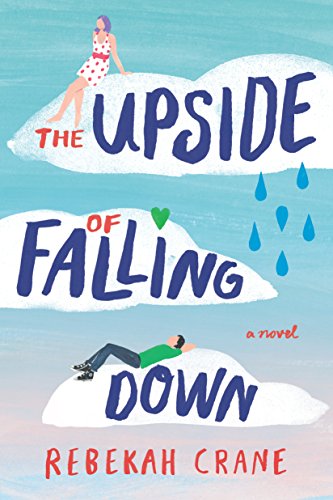
The Upside of Falling Down
Rebecca Crane
new adult fiction

If your past were erased, who would you become? What choices would you make?

While being the sole survivor of a plane crash and suffering amnesia might sound like a plot pulled from a soap opera, Crane makes the scenario an intensely personal one, pulling you into her heroine's lost sense of self and frantic desire to be whole again.

I think this is my favorite Rebekah Crane book so far. I liked that not every character had super unusual name and that while there are lyrical moments, they don't feel so forced. (Infinite Pieces of Us irked me on both counts; The Odds of Loving Grover Cleveland mostly on the former.) The intrigue of a very, very unreliable narrator trying so hard not to be, and discovering her story with her, kept me turning pages. I also liked that well-placed details actually provide clues rather than merely being too-convenient author machinations.

If you're merely looking for a feel-good travel story of touristy vistas, this isn't it. The travel aspect is almost metaphorical--a reflection of the heroine's extreme sense of being lost and out of her element. At its core, the story examines the part memory plays in forming our identities. The slow build romance worked really well, as did Clementine/Jane's friendships, some of which come easily, and others that are hard-won. The mystery behind Clementine's identity makes sense of so much of what comes before that when the truth comes out, you don't feel tricked so much as impressed at the subtlety and wanting to look at it again, like with the film The Sixth Sense.

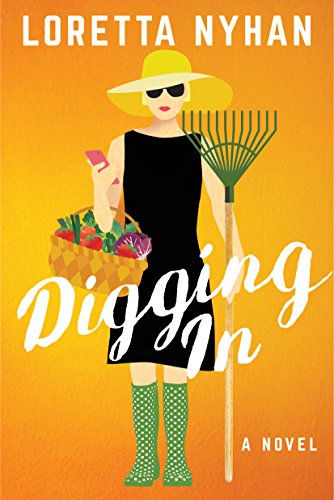
Digging In
Loretta Nyhan
women's fiction

I inhaled this book in two days, it is just that much of a great read, managing to be heartfelt and funny while dealing with some pretty tough issues, like death of a spouse and ageism in the workplace.

It has a chick-lit-ish fun side, glorying in the messiness of life while really making you think. The young, trying-too-hard-to-be-hip boss manages to be equal parts terrifying and laughable, and I really adored the gang of friends Paige manages to gather around her.

While this story certainly has some comic exaggeration in it, I could suspend disbelief because it had such a nice balance of lightness in a dark situation. Kudos to the author for offering hope and making widowhood seem a little less scary, hard as it surely is in reality.


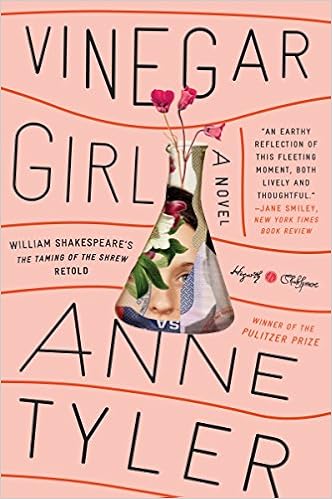
Vinegar Girl
Anne Tyler
literary women's fiction

So many retellings (I'm thinking especially of Austen knock offs) try to slavishly recreate the plot of the original without really modernizing it, so they kind of fall flat. I love that Tyler doesn't fall into this trap. She takes elements of Shakespeare's The Taming of the Shrew, and reworks them in a contemporary idiom so that the result is a delightful read, quite funny, and a lot less sexist than the original.

I especially liked the unusual careers of the characters. How often, outside of medical thrillers, do you ever encounter high-level biomedical researchers who spend all day genetically engineering specialty mice? Tyler totally gets the personalities of men drawn to this kind of work--intellectual, utilitarian, and rather emotionally stupid. Preschool teachers are pretty common in romance, but feisty Kate is terrible at it, breaking the usual stereotype in a wonderful way. The Green Card marriage twist was a pitch-perfect way to update Shakespeare's plot. I was quite wowed by Tyler's ability to really hear and recreate the romantic lead Pyotr's accent. And the wedding scene? Comic gold.


What have you been reading lately?

Thursday, August 01, 2019 Laurel Garver
Sorry to have been gone so long, my friends. In February, we pulled my high schooler out of public school to begin cyber school--a tricky change with a steep learning curve for us all. Despite the online curriculum and teacher support, I needed to be fairly hands on during the transition. I'm thankful to report my daughter ended the year strong. My freelance editing business has been thriving and I've made significant progress on a new novel that I hope to release in time for the Christmas holiday. In this busy year, something had to give, and the blog was it.

As life settles into a new normal, I thought I'd get back in the blogging grove after this long hiatus by sharing my brief take on some recent reads I really enjoyed.


The Upside of Falling Down
Rebecca Crane
new adult fiction

If your past were erased, who would you become? What choices would you make?

While being the sole survivor of a plane crash and suffering amnesia might sound like a plot pulled from a soap opera, Crane makes the scenario an intensely personal one, pulling you into her heroine's lost sense of self and frantic desire to be whole again.

I think this is my favorite Rebekah Crane book so far. I liked that not every character had super unusual name and that while there are lyrical moments, they don't feel so forced. (Infinite Pieces of Us irked me on both counts; The Odds of Loving Grover Cleveland mostly on the former.) The intrigue of a very, very unreliable narrator trying so hard not to be, and discovering her story with her, kept me turning pages. I also liked that well-placed details actually provide clues rather than merely being too-convenient author machinations.

If you're merely looking for a feel-good travel story of touristy vistas, this isn't it. The travel aspect is almost metaphorical--a reflection of the heroine's extreme sense of being lost and out of her element. At its core, the story examines the part memory plays in forming our identities. The slow build romance worked really well, as did Clementine/Jane's friendships, some of which come easily, and others that are hard-won. The mystery behind Clementine's identity makes sense of so much of what comes before that when the truth comes out, you don't feel tricked so much as impressed at the subtlety and wanting to look at it again, like with the film The Sixth Sense.

Digging In
Loretta Nyhan
women's fiction

I inhaled this book in two days, it is just that much of a great read, managing to be heartfelt and funny while dealing with some pretty tough issues, like death of a spouse and ageism in the workplace.

It has a chick-lit-ish fun side, glorying in the messiness of life while really making you think. The young, trying-too-hard-to-be-hip boss manages to be equal parts terrifying and laughable, and I really adored the gang of friends Paige manages to gather around her.

While this story certainly has some comic exaggeration in it, I could suspend disbelief because it had such a nice balance of lightness in a dark situation. Kudos to the author for offering hope and making widowhood seem a little less scary, hard as it surely is in reality.


Vinegar Girl
Anne Tyler
literary women's fiction

So many retellings (I'm thinking especially of Austen knock offs) try to slavishly recreate the plot of the original without really modernizing it, so they kind of fall flat. I love that Tyler doesn't fall into this trap. She takes elements of Shakespeare's The Taming of the Shrew, and reworks them in a contemporary idiom so that the result is a delightful read, quite funny, and a lot less sexist than the original.

I especially liked the unusual careers of the characters. How often, outside of medical thrillers, do you ever encounter high-level biomedical researchers who spend all day genetically engineering specialty mice? Tyler totally gets the personalities of men drawn to this kind of work--intellectual, utilitarian, and rather emotionally stupid. Preschool teachers are pretty common in romance, but feisty Kate is terrible at it, breaking the usual stereotype in a wonderful way. The Green Card marriage twist was a pitch-perfect way to update Shakespeare's plot. I was quite wowed by Tyler's ability to really hear and recreate the romantic lead Pyotr's accent. And the wedding scene? Comic gold.


What have you been reading lately?

Friday, February 8

If you haven't seen the BBC miniseries Wives and Daughters, based on the unfinished novel by Elizabeth Gaskell, I heartily recommend it. I found the story more accessible than Austen's works, perhaps because the social faux pas are more evident to a modern reader. I often feel I'm missing something when I read Austen--the manners so central to the comedy are a bit too removed from our own day.

The acting is really first rate. All the characters come across as full-orbed. The heroine, Molly, is virtuous but outspoken, trustworthy to a fault and perhaps a bit too attached to her father. The stepmother who enters the story is an interesting riff on the stereotype: she's a bit self-absorbed and small-minded, but she's more weak than anything else and never cruel. She fumbles at asserting her role as mistress of the house, coming across as a pitiable character. Along with the stepmother comes a daughter, Cynthia, who is also quite a mixed bag. She's beautiful, charming, free spirited and careless. Though she and Molly become fast friends, her charm and carelessness get her into sticky situations from which Molly loyally tries to rescue her. The hardest part of the story is when Molly crucifies her desires, standing back as the man she loves falls for Cynthia, who neither cherishes nor deserves his love.

The hero and main love interest, Roger, is also pretty unusual. Instead of a rakish, dashing fellow, or a romantic artist or poet, he's a naturalist. He spends his hours outdoors collecting insects and pond scum, then brings his finds inside to draw or examine under a microscope. He seems a far more iteresting hero than most men you'll find in women's literature. He's the guy Gilbert Blythe (Anne of Green Gables series) could be if L.M. Montgomery were better at writing men.

There's a strong undercurrent involving class issues. Most of the romances take place across class boundaries. Those who oppose the matches are often humbled later for their opinion. At one point, Molly repirmands the daughter of the most fabulously wealthy family in town, Lady Harriet, a young woman about 5-7 years her senior. Lady Harriet had confided that she's been invited the home of two middle class spinster sisters who she considers "quite ridiculous," and Molly chides her to not go if you're only going to gawk and laugh, adding that she dislikes hearing her class spoken of that way. Lady Harriet takes the rebuke in stride and her admiration for Molly grows to the point that she takes great pains to help her "protege" ever after. Lady Harriet's brother likewise admires Roger's first-class brain and becomes his benefactor. It was refreshing to see noblesse oblige working properly.

Most of all, I think Wives and Daughters is a fascinating character study in the effects of different parenting. Molly loses her mother at a young age, yet matures into a loyal, soft-hearted girl. Her foil and stepsister, Cynthia, loses her father at a young age. Yet Cynthia matures into a woman who is unable to feel deeply or make meaningful connections with people.

One would expect the motherless girl to fare worse, but Molly is more fully human. Gaskell’s point is that a child needs loving care, regardless of the sex of the parent who gives it.

Cynthia’s living mother treats her as a burden from the beginning of widowhood, sending Cynthia off to boarding school at age 4. Every school vacation, Cynthia is left in the care of strangers while her mother travels with the great families that employ her as governess.

The net effect of this continued neglect is a vanity and manipulativeness, someone who cannot ever turn off the charm for fear of rejection. Yet Cynthia is apt to reject others, three suitors in all in the course of the novel. She admits that she’s not really capable of love or deep feeling for others. Today I think Cynthia would be said to suffer from an attachment disorder.

Molly, on the other hand, is blessed to be educated at home by a loving governess. She lives in a community where the women watch out for her, take an interest in her growth, strive to keep up a relationship with her. Though her father is a busy country doctor in the age of nothing but house calls, he works to be as available as he can. Theirs is a relationship of nurture and friendship. Gaskell paints their intimacy by showing father and daughter kneeling at the fireside, making toasted cheese sandwiches and amiably talking about the day’s events.

When Molly’s father marries Cynthia’s mother, thinking it will help is “poor motherless girl,” Gaskell makes it clear that it’s far too late for Molly to be helped by a stepmother. Her good character is well formed by age 17, as is Cynthia’s weak character. A great tension of the story is whether either girl will be swayed by the new family circumstances so late in “childhood.”

What literary classics have you most enjoyed? What have you learned from them?
Friday, February 08, 2019 Laurel Garver
If you haven't seen the BBC miniseries Wives and Daughters, based on the unfinished novel by Elizabeth Gaskell, I heartily recommend it. I found the story more accessible than Austen's works, perhaps because the social faux pas are more evident to a modern reader. I often feel I'm missing something when I read Austen--the manners so central to the comedy are a bit too removed from our own day.

The acting is really first rate. All the characters come across as full-orbed. The heroine, Molly, is virtuous but outspoken, trustworthy to a fault and perhaps a bit too attached to her father. The stepmother who enters the story is an interesting riff on the stereotype: she's a bit self-absorbed and small-minded, but she's more weak than anything else and never cruel. She fumbles at asserting her role as mistress of the house, coming across as a pitiable character. Along with the stepmother comes a daughter, Cynthia, who is also quite a mixed bag. She's beautiful, charming, free spirited and careless. Though she and Molly become fast friends, her charm and carelessness get her into sticky situations from which Molly loyally tries to rescue her. The hardest part of the story is when Molly crucifies her desires, standing back as the man she loves falls for Cynthia, who neither cherishes nor deserves his love.

The hero and main love interest, Roger, is also pretty unusual. Instead of a rakish, dashing fellow, or a romantic artist or poet, he's a naturalist. He spends his hours outdoors collecting insects and pond scum, then brings his finds inside to draw or examine under a microscope. He seems a far more iteresting hero than most men you'll find in women's literature. He's the guy Gilbert Blythe (Anne of Green Gables series) could be if L.M. Montgomery were better at writing men.

There's a strong undercurrent involving class issues. Most of the romances take place across class boundaries. Those who oppose the matches are often humbled later for their opinion. At one point, Molly repirmands the daughter of the most fabulously wealthy family in town, Lady Harriet, a young woman about 5-7 years her senior. Lady Harriet had confided that she's been invited the home of two middle class spinster sisters who she considers "quite ridiculous," and Molly chides her to not go if you're only going to gawk and laugh, adding that she dislikes hearing her class spoken of that way. Lady Harriet takes the rebuke in stride and her admiration for Molly grows to the point that she takes great pains to help her "protege" ever after. Lady Harriet's brother likewise admires Roger's first-class brain and becomes his benefactor. It was refreshing to see noblesse oblige working properly.

Most of all, I think Wives and Daughters is a fascinating character study in the effects of different parenting. Molly loses her mother at a young age, yet matures into a loyal, soft-hearted girl. Her foil and stepsister, Cynthia, loses her father at a young age. Yet Cynthia matures into a woman who is unable to feel deeply or make meaningful connections with people.

One would expect the motherless girl to fare worse, but Molly is more fully human. Gaskell’s point is that a child needs loving care, regardless of the sex of the parent who gives it.

Cynthia’s living mother treats her as a burden from the beginning of widowhood, sending Cynthia off to boarding school at age 4. Every school vacation, Cynthia is left in the care of strangers while her mother travels with the great families that employ her as governess.

The net effect of this continued neglect is a vanity and manipulativeness, someone who cannot ever turn off the charm for fear of rejection. Yet Cynthia is apt to reject others, three suitors in all in the course of the novel. She admits that she’s not really capable of love or deep feeling for others. Today I think Cynthia would be said to suffer from an attachment disorder.

Molly, on the other hand, is blessed to be educated at home by a loving governess. She lives in a community where the women watch out for her, take an interest in her growth, strive to keep up a relationship with her. Though her father is a busy country doctor in the age of nothing but house calls, he works to be as available as he can. Theirs is a relationship of nurture and friendship. Gaskell paints their intimacy by showing father and daughter kneeling at the fireside, making toasted cheese sandwiches and amiably talking about the day’s events.

When Molly’s father marries Cynthia’s mother, thinking it will help is “poor motherless girl,” Gaskell makes it clear that it’s far too late for Molly to be helped by a stepmother. Her good character is well formed by age 17, as is Cynthia’s weak character. A great tension of the story is whether either girl will be swayed by the new family circumstances so late in “childhood.”

What literary classics have you most enjoyed? What have you learned from them?

Thursday, January 24

I confess I wasn't much of a reader in my childhood. From age 4 to almost 9, I lived on a 100-acre farm (most of it forested), where I spent many happy afternoons imagining adventures with a host of imaginary friends, a few barn cats at my heels. Being cooped up inside looking at paper was the stuff of school, the stuff of have-to, must, and you'd better.... Out among the trees was the stuff of color, texture, and life of all kinds. The worlds my imagination built were more real to me than Dick and Jane, cursive, and George Washington.

I suspect this concerned my parents a bit. They were both big readers who filled our house with books and magazines. They often read to me at bedtime, and on long car trips, Mom or one of my sibs would read aloud to us. Several books of the Narnia series got us through the insanely long drive from Pennsylvania to my grandparents' house in western Montana.

My parents rarely, if ever, watched TV. In fact, my oldest siblings grew up without one in the house. I was, according to them, lucky to even have a TV. It was black-and-white in an era when absolutely everyone else had color, and we got only four channels out in the sticks--the three major networks and PBS. The 70s weren't known for realistic programming--aside from the Bionic Man, Wonder Woman,  and Fantasy Island, were the distant luxury worlds of The Love Boat, and the sanitized "Old West" of Little House on the Prairie. These shows, plus The Wonderful World of Disney, and some Saturday cartoons made up my entertainment diet, which was quite time-limited. When I complained about my meager TV time, "Go play," was the usual response. So I did.

We ended up having to sell the farm because my father had a mental health crisis. My ability to get lost in my imaginary world saved me, I think. Out in the woods, I could process my anxieties. Nature soothed me and brought joy in a very dark time for our family.

Our new home was a more manageable three acres, part of it wooded with a creek, so the adventures--and my source of nature therapy--continued there. Through a school friend, I soon got caught up in an obsession with horses. Her family had kept them sporadically, and she took riding lessons from a stable near her house. Many a Saturday, I trailed her around the barn, soaking up knowledge about how to care for these amazing creatures.

My seventh-grade reading teacher somehow caught onto the fact that I didn't really read for pleasure, though I had no struggles other than a lack of interest. One day during study hall, she called me over to her closet at the back of the classroom. "I hear you like horses," she whispered conspiratorially. "Check this out." She handed me a book with a gorgeous bay mare on the cover. "You want to borrow it?" Boy, did I ever.

I read every horse book Mrs. Brooks had. Over the next two years, I read nearly every horse story my public library had, and there were quite a few. When I finished those, I read other books written for middle schoolers, most notably Madeleine L'Engle's work.

During the same period, I was placed in the gifted program, and our advisor got us playing Dungeons and Dragons as a problem-solving and creativity-building exercise. D&D draws on historic and fantastical lore from many, many sources, which opened up even more avenues for reading for me. And the storytelling aspect of role play also captured my imagination.

Soon I was writing my own stories. Not just short works, but the beginnings of full novels with large casts of characters. The itch to create worlds with words was a natural outflow of many, many hours spent in creative play early on. My writing only grew from there, and my love of reading continued to flourish into an English degree and a career in publishing.

So if you have a reluctant reader in your house, take heart.  Not every writer starts out bookish. Model good reading habits. Keep your home full of books that are cool to look at. Read aloud to this child and as a whole family, enjoying and discussing a book together. Limit TV and computer time. Give lots of outdoor playtime in nature. Be patient for the right opportunity to let your child follow their passions in pleasure reading.

Have you seen other reluctant readers go on to become writers? What encouragement would you give to parents of reluctant readers?
Thursday, January 24, 2019 Laurel Garver
I confess I wasn't much of a reader in my childhood. From age 4 to almost 9, I lived on a 100-acre farm (most of it forested), where I spent many happy afternoons imagining adventures with a host of imaginary friends, a few barn cats at my heels. Being cooped up inside looking at paper was the stuff of school, the stuff of have-to, must, and you'd better.... Out among the trees was the stuff of color, texture, and life of all kinds. The worlds my imagination built were more real to me than Dick and Jane, cursive, and George Washington.

I suspect this concerned my parents a bit. They were both big readers who filled our house with books and magazines. They often read to me at bedtime, and on long car trips, Mom or one of my sibs would read aloud to us. Several books of the Narnia series got us through the insanely long drive from Pennsylvania to my grandparents' house in western Montana.

My parents rarely, if ever, watched TV. In fact, my oldest siblings grew up without one in the house. I was, according to them, lucky to even have a TV. It was black-and-white in an era when absolutely everyone else had color, and we got only four channels out in the sticks--the three major networks and PBS. The 70s weren't known for realistic programming--aside from the Bionic Man, Wonder Woman,  and Fantasy Island, were the distant luxury worlds of The Love Boat, and the sanitized "Old West" of Little House on the Prairie. These shows, plus The Wonderful World of Disney, and some Saturday cartoons made up my entertainment diet, which was quite time-limited. When I complained about my meager TV time, "Go play," was the usual response. So I did.

We ended up having to sell the farm because my father had a mental health crisis. My ability to get lost in my imaginary world saved me, I think. Out in the woods, I could process my anxieties. Nature soothed me and brought joy in a very dark time for our family.

Our new home was a more manageable three acres, part of it wooded with a creek, so the adventures--and my source of nature therapy--continued there. Through a school friend, I soon got caught up in an obsession with horses. Her family had kept them sporadically, and she took riding lessons from a stable near her house. Many a Saturday, I trailed her around the barn, soaking up knowledge about how to care for these amazing creatures.

My seventh-grade reading teacher somehow caught onto the fact that I didn't really read for pleasure, though I had no struggles other than a lack of interest. One day during study hall, she called me over to her closet at the back of the classroom. "I hear you like horses," she whispered conspiratorially. "Check this out." She handed me a book with a gorgeous bay mare on the cover. "You want to borrow it?" Boy, did I ever.

I read every horse book Mrs. Brooks had. Over the next two years, I read nearly every horse story my public library had, and there were quite a few. When I finished those, I read other books written for middle schoolers, most notably Madeleine L'Engle's work.

During the same period, I was placed in the gifted program, and our advisor got us playing Dungeons and Dragons as a problem-solving and creativity-building exercise. D&D draws on historic and fantastical lore from many, many sources, which opened up even more avenues for reading for me. And the storytelling aspect of role play also captured my imagination.

Soon I was writing my own stories. Not just short works, but the beginnings of full novels with large casts of characters. The itch to create worlds with words was a natural outflow of many, many hours spent in creative play early on. My writing only grew from there, and my love of reading continued to flourish into an English degree and a career in publishing.

So if you have a reluctant reader in your house, take heart.  Not every writer starts out bookish. Model good reading habits. Keep your home full of books that are cool to look at. Read aloud to this child and as a whole family, enjoying and discussing a book together. Limit TV and computer time. Give lots of outdoor playtime in nature. Be patient for the right opportunity to let your child follow their passions in pleasure reading.

Have you seen other reluctant readers go on to become writers? What encouragement would you give to parents of reluctant readers?