Thursday, March 21

One of my neighbors is a wonderfully eccentric homeschooling mom who painted her Edwardian-era home purple, gold and teal and keeps chickens in her tiny yard, a block from the commuter rail station. She's often out in her garden with her rough-and-tumble girls, teaching them about plant life cycles or reading poetry.

So when an adorable miniature house full of books appeared at her front gate, painted to match the main house, I thought it was another one of Sue's cool new ideas. Share books! Meet neighbors! The "Little Free Library" sign, I believed, must be a riff on Philadelphia's public library system, called "The Free Library of Philadelphia."

While perusing this month's O, the Oprah Magazine, I came across a brief article on a very special organization behind Sue's box. Apparently there's an international movement of "take a book, leave a book," neighborhood by neighborhood.

The Little Free Library is a charity that helps individuals (folks like you and me) foster literacy and build community in their neighborhoods. You can order kits from their site and place a miniature lending library on your property. Register your library with LFL to receive extra support. The organization also is active in providing books to the third world to promote global literacy.

Here are a few more adorable libraries to inspire you:

Habitat for the Humanities (clever, right?)

A book barn!

A very classy library.
Go check it out, my book-loving friends! This might be just the thing your neighborhood needs.

If you could custom-design a box for your yard, what would it look like? What books might you share with your neighbors?
Thursday, March 21, 2013 Laurel Garver
One of my neighbors is a wonderfully eccentric homeschooling mom who painted her Edwardian-era home purple, gold and teal and keeps chickens in her tiny yard, a block from the commuter rail station. She's often out in her garden with her rough-and-tumble girls, teaching them about plant life cycles or reading poetry.

So when an adorable miniature house full of books appeared at her front gate, painted to match the main house, I thought it was another one of Sue's cool new ideas. Share books! Meet neighbors! The "Little Free Library" sign, I believed, must be a riff on Philadelphia's public library system, called "The Free Library of Philadelphia."

While perusing this month's O, the Oprah Magazine, I came across a brief article on a very special organization behind Sue's box. Apparently there's an international movement of "take a book, leave a book," neighborhood by neighborhood.

The Little Free Library is a charity that helps individuals (folks like you and me) foster literacy and build community in their neighborhoods. You can order kits from their site and place a miniature lending library on your property. Register your library with LFL to receive extra support. The organization also is active in providing books to the third world to promote global literacy.

Here are a few more adorable libraries to inspire you:

Habitat for the Humanities (clever, right?)

A book barn!

A very classy library.
Go check it out, my book-loving friends! This might be just the thing your neighborhood needs.

If you could custom-design a box for your yard, what would it look like? What books might you share with your neighbors?

Monday, March 18

I'm over at Crystal Collier's blog today, talking about how I got started writing poetry and my attraction to the offbeat and the "beauty of the weird." Please stop on by and say hello!

 In celebration of my new release, I'm also hosting a giveaway of a digital copy of Muddy-Fingered Midnights. The contest ends April 1 (no fooling), just in time for National Poetry Month. Use the widget below to enter:

a Rafflecopter giveaway
Monday, March 18, 2013 Laurel Garver
I'm over at Crystal Collier's blog today, talking about how I got started writing poetry and my attraction to the offbeat and the "beauty of the weird." Please stop on by and say hello!

 In celebration of my new release, I'm also hosting a giveaway of a digital copy of Muddy-Fingered Midnights. The contest ends April 1 (no fooling), just in time for National Poetry Month. Use the widget below to enter:

a Rafflecopter giveaway

Thursday, March 14

The happy day has arrived! It's release day for my first-ever poetry collection.

Muddy-Fingered Midnights
poems from the bright days 
and dark nights of the soul


This thirty-poem collection is an eclectic mix of light and dark, playful and spiritual, lyric and narrative free verse. In an intricate dance of sound play, it explores how our perceptions shape our interactions with the world. Here child heroes emerge on playgrounds and in chicken coops, teens grapple with grief and taste first love, adults waver between isolation and engaged connection. It is a book about creative life, our capacity to wound and heal, and the unlikely places we find love, beauty, and grace. 

“In Muddy-Fingered Midnights, Garver seamlessly integrates unpredictable rhyme and alliteration to undergird the themes and strange beauty of these poems. The collection explores moments of cowardice and melting purity, ‘my only fruit / a cool ooze / that bubbles up / on blistering days,’  yet holds strongly onto faith as much as ‘Yankee girl grit.’ Even in dark times that are ‘glassy with misery,’ there’s a hidden reflection in the pane: hope.” 

—Jessica Bell, co-founder of Vine Leaves Literary Journal and author of Fabric, semi-finalist, Goodreads Readers’ Choice Awards 2012: Best Poetry.


The title comes from the final piece in the collection, "A Writer's Parable," which explores fear in the creative process, using imagery from the parable of the talents in Matthew 25 (the one where the cowardly servant buries his piece of gold in the ground rather than take a risk and invest it like his faithful co-workers do).

The collection includes a number of all-new pieces, plus previously published favorites that appeared in international literary journals. About 2/3 of the poems are general topics, a 1/3 have spiritual themes. I love using sound-play, but don't use traditional forms. Within free verse, rhythms emerge organically and rhyming is nearly always inside lines rather than at the ends.

Here are a few sample pieces:
Affliction, about the writing life
Storm Shelter, rom-dram fiction-in-verse
Not Quite Away, experimental narrative poem

Fun and soulful, dark and bright, Muddy-Fingered Midnights has a little something for everyone in small, bite-sized pieces.

Add it on Goodreads

The digital book is just $1.99. 
Find it here: Amazon, Barnes and Noble, Kobo, Smashwords

Or get the paperback for $6.50 from CreateSpace, Amazon

Can you help me spread the word? Simply use the share links below. Thanks!! 

Thursday, March 14, 2013 Laurel Garver
The happy day has arrived! It's release day for my first-ever poetry collection.

Muddy-Fingered Midnights
poems from the bright days 
and dark nights of the soul


This thirty-poem collection is an eclectic mix of light and dark, playful and spiritual, lyric and narrative free verse. In an intricate dance of sound play, it explores how our perceptions shape our interactions with the world. Here child heroes emerge on playgrounds and in chicken coops, teens grapple with grief and taste first love, adults waver between isolation and engaged connection. It is a book about creative life, our capacity to wound and heal, and the unlikely places we find love, beauty, and grace. 

“In Muddy-Fingered Midnights, Garver seamlessly integrates unpredictable rhyme and alliteration to undergird the themes and strange beauty of these poems. The collection explores moments of cowardice and melting purity, ‘my only fruit / a cool ooze / that bubbles up / on blistering days,’  yet holds strongly onto faith as much as ‘Yankee girl grit.’ Even in dark times that are ‘glassy with misery,’ there’s a hidden reflection in the pane: hope.” 

—Jessica Bell, co-founder of Vine Leaves Literary Journal and author of Fabric, semi-finalist, Goodreads Readers’ Choice Awards 2012: Best Poetry.


The title comes from the final piece in the collection, "A Writer's Parable," which explores fear in the creative process, using imagery from the parable of the talents in Matthew 25 (the one where the cowardly servant buries his piece of gold in the ground rather than take a risk and invest it like his faithful co-workers do).

The collection includes a number of all-new pieces, plus previously published favorites that appeared in international literary journals. About 2/3 of the poems are general topics, a 1/3 have spiritual themes. I love using sound-play, but don't use traditional forms. Within free verse, rhythms emerge organically and rhyming is nearly always inside lines rather than at the ends.

Here are a few sample pieces:
Affliction, about the writing life
Storm Shelter, rom-dram fiction-in-verse
Not Quite Away, experimental narrative poem

Fun and soulful, dark and bright, Muddy-Fingered Midnights has a little something for everyone in small, bite-sized pieces.

Add it on Goodreads

The digital book is just $1.99. 
Find it here: Amazon, Barnes and Noble, Kobo, Smashwords

Or get the paperback for $6.50 from CreateSpace, Amazon

Can you help me spread the word? Simply use the share links below. Thanks!! 

Monday, March 11


by Michelle Davidson Argyle

I have two books out that are considered a series—The Breakaway (about a girl who’s kidnapped and falls in love with her kidnapper) and Pieces (about the same girl, but two years after the events of The Breakaway). To me, the duet feels like a companion set rather than a series, but one thing remains constant, and that is the fact that when I sat down to write Pieces seventeen years after I very first wrote The Breakaway, I had to figure out how to mature Naomi, my main character. Although I’ve written nine novels in my career, I’ve never written a series, so you can imagine the sense of fear I felt heading into such a project.

Naomi, the main character in the duet, is seventeen when The Breakaway begins. She’s almost graduated from high school, has an abusive boyfriend and absentee parents. She’s a little more mature for her age, but she’s still only seventeen. By the end of The Breakaway, Naomi is nineteen. By the time Pieces opens, she is turning twenty-one. All I can say is … um, yikes. Did I have a surprise coming when I started writing Pieces! I got about 10,000 words in and hit a BRICK WALL. Turns out I had to stop completely and pull out my copy of The Breakaway.

You have to understand that at this point, The Breakaway had been published for about three months. I couldn’t go back and change anything. It was set in stone. Anything that came in Pieces had to be worked around The Breakaway because, well, I never, ever for one-teeny-tiny-second planned to write a sequel/companion/whatever-it-is. It just happened. To say the least, I was a little lost when I started. I kept running into problems. Naomi was a character I created years and years and years ago. Sure, I did revisions and edits on the book before it was published, but when I first created Naomi and her voice and all her little nuances, I was almost a different person. I was a teenager. I’m far from that now. So what did I do?

I read through The Breakaway from cover-to-cover. Twice. I got to know Naomi all over again. I pulled out my highlighters and started highlighting physical descriptions, certain words characters like to use, details all over the place…until I finally felt I was immersed enough in the world again that I could continue forward.

The other problem, though? How much would someone like Naomi really change? Without giving too much away of the story, all I can say is she suffers from pretty severe Stockholm Syndrome. I never really get into that term in the books, but it’s there, in every line, in every crazy decision Naomi makes. So I not only had to take into account how someone changes between nineteen and twenty-one, but how someone with Stockholm Syndrome might change (or, in Naomi’s case, not change between nineteen and twenty-one). I did a lot of remembering back to my college years, the insecurities, the need to belong to someone and/or something, the need to discover who the heck you really are and where you are going. I wrapped all that up into Naomi’s character, added her insane issues, and I had a refreshed character I could finally start writing. And yikes, was it a fun ride! I love Pieces because I had no idea Naomi had so much more to grow. I’m happy I made the journey with her, though.

To wrap up, I’d say anyone working on a series/duet/companion where you have to mature a character across a span of time, keep one thing in mind—people change, but at heart, they don’t change that much. The biggest changes, I’ve found, are in people’s decisions and realizations, not in who they are.


Michelle Davidson Argyle lives and writes in Utah, surrounded by the Rocky Mountains. She loves the seasons, but late summer and early fall are her favorites. She adores chocolate, sushi, and lots of ethnic food, and loves to read and write books in whatever time she can grab between her sword-wielding husband and energetic daughter. She believes a simple life is the best life.


About the books: The Breakaway / Pieces 

 -----
Thanks so much, Michelle, for coming by and sharing your insights on maturing characters, and also on how to pick up a former creation and build a whole new story for that protagonist. 

What do you think, readers? Do you have any questions for Michelle? 
Have you attempted series writing? What worked for you? Ever try to pick up a character you first wrote more than a decade ago?
Monday, March 11, 2013 Laurel Garver

by Michelle Davidson Argyle

I have two books out that are considered a series—The Breakaway (about a girl who’s kidnapped and falls in love with her kidnapper) and Pieces (about the same girl, but two years after the events of The Breakaway). To me, the duet feels like a companion set rather than a series, but one thing remains constant, and that is the fact that when I sat down to write Pieces seventeen years after I very first wrote The Breakaway, I had to figure out how to mature Naomi, my main character. Although I’ve written nine novels in my career, I’ve never written a series, so you can imagine the sense of fear I felt heading into such a project.

Naomi, the main character in the duet, is seventeen when The Breakaway begins. She’s almost graduated from high school, has an abusive boyfriend and absentee parents. She’s a little more mature for her age, but she’s still only seventeen. By the end of The Breakaway, Naomi is nineteen. By the time Pieces opens, she is turning twenty-one. All I can say is … um, yikes. Did I have a surprise coming when I started writing Pieces! I got about 10,000 words in and hit a BRICK WALL. Turns out I had to stop completely and pull out my copy of The Breakaway.

You have to understand that at this point, The Breakaway had been published for about three months. I couldn’t go back and change anything. It was set in stone. Anything that came in Pieces had to be worked around The Breakaway because, well, I never, ever for one-teeny-tiny-second planned to write a sequel/companion/whatever-it-is. It just happened. To say the least, I was a little lost when I started. I kept running into problems. Naomi was a character I created years and years and years ago. Sure, I did revisions and edits on the book before it was published, but when I first created Naomi and her voice and all her little nuances, I was almost a different person. I was a teenager. I’m far from that now. So what did I do?

I read through The Breakaway from cover-to-cover. Twice. I got to know Naomi all over again. I pulled out my highlighters and started highlighting physical descriptions, certain words characters like to use, details all over the place…until I finally felt I was immersed enough in the world again that I could continue forward.

The other problem, though? How much would someone like Naomi really change? Without giving too much away of the story, all I can say is she suffers from pretty severe Stockholm Syndrome. I never really get into that term in the books, but it’s there, in every line, in every crazy decision Naomi makes. So I not only had to take into account how someone changes between nineteen and twenty-one, but how someone with Stockholm Syndrome might change (or, in Naomi’s case, not change between nineteen and twenty-one). I did a lot of remembering back to my college years, the insecurities, the need to belong to someone and/or something, the need to discover who the heck you really are and where you are going. I wrapped all that up into Naomi’s character, added her insane issues, and I had a refreshed character I could finally start writing. And yikes, was it a fun ride! I love Pieces because I had no idea Naomi had so much more to grow. I’m happy I made the journey with her, though.

To wrap up, I’d say anyone working on a series/duet/companion where you have to mature a character across a span of time, keep one thing in mind—people change, but at heart, they don’t change that much. The biggest changes, I’ve found, are in people’s decisions and realizations, not in who they are.


Michelle Davidson Argyle lives and writes in Utah, surrounded by the Rocky Mountains. She loves the seasons, but late summer and early fall are her favorites. She adores chocolate, sushi, and lots of ethnic food, and loves to read and write books in whatever time she can grab between her sword-wielding husband and energetic daughter. She believes a simple life is the best life.


About the books: The Breakaway / Pieces 

 -----
Thanks so much, Michelle, for coming by and sharing your insights on maturing characters, and also on how to pick up a former creation and build a whole new story for that protagonist. 

What do you think, readers? Do you have any questions for Michelle? 
Have you attempted series writing? What worked for you? Ever try to pick up a character you first wrote more than a decade ago?

Friday, March 8


Dear Editor-on-call:

I always have trouble with lay and lie. I've heard that people lie and objects lay but it always sounds odd to me to say, "I'm lying here" instead of "I'm laying here." What is the correct usage?

Yours truly,
Don't want to lie

Dear No lie,

The mnemonic you mentioned is correct. Only a chicken, dinosaur or other oviparous creature should ever say "I'm laying here."

Except in the sense of producing eggs, lay is always a transitive verb. That means it is the sort of action that always happens TO something (its object). It behaves more like other "regular" verbs, taking an -ed sounding ending (though spelled differently).

Photo credit: Carool from morguefile.com
The basic pattern: lay, laid, had/have laid (NOT layed)

Here are some examples, with the verb in italics and the object highlighted:

Present: Lay your key here.
He lays down the law.
Present participle: We are laying all rejects on this pile.
Past: Jo laid her dry cleaning on the counter.
Past participle: The Duke had laid all choices before him.
Future: Xan will lay your order out in the morning
Gerund: Laying carpet is hard work.


Lie, on the other hand, is intransitive. It's a simple action the subject does. Period. But it's not so simple tense-wise. It's annoyingly irregular with a past tense that trips us up: lay! Argh.

Basic pattern: lie, lay, had/have lain
Photo credit: greyerbaby from morguefile.com

PresentLie still!
Lulu lies on the hammock.
Present participle:am lying in bed, reading.
Past: Hector lay there, dreaming of victory.
Past participle: The tiger had lain in wait.
Future: Dad will lie down when his shift ends.
Gerund: Lying around is relaxing.


I think another reason for your discomfort is that fact that this perfectly good verb has a homonym (sound alike) that means "to tell a falsehood." And who wants that taint to one's honest rest? Well, anyone who isn't a chicken.

We usually overcome that confusion by adding place markers like "lie down" or "lying on the couch" to distinguish reclining from speaking falsehood.

To summarize:
Use LAY when moving objects. 
Its tenses are regular, if strangely spelled.

Use LIE when the actor is moving him/herself. 
Its tenses are irregular.

How do you keep lay and lie straight in your mind? Any tips to add? Any other topics you'd like me to tackle in an "Editor-on-call" post?
Friday, March 08, 2013 Laurel Garver

Dear Editor-on-call:

I always have trouble with lay and lie. I've heard that people lie and objects lay but it always sounds odd to me to say, "I'm lying here" instead of "I'm laying here." What is the correct usage?

Yours truly,
Don't want to lie

Dear No lie,

The mnemonic you mentioned is correct. Only a chicken, dinosaur or other oviparous creature should ever say "I'm laying here."

Except in the sense of producing eggs, lay is always a transitive verb. That means it is the sort of action that always happens TO something (its object). It behaves more like other "regular" verbs, taking an -ed sounding ending (though spelled differently).

Photo credit: Carool from morguefile.com
The basic pattern: lay, laid, had/have laid (NOT layed)

Here are some examples, with the verb in italics and the object highlighted:

Present: Lay your key here.
He lays down the law.
Present participle: We are laying all rejects on this pile.
Past: Jo laid her dry cleaning on the counter.
Past participle: The Duke had laid all choices before him.
Future: Xan will lay your order out in the morning
Gerund: Laying carpet is hard work.


Lie, on the other hand, is intransitive. It's a simple action the subject does. Period. But it's not so simple tense-wise. It's annoyingly irregular with a past tense that trips us up: lay! Argh.

Basic pattern: lie, lay, had/have lain
Photo credit: greyerbaby from morguefile.com

PresentLie still!
Lulu lies on the hammock.
Present participle:am lying in bed, reading.
Past: Hector lay there, dreaming of victory.
Past participle: The tiger had lain in wait.
Future: Dad will lie down when his shift ends.
Gerund: Lying around is relaxing.


I think another reason for your discomfort is that fact that this perfectly good verb has a homonym (sound alike) that means "to tell a falsehood." And who wants that taint to one's honest rest? Well, anyone who isn't a chicken.

We usually overcome that confusion by adding place markers like "lie down" or "lying on the couch" to distinguish reclining from speaking falsehood.

To summarize:
Use LAY when moving objects. 
Its tenses are regular, if strangely spelled.

Use LIE when the actor is moving him/herself. 
Its tenses are irregular.

How do you keep lay and lie straight in your mind? Any tips to add? Any other topics you'd like me to tackle in an "Editor-on-call" post?

Monday, March 4

Once you take the Indie plunge, you might be tempted to be very hands-off with the vendors to whom you outsource tasks. Especially your cover designer. Writing is verbal, design is visual. Unless you've had the good fortune to have studied communications or journalism, where you're trained in both sets of skills, you likely will take anything your designer says as gospel.

But here's the rub. Some designers know digital deeply and intimately, but have very little knowledge of the ins and outs of print production. And print is a very different animal. What you see on screen is not necessarily what you get in final output when a press (even a digital press) is generating the product.

The one thing you must know and discuss with a designer is this: digital colors and print colors are created completely differently, so how do I get a consistently good product for both e-books and paperbacks?

Digital colors are built from lights in red, green and blue (designers call it RGB). The maximum amount of all three combined creates...WHITE! Weird, right? This is how computers create color. If you only do e-books, you're golden. What you see on screen is an excellent representation of the final product.

RGB or digital color. Image source: wikipedia

Print colors, on the other hand, are build from inks in cyan (a medium turquoise), magenta, yellow and black (designers call it CMYK). The maximum amount of all four combined colors is...BLACK, like the bottom of the Mariana trench in density of darkness. Because the RGB system of a computer monitor makes color differently than a printing device, what you see on screen is not exactly what you get when output onto paper. There's translation involved. And if you want your paperback cover to look as attractive as you e-book, you need to be careful about color choice.

CMYK or "process" color used in printing


Is you mind blown?

Can you see why you might want to discuss color with your designer? Or, if you're a do-it-yourself-er, why you need to educate yourself a bit?

When choosing solid colors for a design, you need to see swatches from a "process color" swatch book to really know what your output will look like. A nice onscreen color might become a muddy or hazy color when translated to CMYK. This is especially true for darker shades of blue from royal to navy.

Another tip--especially for colored text--you want those colors to be composed of the fewest number of inks. Remember that the print process involves laying down tiny dots of ink next to each other. Newer digital presses are pretty good at staying aligned, but there's always a chance that off-register problems can arise. Here's an illustration that shows the ugly result of misalignment in registration.

cyan and magenta are misaligned; image from Wikipedia
The fewer inks you use, the less likely you'll have to worry about misalignment. So when looking through that process swatch book, think about what color will output best that can be made most simply.

For example, when selecting between two emerald greens, such as these two:
PMS 348: C=97, Y=95, M=17

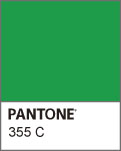
PMS 355: C=93, Y=96

I know I'll get better results with the two-ink shade than the three-ink shade.

If you're planning to only create e-books, someone with expertise in Web design might be perfectly capable of creating a great cover design. If you plan to do both e-book and a paperback, however, it's a good idea to work with a designer with some print experience. And the more you know, the better you'll be able to communicate and make wise decisions.

And do-it-yourself-ers, take the time to learn about the print process. A few resources I recommend are:

Printing and Prepress Basics
Claudia McCue's book Real World Print Production with Adobe Creative Suite Applications
From Design Into Print: Preparing Graphics and Text for Professional Printing by Sandee Cohen
The Non-Designers Design Book by Robin Williams

Do you feel more empowered as a consumer of design services? What other questions or concerns do you have about producing print books?
Monday, March 04, 2013 Laurel Garver
Once you take the Indie plunge, you might be tempted to be very hands-off with the vendors to whom you outsource tasks. Especially your cover designer. Writing is verbal, design is visual. Unless you've had the good fortune to have studied communications or journalism, where you're trained in both sets of skills, you likely will take anything your designer says as gospel.

But here's the rub. Some designers know digital deeply and intimately, but have very little knowledge of the ins and outs of print production. And print is a very different animal. What you see on screen is not necessarily what you get in final output when a press (even a digital press) is generating the product.

The one thing you must know and discuss with a designer is this: digital colors and print colors are created completely differently, so how do I get a consistently good product for both e-books and paperbacks?

Digital colors are built from lights in red, green and blue (designers call it RGB). The maximum amount of all three combined creates...WHITE! Weird, right? This is how computers create color. If you only do e-books, you're golden. What you see on screen is an excellent representation of the final product.

RGB or digital color. Image source: wikipedia

Print colors, on the other hand, are build from inks in cyan (a medium turquoise), magenta, yellow and black (designers call it CMYK). The maximum amount of all four combined colors is...BLACK, like the bottom of the Mariana trench in density of darkness. Because the RGB system of a computer monitor makes color differently than a printing device, what you see on screen is not exactly what you get when output onto paper. There's translation involved. And if you want your paperback cover to look as attractive as you e-book, you need to be careful about color choice.

CMYK or "process" color used in printing


Is you mind blown?

Can you see why you might want to discuss color with your designer? Or, if you're a do-it-yourself-er, why you need to educate yourself a bit?

When choosing solid colors for a design, you need to see swatches from a "process color" swatch book to really know what your output will look like. A nice onscreen color might become a muddy or hazy color when translated to CMYK. This is especially true for darker shades of blue from royal to navy.

Another tip--especially for colored text--you want those colors to be composed of the fewest number of inks. Remember that the print process involves laying down tiny dots of ink next to each other. Newer digital presses are pretty good at staying aligned, but there's always a chance that off-register problems can arise. Here's an illustration that shows the ugly result of misalignment in registration.

cyan and magenta are misaligned; image from Wikipedia
The fewer inks you use, the less likely you'll have to worry about misalignment. So when looking through that process swatch book, think about what color will output best that can be made most simply.

For example, when selecting between two emerald greens, such as these two:
PMS 348: C=97, Y=95, M=17

PMS 355: C=93, Y=96

I know I'll get better results with the two-ink shade than the three-ink shade.

If you're planning to only create e-books, someone with expertise in Web design might be perfectly capable of creating a great cover design. If you plan to do both e-book and a paperback, however, it's a good idea to work with a designer with some print experience. And the more you know, the better you'll be able to communicate and make wise decisions.

And do-it-yourself-ers, take the time to learn about the print process. A few resources I recommend are:

Printing and Prepress Basics
Claudia McCue's book Real World Print Production with Adobe Creative Suite Applications
From Design Into Print: Preparing Graphics and Text for Professional Printing by Sandee Cohen
The Non-Designers Design Book by Robin Williams

Do you feel more empowered as a consumer of design services? What other questions or concerns do you have about producing print books?

Friday, March 1

Welcome! 

This page is a compilation of all my guest appearances around the Internet. Learn more about my fiction, poetry and writing tips.

Contact
To request an interview, guest post, or a copy of my work for review, e-mail me at
laurels (dot) leaves (at) gmail (dot) com

Never Gone 

Articles

Exploring father-daughter relationships: Why Dads Matter

From high rises to cathedrals--setting a story in NYC and rural England: How I develop setting

Writing realistic romanceRepulsion, Attraction, Connection: Romance is more than "hotness"

Writing a character for whom faith is a natural part of life: The truth about...writing faith

How I use poetic techniques in my fiction to make it more musical: Make your stories sing

How I wrote Never Gone: inspirations and themes--Grief, ghosts and God

Advice on writing bereaved characters: Grief faces, not phases

Advice on developing distinct character voices: Elements of Voice

Learning to embrace a messy creative process: The two-faced life of a writing editor

Laurel's favorite book from childhood: Stories of our youth: empathy and transformation

On writing stories when you're mature enough to do them justice: Let It Simmer

Why community matters in Never Gone, and for me as a writer: The importance of community and support

Tips and tricks learned while creating the book trailer for Never Gone: Eleven book trailer tips

Interviews

Edgy and clean? Writing across genre divides
"KA: You call Never Gone’s genre 'YA edgy inspirational.' What does that mean?
LG: It means Christian in outlook, but with mature, challenging situations. 'Edgy' here is not what mainstream publishers mean by the term — they’re generally talking content and language that would earn an R rating if it were a film. My story is 'edgy' compared to other books in the Christian book market."
More here: interview with Karen Akins

Why I wrote Never Gone: tackling the question of "where is God when we suffer?"
"I wanted to explore how loss and grief are handled well – and poorly – in Christianity. People of faith can at times have an unhealthy stoicism about death.... But when someone isn’t given space to fully grieve, the emotions will come out sideways and be far more damaging."
More here: interview with Carmen Ferrerio Esteban

In loving memory: How autobiographical is Never Gone?
"I also knew if I tried to write directly about my experience [losing a parent], I’d have trouble keeping the emotional distance I needed to really shape the story and not err toward clinical detachment or maudlin sentiment. In that way, fiction can be more truth-revealing than 'true' stories."
More here: interview with Angela Felsted

Why ghosts and God?
"The idea of a parental presence lingering to help a child fascinated me, especially when it’s unclear why it’s happening (is it supernatural or psychological?)."
More here: interview with Mary Aalgaard

Teen grief and "third culture kids"
"Dani struggles with expressing her deepest feelings, suppressing and self-managing more than the typical American teen might.... Losing her British father requires Dani to reassess how she fits in the world, and how to reconcile with her American half."
More here: interview with Margo Berendsen

Let Setting Emerge From Character
"I wanted the time that Dani spent in her late father’s hometown to challenge her strong identification with him. The setting had to be a big contrast from her very American, very urban home, so her dad is not only foreign, but rural."
More here: interview with Melissa Sarno

Style, roadblocks and growing as a writer
"I strive to use language in a way that’s musical like a movie soundtrack, undergirding the emotion and action. In tender moments, expansive and flowing; in tense moments, terse and staccato. Beautiful doesn’t have to mean slow paced."
More here: interview with Kayla Black

Teen experiences 
"Like the busy teens I know in real life, Dani juggles many things that compete for her time: school work, extracirriculars, friendships, romance, family, and her own spiritual health. But most of all, she faces a moment when she has to grasp her own faith rather than lean on her devout dad’s faith--a moment every teen raised in a Christian home will face at some point."
More here: interview with Tessa Emily Hall

Writing life, projects and favorite resources
"Talk to real people when researching any aspect of your story. It not only gains you insider perspective, but also can stimulate your thinking and help generate stronger plots and characters far more than static library and Internet research can."
More here: interview at New Zeland blog YAlicious

Inspirations and comparison titles
"BK:Which books are your book’s 'cousin' (Similar set-up or style)?
LG: The Truth About Forever by Sarah Dessen, The Sky is Everywhere by Jandy Nelson, and Once Was Lost by Sara Zarr."
More here: interview with Brandi Kosiner

Reviews

"I couldn't put this one down": a review

"The perfect fall-into-winter book": a review

"Journey across the world and into the depths of her soul": a review

"A story of redemption, of hope in the face of intense sorrow, and of great personal growth, Never Gone is a touching read." review from A Word's Worth

"Laurel Garver approached the hard issues of grief, doubt, and fear with an honesty I have never read.... Even with the tough subjects in this novel it is a very hopeful book.  I recommend this novel to young adults and not so young adult readers." review from A Novel Review

"This book is full of twists and turns, of love and forgiveness, and of faith and clarity. This story is beautiful and inspirational and can reassure someone in pain that things will get better....a great read." review from O.D Book Reviews

"I found it to be a very well written story about how a fifteen year old feels the loss of her father, written with a very realistic feel.... The author weaves a serious story, but instead of it feeling sad, it was a story of new beginnings, friendships, faith and family." review from WV Stitcher

More to come!

Muddy-Fingered Midnights


Interview with Crystal Collier
featurette and e-book giveaway with Deniz Bevan
"Skills + soul = my publishing journey"; guest post for Michelle Davidson Argyle
"Make words your playground"; guest post for Connie Keller
Interview with Anne Gallagher
"Writing through Fear"; guest post for Jennifer R. Hubbard
"Stories that sing: poems with a plot": guest post for Caroline Starr Rose
"Save Your Life, a patchwork approach": guest post for Jessica Bell
"Why read poetry?" guest post for Tyrean Martinson
Friday, March 01, 2013 Laurel Garver
Welcome! 

This page is a compilation of all my guest appearances around the Internet. Learn more about my fiction, poetry and writing tips.

Contact
To request an interview, guest post, or a copy of my work for review, e-mail me at
laurels (dot) leaves (at) gmail (dot) com

Never Gone 

Articles

Exploring father-daughter relationships: Why Dads Matter

From high rises to cathedrals--setting a story in NYC and rural England: How I develop setting

Writing realistic romanceRepulsion, Attraction, Connection: Romance is more than "hotness"

Writing a character for whom faith is a natural part of life: The truth about...writing faith

How I use poetic techniques in my fiction to make it more musical: Make your stories sing

How I wrote Never Gone: inspirations and themes--Grief, ghosts and God

Advice on writing bereaved characters: Grief faces, not phases

Advice on developing distinct character voices: Elements of Voice

Learning to embrace a messy creative process: The two-faced life of a writing editor

Laurel's favorite book from childhood: Stories of our youth: empathy and transformation

On writing stories when you're mature enough to do them justice: Let It Simmer

Why community matters in Never Gone, and for me as a writer: The importance of community and support

Tips and tricks learned while creating the book trailer for Never Gone: Eleven book trailer tips

Interviews

Edgy and clean? Writing across genre divides
"KA: You call Never Gone’s genre 'YA edgy inspirational.' What does that mean?
LG: It means Christian in outlook, but with mature, challenging situations. 'Edgy' here is not what mainstream publishers mean by the term — they’re generally talking content and language that would earn an R rating if it were a film. My story is 'edgy' compared to other books in the Christian book market."
More here: interview with Karen Akins

Why I wrote Never Gone: tackling the question of "where is God when we suffer?"
"I wanted to explore how loss and grief are handled well – and poorly – in Christianity. People of faith can at times have an unhealthy stoicism about death.... But when someone isn’t given space to fully grieve, the emotions will come out sideways and be far more damaging."
More here: interview with Carmen Ferrerio Esteban

In loving memory: How autobiographical is Never Gone?
"I also knew if I tried to write directly about my experience [losing a parent], I’d have trouble keeping the emotional distance I needed to really shape the story and not err toward clinical detachment or maudlin sentiment. In that way, fiction can be more truth-revealing than 'true' stories."
More here: interview with Angela Felsted

Why ghosts and God?
"The idea of a parental presence lingering to help a child fascinated me, especially when it’s unclear why it’s happening (is it supernatural or psychological?)."
More here: interview with Mary Aalgaard

Teen grief and "third culture kids"
"Dani struggles with expressing her deepest feelings, suppressing and self-managing more than the typical American teen might.... Losing her British father requires Dani to reassess how she fits in the world, and how to reconcile with her American half."
More here: interview with Margo Berendsen

Let Setting Emerge From Character
"I wanted the time that Dani spent in her late father’s hometown to challenge her strong identification with him. The setting had to be a big contrast from her very American, very urban home, so her dad is not only foreign, but rural."
More here: interview with Melissa Sarno

Style, roadblocks and growing as a writer
"I strive to use language in a way that’s musical like a movie soundtrack, undergirding the emotion and action. In tender moments, expansive and flowing; in tense moments, terse and staccato. Beautiful doesn’t have to mean slow paced."
More here: interview with Kayla Black

Teen experiences 
"Like the busy teens I know in real life, Dani juggles many things that compete for her time: school work, extracirriculars, friendships, romance, family, and her own spiritual health. But most of all, she faces a moment when she has to grasp her own faith rather than lean on her devout dad’s faith--a moment every teen raised in a Christian home will face at some point."
More here: interview with Tessa Emily Hall

Writing life, projects and favorite resources
"Talk to real people when researching any aspect of your story. It not only gains you insider perspective, but also can stimulate your thinking and help generate stronger plots and characters far more than static library and Internet research can."
More here: interview at New Zeland blog YAlicious

Inspirations and comparison titles
"BK:Which books are your book’s 'cousin' (Similar set-up or style)?
LG: The Truth About Forever by Sarah Dessen, The Sky is Everywhere by Jandy Nelson, and Once Was Lost by Sara Zarr."
More here: interview with Brandi Kosiner

Reviews

"I couldn't put this one down": a review

"The perfect fall-into-winter book": a review

"Journey across the world and into the depths of her soul": a review

"A story of redemption, of hope in the face of intense sorrow, and of great personal growth, Never Gone is a touching read." review from A Word's Worth

"Laurel Garver approached the hard issues of grief, doubt, and fear with an honesty I have never read.... Even with the tough subjects in this novel it is a very hopeful book.  I recommend this novel to young adults and not so young adult readers." review from A Novel Review

"This book is full of twists and turns, of love and forgiveness, and of faith and clarity. This story is beautiful and inspirational and can reassure someone in pain that things will get better....a great read." review from O.D Book Reviews

"I found it to be a very well written story about how a fifteen year old feels the loss of her father, written with a very realistic feel.... The author weaves a serious story, but instead of it feeling sad, it was a story of new beginnings, friendships, faith and family." review from WV Stitcher

More to come!

Muddy-Fingered Midnights


Interview with Crystal Collier
featurette and e-book giveaway with Deniz Bevan
"Skills + soul = my publishing journey"; guest post for Michelle Davidson Argyle
"Make words your playground"; guest post for Connie Keller
Interview with Anne Gallagher
"Writing through Fear"; guest post for Jennifer R. Hubbard
"Stories that sing: poems with a plot": guest post for Caroline Starr Rose
"Save Your Life, a patchwork approach": guest post for Jessica Bell
"Why read poetry?" guest post for Tyrean Martinson