Thursday, October 27

Some writers are just the nicest people. So nice, in fact, that they write fiction that bores you to tears. Why is it that all nice all the time makes such terrible fiction?

Readers don't worry about the characters, aren't curious about what will happen to them.

Think about the cars  you see pulled over on the highway. If you slow and see they've stopped for something innocuous-- to walk the dog or switch drivers--you'll speed up and go along your merry way. Nothing to see here.

If the pulled-over car has smoke billowing out of the engine and little kids howling in fear in the back seat, you'll slow down. Maybe even stop. Trouble! Will they be okay? Do they need help? Should the kids be taken a safe distance away?

Adversity, loss, mistakes, arguments, fights, dilemmas--these are the pieces of life that actually make it interesting. A healthy dose of each of these things added to every story will make for a gripping reading experience. Diffuse or remove every one, and you'll have a yawn-fest.

So how do you overcome a bad case of Nice Writer Syndrome?

Understand that running from conflict has serious drawbacks


Painful rejections and traumas from the past that bleed through into the present can become emotionally immobilizing. You might believe you're safer to clam up when others hurt you, or to flee when the going gets tough, but in the long run, these habits increase one's isolation and can simply reinforce a shaky sense of self worth.

In the Psychology Today article, "The Perils and Advantages of Being Conflict-Avoidant," Dr. John Amodeo notes:

There are notable pitfalls to avoiding potential conflict. We may conceal our genuine feelings, desires, and viewpoints because we’re afraid of how we’ll be seen or received by others. We shut down rather than take the risk to show our real self. Rather than be courageously authentic, we might cling to lies, deceptions, and omissions that make it difficult for people to trust us. We may withdraw emotionally or change the subject, fearing that if we reveal our honest feelings or wants, we’ll be rejected or shamed.
Consider also this perspective for getting resolution (instead of the endless push/pull cycle): Stop Avoiding It: Why conflict is good for you.

Determine the source of the nice-at-all-costs message you have internalized


Was there an influential person in your life who demanded complete compliance with rules and suppression of negative emotions? Rewarded only angelic behavior? Or conversely, was your childhood filled with such toxic people, you've walled off anything that reminds you of that time?

Perhaps it was an influential event in your life that cemented the idea that you must be sweetness and light all the time or something truly terrible will happen. Are you compensating for some past mistake or loss that threatens to overwhelm you with guilt or shame?

Perhaps you simply had poor role models of engaging in normal conflict and resolving it. Your family  members might have stuffed their feelings until someone exploded--then everyone pretended nothing was happening. Or perhaps one family member with poor personal boundaries--or even a narcissistic, borderline or histrionic personality disorder--manipulated and emotionally blackmailed everyone in order to feel okay themselves, making authentic relationships impossible.

Get appropriate help


Not every conflict-avoidant person has a borderline personality parent who manipulated and emotionally blackmailed them to such a degree they'd rather throw themselves in front of a train than argue with someone. Extreme cases like this--and ones involving ongoing abuse--do call for professional help.

Others simply grew up with an authoritarian parent, and must re-parent themselves to a degree--gradually introducing themselves to freedoms that had been curtailed in childhood, and working to grow in self confidence.

Perhaps simply reading and doing exercises from a self-help book or joining an online forum will be enough to address some of the underlying issues.

Become a student of conflict


Obviously, you'll be most easily able to study conflict at a remove, in fictional settings. Taking forays into viewing films you wouldn't normally watch because of the interpersonal conflict squirm factor can be a way to do "exposure therapy" like phobia patients often do--having small, controlled experiences getting close to the feared thing.

Start with comic conflicts, as found in films for the younger set, such as Diary of a Wimpy Kid. Freaky Friday and Mean Girls.

Move up to dramas with low-simmer conflict like The Spectacular Now, Metropolitan, and Persuasion

As you get more comfortable, take on films with explosive interpersonal conflict, like The Talented Mr. Ripley, Closer, and The Celebration/Festen (Danish with subtitles).

As you watch each film, consider what each character wants and why. Note also what each character values, and how those values clash with others and within itself.

Begin building conflicts


All conflict has one of two positive roots: a desire or a value.

Before you consider any of the nasty stuff that scares you, answer these happier questions:

  • What does your protagonist want, crave, or long for?
  • What does your protagonist value?

Chances are, too-nice writer, you do know these things about your character. After all, you like everyone to be happy.

Now comes the tough part--consider how these positives might be harmed, thwarted, or cause problems. Here are some helpful questions to do that:

  • What are some reasons your protagonist does not yet have what he/she desires?
  • What are some ways your protagonist might try to gain the desired thing that will fail?
  • How does pursuing this desired thing thwart the desires of other story characters?
  • How could satiating this desire have unintended negative consequences?
  • In what way might his/her desire conflict with important values s/he holds?
  • Do any of your protagonist's values potentially clash? How can you reveal it?
  • How can you delve into the complications or clashes within one of his/her values?
  • How might these values clash with the values of other characters?


Don't settle for easy answers here. See if you can come up with three to eight answers for each question. The longer you consider each question, the better the chance that you'll move past the cliches and tropes and come up with fresher, more interesting ideas.

Congratulations! You're on your way toward bravely tackling character conflicts.

Further reading:
James Scott Bell's Conflict and Suspense
Cheryl St. John's Writing with Emotion, Tension, and Conflict

Do you struggle with Nice Writer Syndrome? What steps will you take to tackle your conflict aversion?
Thursday, October 27, 2016 Laurel Garver
Some writers are just the nicest people. So nice, in fact, that they write fiction that bores you to tears. Why is it that all nice all the time makes such terrible fiction?

Readers don't worry about the characters, aren't curious about what will happen to them.

Think about the cars  you see pulled over on the highway. If you slow and see they've stopped for something innocuous-- to walk the dog or switch drivers--you'll speed up and go along your merry way. Nothing to see here.

If the pulled-over car has smoke billowing out of the engine and little kids howling in fear in the back seat, you'll slow down. Maybe even stop. Trouble! Will they be okay? Do they need help? Should the kids be taken a safe distance away?

Adversity, loss, mistakes, arguments, fights, dilemmas--these are the pieces of life that actually make it interesting. A healthy dose of each of these things added to every story will make for a gripping reading experience. Diffuse or remove every one, and you'll have a yawn-fest.

So how do you overcome a bad case of Nice Writer Syndrome?

Understand that running from conflict has serious drawbacks


Painful rejections and traumas from the past that bleed through into the present can become emotionally immobilizing. You might believe you're safer to clam up when others hurt you, or to flee when the going gets tough, but in the long run, these habits increase one's isolation and can simply reinforce a shaky sense of self worth.

In the Psychology Today article, "The Perils and Advantages of Being Conflict-Avoidant," Dr. John Amodeo notes:

There are notable pitfalls to avoiding potential conflict. We may conceal our genuine feelings, desires, and viewpoints because we’re afraid of how we’ll be seen or received by others. We shut down rather than take the risk to show our real self. Rather than be courageously authentic, we might cling to lies, deceptions, and omissions that make it difficult for people to trust us. We may withdraw emotionally or change the subject, fearing that if we reveal our honest feelings or wants, we’ll be rejected or shamed.
Consider also this perspective for getting resolution (instead of the endless push/pull cycle): Stop Avoiding It: Why conflict is good for you.

Determine the source of the nice-at-all-costs message you have internalized


Was there an influential person in your life who demanded complete compliance with rules and suppression of negative emotions? Rewarded only angelic behavior? Or conversely, was your childhood filled with such toxic people, you've walled off anything that reminds you of that time?

Perhaps it was an influential event in your life that cemented the idea that you must be sweetness and light all the time or something truly terrible will happen. Are you compensating for some past mistake or loss that threatens to overwhelm you with guilt or shame?

Perhaps you simply had poor role models of engaging in normal conflict and resolving it. Your family  members might have stuffed their feelings until someone exploded--then everyone pretended nothing was happening. Or perhaps one family member with poor personal boundaries--or even a narcissistic, borderline or histrionic personality disorder--manipulated and emotionally blackmailed everyone in order to feel okay themselves, making authentic relationships impossible.

Get appropriate help


Not every conflict-avoidant person has a borderline personality parent who manipulated and emotionally blackmailed them to such a degree they'd rather throw themselves in front of a train than argue with someone. Extreme cases like this--and ones involving ongoing abuse--do call for professional help.

Others simply grew up with an authoritarian parent, and must re-parent themselves to a degree--gradually introducing themselves to freedoms that had been curtailed in childhood, and working to grow in self confidence.

Perhaps simply reading and doing exercises from a self-help book or joining an online forum will be enough to address some of the underlying issues.

Become a student of conflict


Obviously, you'll be most easily able to study conflict at a remove, in fictional settings. Taking forays into viewing films you wouldn't normally watch because of the interpersonal conflict squirm factor can be a way to do "exposure therapy" like phobia patients often do--having small, controlled experiences getting close to the feared thing.

Start with comic conflicts, as found in films for the younger set, such as Diary of a Wimpy Kid. Freaky Friday and Mean Girls.

Move up to dramas with low-simmer conflict like The Spectacular Now, Metropolitan, and Persuasion

As you get more comfortable, take on films with explosive interpersonal conflict, like The Talented Mr. Ripley, Closer, and The Celebration/Festen (Danish with subtitles).

As you watch each film, consider what each character wants and why. Note also what each character values, and how those values clash with others and within itself.

Begin building conflicts


All conflict has one of two positive roots: a desire or a value.

Before you consider any of the nasty stuff that scares you, answer these happier questions:

  • What does your protagonist want, crave, or long for?
  • What does your protagonist value?

Chances are, too-nice writer, you do know these things about your character. After all, you like everyone to be happy.

Now comes the tough part--consider how these positives might be harmed, thwarted, or cause problems. Here are some helpful questions to do that:

  • What are some reasons your protagonist does not yet have what he/she desires?
  • What are some ways your protagonist might try to gain the desired thing that will fail?
  • How does pursuing this desired thing thwart the desires of other story characters?
  • How could satiating this desire have unintended negative consequences?
  • In what way might his/her desire conflict with important values s/he holds?
  • Do any of your protagonist's values potentially clash? How can you reveal it?
  • How can you delve into the complications or clashes within one of his/her values?
  • How might these values clash with the values of other characters?


Don't settle for easy answers here. See if you can come up with three to eight answers for each question. The longer you consider each question, the better the chance that you'll move past the cliches and tropes and come up with fresher, more interesting ideas.

Congratulations! You're on your way toward bravely tackling character conflicts.

Further reading:
James Scott Bell's Conflict and Suspense
Cheryl St. John's Writing with Emotion, Tension, and Conflict

Do you struggle with Nice Writer Syndrome? What steps will you take to tackle your conflict aversion?

Friday, October 21

I've been hard at work on several collections of writing prompts that I hope to release in the coming months. Just for fun, I thought I'd give you a small taste of what's in store. The prompts below are a very small sampling of the character and emotions prompts collection, over 1,000 in all. on 40 different emotions and numerous aspects of character development.

(Update: 1001 Evocative Prompts for Fiction Writers is available NOW!)

----

Emotions are the raw material for all creative writing (and quite a lot of nonfiction as well). Use one of the following prompts to delve into a strong emotion, writing as yourself, a fictional character, or a poetic persona. Let your exploration lead you toward the beginnings of a work of memoir, fiction or poetry. Some hint at a particular genre, others could be spun to fit multiple genres.

Amusement / Mirth


  • The best prank I’ve ever pulled / heard about.
  • How the court jester turned back an invading army.
  • Ten terrible metaphors and/or similes
  • Epic fail involving a skateboard, trampoline, or rope swing.
  • Mischievous magical folk create havoc in a village one spring evening.
  • Ten of the most ridiculous ways to kill off a character.
  • I can’t keep a straight face when I see ____.
  • A group of stand-up comics is taken hostage and must joke their way out of captivity.

Boredom


  • The most boring family event I can remember (or imagine)
  • You are a spinster noblewoman in 1815 England.
  • An athlete recovering from a concussion may not do, watch, or read anything to rest his/her injured brain.
  • A child’s eye view of a wedding.
  • You work as a lifeguard at a lap pool in a retirement home.
  • The diary of a prisoner in solitary confinement.
  • To marry your true love, you must attend weekly three-hour prayer meetings with your future in-laws for the next six months.
  • The dullest person you have ever dated.
  • An astronaut must live alone on a space station for a year.

Defeat / Discouragement


  • A setback or failure from which you thought you would never recover.
  • You missed the last bus/train/flight for the day.
  • Your science fair invention works perfectly until the judges come to observe it.
  • A false rumor causes everyone to shun you.
  • In a team competition, your teammates suffer a series of injuries, one after another.
  • Your corporate sponsor threatens to withdraw funding for a minor mistake.
  • You can’t hold a job because of a crazy relative who makes trouble everywhere.
  • A chronic illness makes it impossible to complete an important task.

Embarrassment


  • I have never been so embarrassed as when ____.
  • A beauty queen gets a nosebleed/gas attack during a pageant.
  • A dignitary comes for dinner and you/your child/your pet vomits on him/her.
  • Your swimsuit gets gobbled up by the pool drainage system.
  • Your parent with Tourette’s Syndrome chaperones the class trip/school dance.
  • The bakery accidently sends a lewd bachelorette party cake for Nana’s 90th birthday party.
  • The fart that changed my destiny.
  • Your doting mother shows off your baby pictures/awkward adolescent pictures/dweeby polka-band pictures to a potential mate.

Hope


  • You romantically connect with someone on a chance encounter, and the person asks for your number or gives you theirs.
  • A woman who has suffered several miscarriages enters the 36th week of a healthy pregnancy.
  • Describe the bodily sensations you have when you are hopeful.
  • Interstellar explorers find what looks like a viable planet for colonization, capable of sustaining human life.
  • A cancer patient begins an experimental treatment.
  • Police get an anonymous tip about a cold case.
  • The addict you love reaches their first anniversary of sobriety.
  • A group of castaways finds a crate on the beach full of farming and fishing equipment.

Shame


  • I could never tell ____.
  • How someone with an eating disorder might think about his/her body.
  • What deeply shameful experience could I more easily write myself free of if I gave it to a fictional character?
  • What skeletons do my parents have in their closets?
  • The day I realized there was something deeply wrong with me.
  • What shameful secret might my antagonist hide at all costs?
  • Deeply religious parents learn their child is leaving the faith because…
  • You learn that your parent or grandparent was once a Nazi, a torturer, or slave dealer.
  • A doctor makes a simple error that causes a patient to ____.


Interested in doing more with emotion in your writing? Pick up my guided journal Emotions in the Wild: A Writer's Observation Journal. This tool, based on exercises used in method acting, leads you through observation activities so that you can better describe character emotional responses in your writing. 

Pocket sized, with plenty of space to record your observations, this is a tool useful for writers of any genre. 

Available here: 
Amazon / Barnes and Noble / Createspace / Book Depository

Which of these prompts appeal most to you? Why?
Friday, October 21, 2016 Laurel Garver
I've been hard at work on several collections of writing prompts that I hope to release in the coming months. Just for fun, I thought I'd give you a small taste of what's in store. The prompts below are a very small sampling of the character and emotions prompts collection, over 1,000 in all. on 40 different emotions and numerous aspects of character development.

(Update: 1001 Evocative Prompts for Fiction Writers is available NOW!)

----

Emotions are the raw material for all creative writing (and quite a lot of nonfiction as well). Use one of the following prompts to delve into a strong emotion, writing as yourself, a fictional character, or a poetic persona. Let your exploration lead you toward the beginnings of a work of memoir, fiction or poetry. Some hint at a particular genre, others could be spun to fit multiple genres.

Amusement / Mirth


  • The best prank I’ve ever pulled / heard about.
  • How the court jester turned back an invading army.
  • Ten terrible metaphors and/or similes
  • Epic fail involving a skateboard, trampoline, or rope swing.
  • Mischievous magical folk create havoc in a village one spring evening.
  • Ten of the most ridiculous ways to kill off a character.
  • I can’t keep a straight face when I see ____.
  • A group of stand-up comics is taken hostage and must joke their way out of captivity.

Boredom


  • The most boring family event I can remember (or imagine)
  • You are a spinster noblewoman in 1815 England.
  • An athlete recovering from a concussion may not do, watch, or read anything to rest his/her injured brain.
  • A child’s eye view of a wedding.
  • You work as a lifeguard at a lap pool in a retirement home.
  • The diary of a prisoner in solitary confinement.
  • To marry your true love, you must attend weekly three-hour prayer meetings with your future in-laws for the next six months.
  • The dullest person you have ever dated.
  • An astronaut must live alone on a space station for a year.

Defeat / Discouragement


  • A setback or failure from which you thought you would never recover.
  • You missed the last bus/train/flight for the day.
  • Your science fair invention works perfectly until the judges come to observe it.
  • A false rumor causes everyone to shun you.
  • In a team competition, your teammates suffer a series of injuries, one after another.
  • Your corporate sponsor threatens to withdraw funding for a minor mistake.
  • You can’t hold a job because of a crazy relative who makes trouble everywhere.
  • A chronic illness makes it impossible to complete an important task.

Embarrassment


  • I have never been so embarrassed as when ____.
  • A beauty queen gets a nosebleed/gas attack during a pageant.
  • A dignitary comes for dinner and you/your child/your pet vomits on him/her.
  • Your swimsuit gets gobbled up by the pool drainage system.
  • Your parent with Tourette’s Syndrome chaperones the class trip/school dance.
  • The bakery accidently sends a lewd bachelorette party cake for Nana’s 90th birthday party.
  • The fart that changed my destiny.
  • Your doting mother shows off your baby pictures/awkward adolescent pictures/dweeby polka-band pictures to a potential mate.

Hope


  • You romantically connect with someone on a chance encounter, and the person asks for your number or gives you theirs.
  • A woman who has suffered several miscarriages enters the 36th week of a healthy pregnancy.
  • Describe the bodily sensations you have when you are hopeful.
  • Interstellar explorers find what looks like a viable planet for colonization, capable of sustaining human life.
  • A cancer patient begins an experimental treatment.
  • Police get an anonymous tip about a cold case.
  • The addict you love reaches their first anniversary of sobriety.
  • A group of castaways finds a crate on the beach full of farming and fishing equipment.

Shame


  • I could never tell ____.
  • How someone with an eating disorder might think about his/her body.
  • What deeply shameful experience could I more easily write myself free of if I gave it to a fictional character?
  • What skeletons do my parents have in their closets?
  • The day I realized there was something deeply wrong with me.
  • What shameful secret might my antagonist hide at all costs?
  • Deeply religious parents learn their child is leaving the faith because…
  • You learn that your parent or grandparent was once a Nazi, a torturer, or slave dealer.
  • A doctor makes a simple error that causes a patient to ____.


Interested in doing more with emotion in your writing? Pick up my guided journal Emotions in the Wild: A Writer's Observation Journal. This tool, based on exercises used in method acting, leads you through observation activities so that you can better describe character emotional responses in your writing. 

Pocket sized, with plenty of space to record your observations, this is a tool useful for writers of any genre. 

Available here: 
Amazon / Barnes and Noble / Createspace / Book Depository

Which of these prompts appeal most to you? Why?

Thursday, October 13

by guest Chrysa Smith

Some schools do it every year. Others have never had an author come into their school to speak to their students.  Yet for me, it's the only way to sell children's books--to sell books in quantity. But it's surely not for the faint of heart. Here are some of the lessons learned from "going back to school."

I learned long ago that if I wanted to get noticed as an author, I'd need to offer more than my book. After all, what makes my book different than the tens of thousands of children's books out there? So, after a little research and a lot of chutzpah, I decided to create a school program that went along with my first book.

Naturally, it spoke to my book, but it also included quite a bit about the writing process, which can also set an author apart. The presentation then became a lesson. More than a show 'n tell from an author, kids learned a few things without realizing it, all from a different perspective. And from my experience, teachers love it.

 Eight years ago, my program began as an overhead presentation (so much for technology). But it evolved, as the purchase of a projector gave birth to a PowerPoint, complete with cool graphics and fancy effects. A screen presentation is a 'must' if you visit schools, as assemblies are often held in gyms, auditoriums or cafeterias. Many schools do have Smart Boards with internet access and presentations can be shown from laptops. So it helps to have presentations on a memory stick as well--a little easier to tote and compatible with those schools that have the latest technology.

Presentations must fall in line with school schedules and teachers have to clear the space, the date and rearrange classes for the day, so while you might expect innumerable schools as your target market, my experience has shown the return on contacts to be quite low, thus my point about it not being for the faint of heart. Scoring school visits involves lots of time--lots and lots of time, perseverance and a budget--all necessary to create things like bookmarks, postcards, brochures--all must-haves in order to spread the word about you.

But perhaps the biggest question of all is how to market to schools? I wish I had a magic formula to share. To put it simply, it involves lots of contact. Emails, direct mailings, getting on school visitation websites. And while I have listed myself on 'authors who visit schools' sites, very little has come of it. For the most part, I do email blasts, and it does yield some results, but with the ever-growing number of protective filters out there, so many emails go unopened, which is why complimentary postcard mailings help. And don't underestimate the value of going to book fairs. I have sat at many, twiddling my thumbs and contemplating the universe, but some of the seemingly unending events have yielded school visits. All it takes is one contact to sell a few dozen books and perhaps lead to another school visit.

My advice? Start out locally. Hitting schools where you live is the best place to begin. They are often more open to authors who share their community. Discipline yourself with regular contact with them, and slowly, like a spider or world-wide web, cast your net larger and larger--as large as you care to or as long as you can stand being back in the classroom once again Good luck!

About the Author


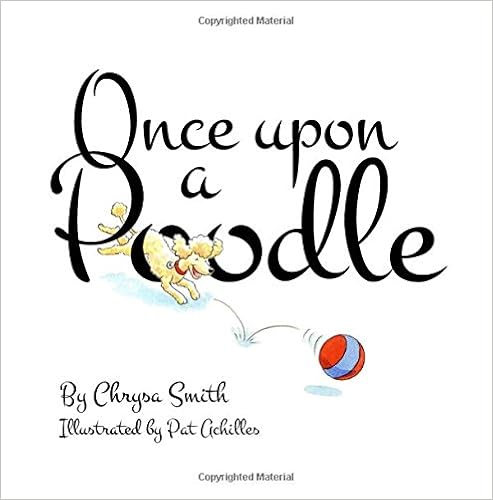
Author of the easy-reader series: The Adventures of the Poodle Posse and a new picture book, Once upon a Poodle, Chrysa Smith always likes to see the fun side of things, as she observes her miniature poodles during devious endeavors in her home. A long-time feature magazine writer and shorter term children's author, Chrysa has always been a fan of the written word. It's just that now, it comes in simple, concise sentences.

Connect with Chrysa:

website / e-mail / Facebook

About the book

Once Upon a Poodle

Mom's Choice Award Silver Medalist for excellence in Juvenile Fiction


When miniature poodle Woody goes on a hunt for a new brother, all sorts of adventures are in store. Several attempts bring chaos into the house while trying to find a suitable creature to become the latest member of the family. Feathers fly, gardens are harvested and nuts are cracked in this full-color illustrated tale that embraces fun, problem-solving and learning what family and friendship are all about.

Available here: The Well Bred Book / Amazon

What questions do you have for Chrysa about booking and planning school visits?
Thursday, October 13, 2016 Laurel Garver
by guest Chrysa Smith

Some schools do it every year. Others have never had an author come into their school to speak to their students.  Yet for me, it's the only way to sell children's books--to sell books in quantity. But it's surely not for the faint of heart. Here are some of the lessons learned from "going back to school."

I learned long ago that if I wanted to get noticed as an author, I'd need to offer more than my book. After all, what makes my book different than the tens of thousands of children's books out there? So, after a little research and a lot of chutzpah, I decided to create a school program that went along with my first book.

Naturally, it spoke to my book, but it also included quite a bit about the writing process, which can also set an author apart. The presentation then became a lesson. More than a show 'n tell from an author, kids learned a few things without realizing it, all from a different perspective. And from my experience, teachers love it.

 Eight years ago, my program began as an overhead presentation (so much for technology). But it evolved, as the purchase of a projector gave birth to a PowerPoint, complete with cool graphics and fancy effects. A screen presentation is a 'must' if you visit schools, as assemblies are often held in gyms, auditoriums or cafeterias. Many schools do have Smart Boards with internet access and presentations can be shown from laptops. So it helps to have presentations on a memory stick as well--a little easier to tote and compatible with those schools that have the latest technology.

Presentations must fall in line with school schedules and teachers have to clear the space, the date and rearrange classes for the day, so while you might expect innumerable schools as your target market, my experience has shown the return on contacts to be quite low, thus my point about it not being for the faint of heart. Scoring school visits involves lots of time--lots and lots of time, perseverance and a budget--all necessary to create things like bookmarks, postcards, brochures--all must-haves in order to spread the word about you.

But perhaps the biggest question of all is how to market to schools? I wish I had a magic formula to share. To put it simply, it involves lots of contact. Emails, direct mailings, getting on school visitation websites. And while I have listed myself on 'authors who visit schools' sites, very little has come of it. For the most part, I do email blasts, and it does yield some results, but with the ever-growing number of protective filters out there, so many emails go unopened, which is why complimentary postcard mailings help. And don't underestimate the value of going to book fairs. I have sat at many, twiddling my thumbs and contemplating the universe, but some of the seemingly unending events have yielded school visits. All it takes is one contact to sell a few dozen books and perhaps lead to another school visit.

My advice? Start out locally. Hitting schools where you live is the best place to begin. They are often more open to authors who share their community. Discipline yourself with regular contact with them, and slowly, like a spider or world-wide web, cast your net larger and larger--as large as you care to or as long as you can stand being back in the classroom once again Good luck!

About the Author


Author of the easy-reader series: The Adventures of the Poodle Posse and a new picture book, Once upon a Poodle, Chrysa Smith always likes to see the fun side of things, as she observes her miniature poodles during devious endeavors in her home. A long-time feature magazine writer and shorter term children's author, Chrysa has always been a fan of the written word. It's just that now, it comes in simple, concise sentences.

Connect with Chrysa:

website / e-mail / Facebook

About the book

Once Upon a Poodle

Mom's Choice Award Silver Medalist for excellence in Juvenile Fiction


When miniature poodle Woody goes on a hunt for a new brother, all sorts of adventures are in store. Several attempts bring chaos into the house while trying to find a suitable creature to become the latest member of the family. Feathers fly, gardens are harvested and nuts are cracked in this full-color illustrated tale that embraces fun, problem-solving and learning what family and friendship are all about.

Available here: The Well Bred Book / Amazon

What questions do you have for Chrysa about booking and planning school visits?

Monday, October 3

by Franky A. Brown
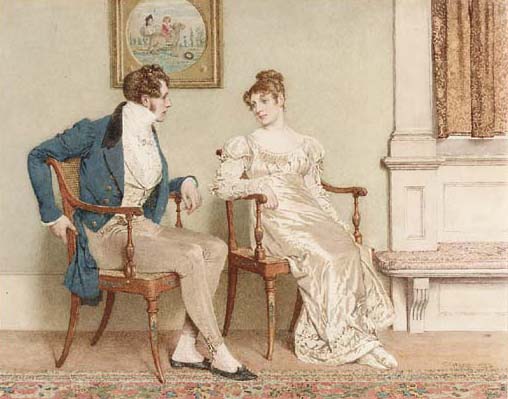
The Courtship by Charles Green. Wikimedia commons.

My Austen Inspirations series is loosely based on Jane Austen’s works, some more than others. Emma’s Match features my character, Emma Wallace, a modern version of Austen’s Emma. She first came into being in the second book in the series, None But You, as the heroine’s best friend.

My goal was to craft her personality as closely as I could to Austen’s Emma, while setting her in modern-day South Carolina. She’s well-bred and classy, and while some may see her a snobbish, she has a generous heart and the best intentions when matchmaking her friends. But Emma’s Match is not a simple retelling of the story of Emma Woodhouse and George Knightley. What I set out to do was to take her character, add similarities to the original Emma, but make it my own story. And while None But You has many similarities to Persuasion, it’s also a new story.

Following the original books exactly didn’t work for me; it felt too much like being boxed in. Obviously women of today have more opportunities than women in the early nineteenth century, but human emotion hasn’t changed. The internal struggles women faced then with things like self-image, financial security, and understanding the opposite sex remain today.

Photo: DMedina on morguefile
Using Jane Austen’s characters as a springboard, I allowed myself the freedom to go in new directions. Pride and Butterflies shares simply a theme with Pride and Prejudice: first impressions can go seriously wrong and opinions can change. These heroines are women striving to succeed in building their own businesses, and struggling with personal weaknesses. The leading man either unexpectedly crashes into the back of her car, suddenly reappears seven years after a broken engagement, or lives down the hall and has no idea of her feelings.

All three of the books in this series can be read on their own. They’re filled with clean romance and plenty of humor. Austen, of course, was the first to combine humor and romance.


About the author


Franky A. Brown has always called the South home and loves to write about it. She holds an English degree from the University of South Carolina and can’t seem to stop reading. She is the author of women’s fiction and chick lit about life, love, and Southern women.

Brown started writing her Jane Austen retellings in 2015 with Pride and Butterflies, then None But You. Now she's published Emma's Match, a retelling of Emma by Jane Austen.


About the book


Emma Wallace has a plan up her sleeve to save her struggling design business, but not a clue what do to about the man who has her heart.

Stealing a kiss from Will Knight years ago ended in an embarrassment she didn’t want to repeat. But when a popular new designer in town starts taking her clients and has eyes on Will, too, Emma decides it’s time to fight for what she wants. The perfectly irritating designer she wants to shove into a hole isn’t the only one who can be down-to-earth and likeable. After all, Emma’s never failed at anything...except walking the line between friendship and love. Crossing it again could mean losing Will’s friendship for good.


Giveaway


Franky has generously offered a paperback of Emma’s Match! Use the Rafflecopter to enter. The giveaway will be closed at midnight on October 5th and the winner will be announced around 6AM on the Bookish Orchestration blog on October 6th.

a Rafflecopter giveaway


Tour Schedule

Saturday, October 1
Bookish Orchestrations-Tour Introduction
Rachel Rossano's Words- Excerpt and Character Interview

Sunday, October 2

Monday, October 3
Crystal Walton- Excerpt and Book Review
Laurel's Leaves-Guest Post

Tuesday, October 4
Ramblings- Guest Post
Once Upon an Ordinary-Author Interview

Wednesday, October 5
Rachel John Reviews- Book Review

Thursday, October 6
Bookish Orchestrations-Giveaway Winner


If you ever did a modernization of a classic, would you choose to riff on the characters, as Franky does, or to update the plot?
 
Monday, October 03, 2016 Laurel Garver
by Franky A. Brown
The Courtship by Charles Green. Wikimedia commons.

My Austen Inspirations series is loosely based on Jane Austen’s works, some more than others. Emma’s Match features my character, Emma Wallace, a modern version of Austen’s Emma. She first came into being in the second book in the series, None But You, as the heroine’s best friend.

My goal was to craft her personality as closely as I could to Austen’s Emma, while setting her in modern-day South Carolina. She’s well-bred and classy, and while some may see her a snobbish, she has a generous heart and the best intentions when matchmaking her friends. But Emma’s Match is not a simple retelling of the story of Emma Woodhouse and George Knightley. What I set out to do was to take her character, add similarities to the original Emma, but make it my own story. And while None But You has many similarities to Persuasion, it’s also a new story.

Following the original books exactly didn’t work for me; it felt too much like being boxed in. Obviously women of today have more opportunities than women in the early nineteenth century, but human emotion hasn’t changed. The internal struggles women faced then with things like self-image, financial security, and understanding the opposite sex remain today.

Photo: DMedina on morguefile
Using Jane Austen’s characters as a springboard, I allowed myself the freedom to go in new directions. Pride and Butterflies shares simply a theme with Pride and Prejudice: first impressions can go seriously wrong and opinions can change. These heroines are women striving to succeed in building their own businesses, and struggling with personal weaknesses. The leading man either unexpectedly crashes into the back of her car, suddenly reappears seven years after a broken engagement, or lives down the hall and has no idea of her feelings.

All three of the books in this series can be read on their own. They’re filled with clean romance and plenty of humor. Austen, of course, was the first to combine humor and romance.


About the author


Franky A. Brown has always called the South home and loves to write about it. She holds an English degree from the University of South Carolina and can’t seem to stop reading. She is the author of women’s fiction and chick lit about life, love, and Southern women.

Brown started writing her Jane Austen retellings in 2015 with Pride and Butterflies, then None But You. Now she's published Emma's Match, a retelling of Emma by Jane Austen.


About the book


Emma Wallace has a plan up her sleeve to save her struggling design business, but not a clue what do to about the man who has her heart.

Stealing a kiss from Will Knight years ago ended in an embarrassment she didn’t want to repeat. But when a popular new designer in town starts taking her clients and has eyes on Will, too, Emma decides it’s time to fight for what she wants. The perfectly irritating designer she wants to shove into a hole isn’t the only one who can be down-to-earth and likeable. After all, Emma’s never failed at anything...except walking the line between friendship and love. Crossing it again could mean losing Will’s friendship for good.


Giveaway


Franky has generously offered a paperback of Emma’s Match! Use the Rafflecopter to enter. The giveaway will be closed at midnight on October 5th and the winner will be announced around 6AM on the Bookish Orchestration blog on October 6th.

a Rafflecopter giveaway


Tour Schedule

Saturday, October 1
Bookish Orchestrations-Tour Introduction
Rachel Rossano's Words- Excerpt and Character Interview

Sunday, October 2

Monday, October 3
Crystal Walton- Excerpt and Book Review
Laurel's Leaves-Guest Post

Tuesday, October 4
Ramblings- Guest Post
Once Upon an Ordinary-Author Interview

Wednesday, October 5
Rachel John Reviews- Book Review

Thursday, October 6
Bookish Orchestrations-Giveaway Winner


If you ever did a modernization of a classic, would you choose to riff on the characters, as Franky does, or to update the plot?
 

Thursday, September 22

The other day, my teen daughter heard Alanis Morissette's "You Ought to Know" and got rather confused by a line in the lyrics.
Image by svklimkin on morgeufile.com

"Is she really singing about a cross-eyed bear? Am I hearing that wrong?"

I explained to her that the lyric is "the cross I bear," alluding to Jesus' crucifixion and his teachings prior to it about following his example of living self-sacrificially. This is a kid raised going to church weekly and attends Christian school. So if that allusion whipped right by her, chances are, there are plenty of folks without and even with a Judeo-Christian faith background who don't quite get a number of English idioms that are allusions to Bible stories.

Allusions are complex as literary devices go. An allusion is meant to bring an entire story and its context to bear on a present situation. Therefore, as I explain each, I'll note not only what a phrase typically signifies, but also the context from which the words are taken.

Am I my brother's keeper?

What it means: Not really my problem. I'm not going to take responsibility.

What it alludes to: Genesis 4:1-16
God likes Abel's sacrifice of lamb better than his brother Cain's first fruits offering. Cain gets so envious that he kills Abel. When God asks, "Where is your brother?" Cain's playing-dumb response is, "Am I my brother's keeper?" Cain hoped to evade responsibility and punishment, but he got both, in spades.

Beat swords into ploughshares

What it means: A picture of perfect peace, when weapons aren't needed, and the metal would best be put to use making farm equipment, leading to plenty of food for all.

What it alludes to: Isaiah 2:4, Micah 4:3
These verses are nearly identical in describing a time when humanity is living peacefully under God's leadership: "He will judge between many peoples and will settle disputes for strong nations far and wide. They will beat their swords into plowshares and their spears into pruning hooks. Nation will not take up sword against nation, nor will they train for war anymore" (Micah 4:3 NIV). Folks are so much at peace that weapons are obsolete--a waste of good metal that could be put to better use. Without the weapons, folks don't even train for battle. They have better things to do, like keep agriculture humming along.

Cross to bear

What it means: A difficulty that requires walking a path of suffering; a situation that requires "dying to self" or putting aside one's desires, demands and rights.

To be clear, in popular understanding, the former meaning is more prominent, though it is theologically an incorrect interpretation. The latter meaning more accurately reflect what the Matthew 16 verses mean--radical humility, not masochism of Stoicism. Christian teaching on suffering is more accurately reflected in a "thorn in the flesh" (see below).

What it alludes to: John 19:16-18; Matthew 16:24-26
Two contexts here: first, Jesus' own crucifixion, in which he was made to carry the wood beams on which he would be executed. It's a picture of carrying the means of your death, of extreme self-sacrifice. Second, Jesus taught his disciples that being his followers meant having a similar willingness to  be selfless and to obey God instead of following one's self-serving, throw-others-under-the-bus desire to be first.

Forbidden fruit

What it means: a tempting, bad / wrong thing

What it alludes to: Genesis 2:15-3:24
God gave Adam and Eve and entire garden of food to eat, except for the fruit of one tree, but the cunning serpent convinced them to eat anyway. Breaking that simple rule lost them the privilege of being in the garden and brought pain and curses.

Gird up your loins

What it means: Get ready to fight or do a difficult task.

What it alludes to: Job 40:7, Jeremiah 1:17, Ephesians 6:14, I Peter 1:13
In a culture that wore long, flowing tunics, it was difficult to get anywhere fast with all that fabric flapping around you. "Girding" meant gathering and securing the extra cloth in a girth or belt, and the "loins," or lower torso, would thus be wrapped up, enabling freer leg movement.

Here's a helpful image of the process:

Image by Ted Slampyak (http://jazzagecomics.storenvy.com//)


Good Samaritan

What it means: a complete stranger who cares for someone in need or danger

What it alludes to: Luke 10:25-37
When Jesus says the second greatest commandment is "love your neighbor as yourself," a listener asks "But who is my neighbor?"

He goes on to tell the parable--a fictional teaching story--of a man who gets robbed and beaten and left for dead. Two of his countrymen pass him by, doing nothing (probably not wanting the inconvenience of becoming ritually impure from possibly touching a dead body.) A third guy comes by -- someone from Samaria, land of half-breeds who practice a divergent form of Judaism -- and he helps. And not just a little. The Samaritan cleans the victim's wounds, gives him a ride on his donkey, takes him to a nearby inn, then pays for his care.

Jesus uses the story to teach that loving neighbor isn't about deciding who's part of the in group or out group, it's about showing the care you'd want to receive when you see someone in need--even weirdos, outsiders, and enemies.

Out of the mouths of babes

What it means: Wise words coming from a young person.

What it alludes to: Psalm 8:2, Matthew 21:16
"From the mouth of infants and nursing babes
You have established strength
Because of Your adversaries,
To make the enemy and the revengeful cease." (Psalm 8:2)

Jesus refers to the verse when, following the events of Palm Sunday, the religious leaders are angry that kids are following him around, yelling "Hosanna to the Son of David!" He's making the harsh point that God has given this insight about his identity, and that the temple leaders are, therefore, in enmity with God if they dislike these words.

Pearls before swine

What it means: Know your audience, and be discerning. If a group won't be inclined to value the very good thing you're offering, better to not waste it.

What it alludes to: Matthew 7:6
As part of the Sermon on the Mount, Jesus warns his listeners: "Do not give dogs what is sacred; do not throw your pearls to pigs. If you do, they may trample them under their feet, and turn and tear you to pieces."

Dogs in the Bible are scavenger beasts that do gross things like eat dead bodies; swine/pigs are paralleled here, and likewise "unclean." Similarly, a parallel is being drawn between "what is sacred" and pearls. This verse is part of the section that teaches "do not judge lest you be judged." So it's a counterbalance--don't condemn others, but do be discerning.

Salt of the earth

What it means: A truly good person who embodies loving God and neighbor. A solid citizen who does good and influences others to do the same.

What it alludes to: Matthew 5:13
"You are the salt of the earth," Jesus tells his listeners in this Sermon on the Mount word-picture of being a positive influence. Salt was used in this era to preserve perishable foods (salted meats, pickled vegetables), and as a flavoring. The verse also warns against "losing saltiness"--failing to be a positive force who keeps decay (especially moral decay) at bay.

Scapegoat

What it means: An innocent forced to take on someone else's guilt

What it alludes to: Leviticus 16: 20-22
As part of the original rituals of Yom Kippur / Day of Atonement, a live goat ritually had all the sins (deliberate wrongdoing) and trespasses (straying) of the people prayed onto it by the high priest. It was then set loose to wander in the wilderness. It is a picture of evil being removed through substitution--an innocent one carrying another's guilt.

Thorn in the flesh

What it means: Chronic infirmity, annoyance or trouble, especially that cements your sense of limitation and keeps you humble.

What it alludes to: II Corinthians 12:7-9
In his epistles, St. Paul refers a number of times to a problem with his eyesight that hindered his ability to keep up one important part of his church-building enterprise--sending letters to congregations to train and encourage them. He realized it was more than an annoyance--it was teaching him to not become arrogant about his success spreading Christianity. (There are other theories and interpretations of what St. Paul's "thorn" might have been,)

Writing is on the wall / Handwriting on the wall

What it means: Judgement is imminent / the bad ending is obvious

What it alludes to: Daniel 5
Babylonian King Belshazzar threw a big banquet using sacred vessels looted from the temple in Jerusalem. A hand appeared and wrote a cryptic message on the wall: "Mene, Mene, Tekel, and Parsin." No one could figure out what it meant, so the prophet Daniel was brought in, and he told them the specific judgment about to befall this bad king. The very next day, the prophecy came true.

Were these terms familiar to you? Which one(s) surprised you most?

Thursday, September 22, 2016 Laurel Garver
The other day, my teen daughter heard Alanis Morissette's "You Ought to Know" and got rather confused by a line in the lyrics.
Image by svklimkin on morgeufile.com

"Is she really singing about a cross-eyed bear? Am I hearing that wrong?"

I explained to her that the lyric is "the cross I bear," alluding to Jesus' crucifixion and his teachings prior to it about following his example of living self-sacrificially. This is a kid raised going to church weekly and attends Christian school. So if that allusion whipped right by her, chances are, there are plenty of folks without and even with a Judeo-Christian faith background who don't quite get a number of English idioms that are allusions to Bible stories.

Allusions are complex as literary devices go. An allusion is meant to bring an entire story and its context to bear on a present situation. Therefore, as I explain each, I'll note not only what a phrase typically signifies, but also the context from which the words are taken.

Am I my brother's keeper?

What it means: Not really my problem. I'm not going to take responsibility.

What it alludes to: Genesis 4:1-16
God likes Abel's sacrifice of lamb better than his brother Cain's first fruits offering. Cain gets so envious that he kills Abel. When God asks, "Where is your brother?" Cain's playing-dumb response is, "Am I my brother's keeper?" Cain hoped to evade responsibility and punishment, but he got both, in spades.

Beat swords into ploughshares

What it means: A picture of perfect peace, when weapons aren't needed, and the metal would best be put to use making farm equipment, leading to plenty of food for all.

What it alludes to: Isaiah 2:4, Micah 4:3
These verses are nearly identical in describing a time when humanity is living peacefully under God's leadership: "He will judge between many peoples and will settle disputes for strong nations far and wide. They will beat their swords into plowshares and their spears into pruning hooks. Nation will not take up sword against nation, nor will they train for war anymore" (Micah 4:3 NIV). Folks are so much at peace that weapons are obsolete--a waste of good metal that could be put to better use. Without the weapons, folks don't even train for battle. They have better things to do, like keep agriculture humming along.

Cross to bear

What it means: A difficulty that requires walking a path of suffering; a situation that requires "dying to self" or putting aside one's desires, demands and rights.

To be clear, in popular understanding, the former meaning is more prominent, though it is theologically an incorrect interpretation. The latter meaning more accurately reflect what the Matthew 16 verses mean--radical humility, not masochism of Stoicism. Christian teaching on suffering is more accurately reflected in a "thorn in the flesh" (see below).

What it alludes to: John 19:16-18; Matthew 16:24-26
Two contexts here: first, Jesus' own crucifixion, in which he was made to carry the wood beams on which he would be executed. It's a picture of carrying the means of your death, of extreme self-sacrifice. Second, Jesus taught his disciples that being his followers meant having a similar willingness to  be selfless and to obey God instead of following one's self-serving, throw-others-under-the-bus desire to be first.

Forbidden fruit

What it means: a tempting, bad / wrong thing

What it alludes to: Genesis 2:15-3:24
God gave Adam and Eve and entire garden of food to eat, except for the fruit of one tree, but the cunning serpent convinced them to eat anyway. Breaking that simple rule lost them the privilege of being in the garden and brought pain and curses.

Gird up your loins

What it means: Get ready to fight or do a difficult task.

What it alludes to: Job 40:7, Jeremiah 1:17, Ephesians 6:14, I Peter 1:13
In a culture that wore long, flowing tunics, it was difficult to get anywhere fast with all that fabric flapping around you. "Girding" meant gathering and securing the extra cloth in a girth or belt, and the "loins," or lower torso, would thus be wrapped up, enabling freer leg movement.

Here's a helpful image of the process:

Image by Ted Slampyak (http://jazzagecomics.storenvy.com//)


Good Samaritan

What it means: a complete stranger who cares for someone in need or danger

What it alludes to: Luke 10:25-37
When Jesus says the second greatest commandment is "love your neighbor as yourself," a listener asks "But who is my neighbor?"

He goes on to tell the parable--a fictional teaching story--of a man who gets robbed and beaten and left for dead. Two of his countrymen pass him by, doing nothing (probably not wanting the inconvenience of becoming ritually impure from possibly touching a dead body.) A third guy comes by -- someone from Samaria, land of half-breeds who practice a divergent form of Judaism -- and he helps. And not just a little. The Samaritan cleans the victim's wounds, gives him a ride on his donkey, takes him to a nearby inn, then pays for his care.

Jesus uses the story to teach that loving neighbor isn't about deciding who's part of the in group or out group, it's about showing the care you'd want to receive when you see someone in need--even weirdos, outsiders, and enemies.

Out of the mouths of babes

What it means: Wise words coming from a young person.

What it alludes to: Psalm 8:2, Matthew 21:16
"From the mouth of infants and nursing babes
You have established strength
Because of Your adversaries,
To make the enemy and the revengeful cease." (Psalm 8:2)

Jesus refers to the verse when, following the events of Palm Sunday, the religious leaders are angry that kids are following him around, yelling "Hosanna to the Son of David!" He's making the harsh point that God has given this insight about his identity, and that the temple leaders are, therefore, in enmity with God if they dislike these words.

Pearls before swine

What it means: Know your audience, and be discerning. If a group won't be inclined to value the very good thing you're offering, better to not waste it.

What it alludes to: Matthew 7:6
As part of the Sermon on the Mount, Jesus warns his listeners: "Do not give dogs what is sacred; do not throw your pearls to pigs. If you do, they may trample them under their feet, and turn and tear you to pieces."

Dogs in the Bible are scavenger beasts that do gross things like eat dead bodies; swine/pigs are paralleled here, and likewise "unclean." Similarly, a parallel is being drawn between "what is sacred" and pearls. This verse is part of the section that teaches "do not judge lest you be judged." So it's a counterbalance--don't condemn others, but do be discerning.

Salt of the earth

What it means: A truly good person who embodies loving God and neighbor. A solid citizen who does good and influences others to do the same.

What it alludes to: Matthew 5:13
"You are the salt of the earth," Jesus tells his listeners in this Sermon on the Mount word-picture of being a positive influence. Salt was used in this era to preserve perishable foods (salted meats, pickled vegetables), and as a flavoring. The verse also warns against "losing saltiness"--failing to be a positive force who keeps decay (especially moral decay) at bay.

Scapegoat

What it means: An innocent forced to take on someone else's guilt

What it alludes to: Leviticus 16: 20-22
As part of the original rituals of Yom Kippur / Day of Atonement, a live goat ritually had all the sins (deliberate wrongdoing) and trespasses (straying) of the people prayed onto it by the high priest. It was then set loose to wander in the wilderness. It is a picture of evil being removed through substitution--an innocent one carrying another's guilt.

Thorn in the flesh

What it means: Chronic infirmity, annoyance or trouble, especially that cements your sense of limitation and keeps you humble.

What it alludes to: II Corinthians 12:7-9
In his epistles, St. Paul refers a number of times to a problem with his eyesight that hindered his ability to keep up one important part of his church-building enterprise--sending letters to congregations to train and encourage them. He realized it was more than an annoyance--it was teaching him to not become arrogant about his success spreading Christianity. (There are other theories and interpretations of what St. Paul's "thorn" might have been,)

Writing is on the wall / Handwriting on the wall

What it means: Judgement is imminent / the bad ending is obvious

What it alludes to: Daniel 5
Babylonian King Belshazzar threw a big banquet using sacred vessels looted from the temple in Jerusalem. A hand appeared and wrote a cryptic message on the wall: "Mene, Mene, Tekel, and Parsin." No one could figure out what it meant, so the prophet Daniel was brought in, and he told them the specific judgment about to befall this bad king. The very next day, the prophecy came true.

Were these terms familiar to you? Which one(s) surprised you most?

Thursday, September 15

The new school year has begun, which always feels to me like a time for me to start new things, or in this case, restart old things.

Back in 2009, one of my critique group friends called with an urgent punctuation question. It was something pretty simple about quotes within quotes. This got me wondering if any of my blog followers have burning questions about some matter of grammar, usage, or style.

From there, I started a little series called Editor-on-call, in which I answer your burning questions. It has been a long time since I put out a call for more questions, so I thought I'd do so again. I want to keep this blog relevant and a helpful resource for you, dear readers.

Perhaps first you'd like to know what topics I've already covered. There are quite a few, as it happens, though this hardly exhausts all the concerns I hear come up at my critique group and in the author collaborative I belong to.


Tell me, readers, what burning questions do you have about grammar, punctuation, or fiction writing problems you don't know how to fix?
Thursday, September 15, 2016 Laurel Garver
The new school year has begun, which always feels to me like a time for me to start new things, or in this case, restart old things.

Back in 2009, one of my critique group friends called with an urgent punctuation question. It was something pretty simple about quotes within quotes. This got me wondering if any of my blog followers have burning questions about some matter of grammar, usage, or style.

From there, I started a little series called Editor-on-call, in which I answer your burning questions. It has been a long time since I put out a call for more questions, so I thought I'd do so again. I want to keep this blog relevant and a helpful resource for you, dear readers.

Perhaps first you'd like to know what topics I've already covered. There are quite a few, as it happens, though this hardly exhausts all the concerns I hear come up at my critique group and in the author collaborative I belong to.


Tell me, readers, what burning questions do you have about grammar, punctuation, or fiction writing problems you don't know how to fix?

Thursday, September 8

I was fortunate to land a job early in my career that required me to learn graphic design. Between the professional seminars, how-to books, a very kind colleague who taught me all his best tricks, and a grad school class, I got to a level of basic competence. The more newsletters and magazine spreads and brochures I designed, the more my skills improved.

All that to say, even words people can learn some of the basics of design. You don't need an art degree to attempt to create marketing graphics (though seminars and how-to books are a good idea, so you understand composition, balance and the like).

These days, you don't even need the pricey software I learned on (Quark, Photoshop, Illustrator). There are a number of freeware solutions that will enable you to create very attractive designs. They aren't as powerful as the pricey design products, but they also aren't nearly as complicated to learn (I'm looking at you, Photoshop).

Photo editing


GIMP is a great, basic photo editor, available free, that allows you to not only resize images, but also tweak the colors and use layer masks--one of Photoshop's most powerful tools. Check out GIMP's tutorials page for instructions on using some of these more advanced options. Because it is open-source software, there are lots of cool plug-ins you can get from third parties to make the software even more powerful. Check out the 20 best free GIMP plug ins to start.

Layout


Canva is my new favorite toy. This powerful web-based design platform has lots of free design elements, premade designs, and great, easy-to-use tools to make quick marketing graphics.

Once you login--you can do so easily by linking with a Facebook or Google account--pick the type of element you want--a blog graphic, social media post (Twitter-friendly designs are under this heading), card, poster, etc. This will create a live working area in the correct size for your needs.

From there, you can select one of their premade designs, or you can assemble something freestyle. The amazing thing is that EVERYTHING is editable. It's kind of crazy. You can upload your own photos, pull them into the live area and resize them, flip them, turn them on a jaunty angle. The backgrounds come with textures and colors, but these are editable too. You can change the colors, even the opacity.

You can layer in shapes and text. And wow do they offer a lot of very cool pre-make text elements that are, once again, editable (made larger and smaller, different color, different typeface). Pick the shape that will work well with your message, then simply change the pre-made text to your words, and edit any other attribute as needed. Let me give you a couple examples, from my fairly quick and easy noodling efforts:


This is a standard Twitter-post size. I used one of Canva's free photos, expanding it until it was the right width--the program automatically cropped it to fit in the live area. I dropped in "heading" text element on the left, then changed the typeface to "Emily's Candy" (is that not a great font name?) and played with the color mixer until I had a nice crimson that reflected the raspberries. The black text is the standard "subheading" type, 


This design uses an uploaded image I got from the free image site, morguefile.com. The text graphic is a pre-made that I edited by adding my own text and changing the color of the border to echo the apple. The #1linewed (one line Wednesday, a weekly Twitter party for writers) theme this week was "school," so I had fun doing themed thank you graphics.


This is perhaps the most complex design I've attempted so far. I got the 3D book covers using the free 3D cover designer available from Adazing (warning--you will get a lot of e-mail ads from them in exchange for the free design). Each of these I uploaded. Because they have some white around them to accommodate the drop shadow, I stuck with a white background. The text elements are, top to bottom, subheading, body text, and heading. Only the heading text did I significantly edit, changing to a brush-syle typeface and tweaking the color. I now know how to fine-tune my color choices more, so I will likely do some revisions to this ad for my book series.

It's easy to do permutations of a design by making a copy on an additional page, change an element or two and see which you like better. When you're ready to post the image elsewhere, use the share button, or download. If you have permutations and want to download only one, click "options" in the download menu, and pick just the page you want. 

Anyway, That's a little taste of some of the fun things you can do to jazz up your blog posts, Twitter posts, or Facebook posts. Follow me on Twitter @LaurelGarver to see what new experiments I dream up.

Have I convinced you to try out some of these tools? Do you enjoy design or find it intimidating?
Thursday, September 08, 2016 Laurel Garver
I was fortunate to land a job early in my career that required me to learn graphic design. Between the professional seminars, how-to books, a very kind colleague who taught me all his best tricks, and a grad school class, I got to a level of basic competence. The more newsletters and magazine spreads and brochures I designed, the more my skills improved.

All that to say, even words people can learn some of the basics of design. You don't need an art degree to attempt to create marketing graphics (though seminars and how-to books are a good idea, so you understand composition, balance and the like).

These days, you don't even need the pricey software I learned on (Quark, Photoshop, Illustrator). There are a number of freeware solutions that will enable you to create very attractive designs. They aren't as powerful as the pricey design products, but they also aren't nearly as complicated to learn (I'm looking at you, Photoshop).

Photo editing


GIMP is a great, basic photo editor, available free, that allows you to not only resize images, but also tweak the colors and use layer masks--one of Photoshop's most powerful tools. Check out GIMP's tutorials page for instructions on using some of these more advanced options. Because it is open-source software, there are lots of cool plug-ins you can get from third parties to make the software even more powerful. Check out the 20 best free GIMP plug ins to start.

Layout


Canva is my new favorite toy. This powerful web-based design platform has lots of free design elements, premade designs, and great, easy-to-use tools to make quick marketing graphics.

Once you login--you can do so easily by linking with a Facebook or Google account--pick the type of element you want--a blog graphic, social media post (Twitter-friendly designs are under this heading), card, poster, etc. This will create a live working area in the correct size for your needs.

From there, you can select one of their premade designs, or you can assemble something freestyle. The amazing thing is that EVERYTHING is editable. It's kind of crazy. You can upload your own photos, pull them into the live area and resize them, flip them, turn them on a jaunty angle. The backgrounds come with textures and colors, but these are editable too. You can change the colors, even the opacity.

You can layer in shapes and text. And wow do they offer a lot of very cool pre-make text elements that are, once again, editable (made larger and smaller, different color, different typeface). Pick the shape that will work well with your message, then simply change the pre-made text to your words, and edit any other attribute as needed. Let me give you a couple examples, from my fairly quick and easy noodling efforts:


This is a standard Twitter-post size. I used one of Canva's free photos, expanding it until it was the right width--the program automatically cropped it to fit in the live area. I dropped in "heading" text element on the left, then changed the typeface to "Emily's Candy" (is that not a great font name?) and played with the color mixer until I had a nice crimson that reflected the raspberries. The black text is the standard "subheading" type, 


This design uses an uploaded image I got from the free image site, morguefile.com. The text graphic is a pre-made that I edited by adding my own text and changing the color of the border to echo the apple. The #1linewed (one line Wednesday, a weekly Twitter party for writers) theme this week was "school," so I had fun doing themed thank you graphics.


This is perhaps the most complex design I've attempted so far. I got the 3D book covers using the free 3D cover designer available from Adazing (warning--you will get a lot of e-mail ads from them in exchange for the free design). Each of these I uploaded. Because they have some white around them to accommodate the drop shadow, I stuck with a white background. The text elements are, top to bottom, subheading, body text, and heading. Only the heading text did I significantly edit, changing to a brush-syle typeface and tweaking the color. I now know how to fine-tune my color choices more, so I will likely do some revisions to this ad for my book series.

It's easy to do permutations of a design by making a copy on an additional page, change an element or two and see which you like better. When you're ready to post the image elsewhere, use the share button, or download. If you have permutations and want to download only one, click "options" in the download menu, and pick just the page you want. 

Anyway, That's a little taste of some of the fun things you can do to jazz up your blog posts, Twitter posts, or Facebook posts. Follow me on Twitter @LaurelGarver to see what new experiments I dream up.

Have I convinced you to try out some of these tools? Do you enjoy design or find it intimidating?